Outdoor Sex
✎ 本文編集 (admin) 🖼 画像編集 (admin)“Outdoor Sex” works on DLsite



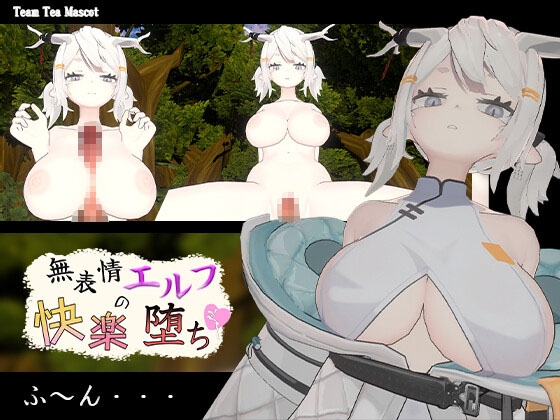



The empty beach at dawn. A park bench at three in the morning. A halfway turning on a mountain path. Outdoor sex is the category in which the absence of a roof, the contact of skin with weather, and the persistent possibility of being seen all rewrite the basic conditions of the act.
Overview
Outdoor sex (Japanese: 屋外セックス, okugai sekkusu; informally aokan, 青姦, “blue/green-sky sex”) names consensual sexual activity carried out in unroofed natural or public spaces. It is distinct from the more general fetish category of outdoor play, which describes the orientation toward such locations as a preference; outdoor sex describes the act itself, with its terrain-specific practical constraints. The two categories overlap heavily but are not the same.
Three structural conditions define outdoor sex as a distinct practical category: the absence of a roof, the presence of ground, and the standing possibility of public observation. Each of these reshapes the act in ways that indoor settings do not. Weather, temperature, season, and time of day all become operative variables; the choice of position is constrained by the ground surface; and the legal and social context of public space frames the whole encounter.
Conditions
The absence of a roof means weather and season become operating variables. Rain rules the activity out. Summer brings insects, heat, and the risk of heatstroke. Winter narrows the window to bodies that can tolerate cold. The result is a category of activity that is, by its physical nature, occasion-dependent in a way that indoor sex is not.
Ground material constrains posture. Grass, sand, rock, concrete, and gravel each have different properties as a surface, and lying-down positions become uncomfortable to varying degrees on each. The standard practical adaptations are bringing a ground cover (picnic mat, towel, a shed jacket), preferring standing positions that minimise ground contact, or avoiding positions that require kneeling on bare ground.
Public observation is the most operationally significant variable. Even nominally deserted locations rarely have a fully zero probability of third-party passage. Beaches have walkers and anglers; mountain paths have hikers and forestry workers; parks have dog-walkers and joggers; riverbanks have cyclists and anglers. Securing genuine privacy requires careful selection of place, time of day, and season, and in practice the experience of outdoor sex is shaped continuously by the management of this risk.
Location categories
Outdoor-sex locations fall into roughly five categories.
Beach and waterside locations include unfrequented stretches of coastline, riverbanks, lake shores, and quieter port areas. Sand and rock as a ground substrate, the acoustic masking effect of waves, and the visual screening of darkness are all advantages. Summer beaches are a recurring location for hame-dori and nanpa adult-video productions.
Mountain and forest locations include hiking-trail surroundings, forestry roads, the more remote ends of campgrounds, and the deeper sections of natural parks. The uneven ground, the visual screening provided by vegetation, and the relative quiet are all working factors; insects, wildlife, and the difficulty of escape if something goes wrong are corresponding constraints.
Parks and managed greenspaces include urban parks at night, suburban parks, and quieter sections of university campuses. Benches, gazebos, and play structures are commonly used. Urban location means that the third-party risk is structurally higher than in the rural categories.
Urban dead zones include alley-end recesses behind closed businesses, gaps between buildings, the underside of bridges, and the quieter sections of underground passages. These are not strictly outdoors and often have partial roofing; they sit at the boundary between outdoor sex and what might be called semi-public-indoor play.
Mobile spaces include the interior of cars, trains, boats, gondolas on observation wheels, and cable cars. These are technically roofed but share with outdoor sex the dimension of motion through public space and limited privacy, and are sometimes treated as adjacent categories.
Positions
The practical position vocabulary of outdoor sex is shaped by ground conditions and the need for visual screening.
Standing rear-entry positions (the most reported in outdoor-set adult video) place the woman with hands against a wall, tree trunk, or rail and the man behind. Ground contact is reduced to the feet, no surface cover is required, and the position is compatible with quick separation if a third party appears.
Standing face-to-face positions, including the ekiben (driving-woman-against-a-wall) position, are visually striking and sometimes used in adult-video productions for symbolic effect, but the physical loading on the man limits them in practice.
Sitting positions use benches, fallen logs, large rocks, or other natural or man-made seating to approximate the comfort of a horizontal position while keeping ground contact minimal. This is the standard practical adaptation for longer encounters.
Squatting positions, with one party kneeling or squatting low to the ground, limit ground contact to the knees and ankles and are workable on harder surfaces without cover.
Public-decency law
In Japanese law, outdoor sex is regulated principally not by Article 175 of the Penal Code (the obscenity provision that governs adult-video production) but by Article 174 (Public Indecency). The legal definition of public in Article 174 jurisprudence is “in a state in which an unspecified or numerous persons could perceive the act”. The crucial point is that actual third-party observation is not required; the possibility of observation, objectively assessed, is sufficient to make out the offence.
Consensual sexual activity between two parties therefore can fall within Article 174 if (1) the location is one in which third-party passage and observation are possible and (2) that possibility is objectively present. Case law has held that night-time parks, apparently deserted parking lots, and quiet stretches of beach do not categorically exclude the necessary perception-possibility, and convictions have been returned on facts that participants would have regarded as fully private.
Additional provisions can come into play: Article 1, item 20 of the Minor Offences Act (body exposure), prefectural anti-nuisance ordinances, beach and park management ordinances, and the protected-area provisions of the Natural Parks Act. The general result is that outdoor sex sits in a legally exposed zone in a way that indoor private sex does not, regardless of the consent of the participants.
Comparable provisions exist in most jurisdictions. The English-language category of public indecency and continental-European public order offences create similar exposure. The United States operates through state-level lewd-conduct statutes, with substantial variation by jurisdiction.
Outdoor-set adult video
The outdoor-set subgenre of adult video has been a stable category of demand since the late 1980s, running in close parallel with the rise of hame-dori (point-of-view amateur-style) production from that period. New productions in the category have continued to be released steadily into the contemporary market.
TDC Fujiki’s Adult Video Kakumei-shi (2009) treats outdoor location shooting as a production device that creates an amateur feel, a sense of reality, and a sense of transgression. Where studio production tends toward formal-grammar repetition, outdoor production introduces contingency and unpredictability, and producers have actively exploited this.
The practical conduct of outdoor shoots is difficult. Location-permission negotiation, weather management, third-party encounter management, and the need for rapid wrap-up all impose costs that studio shoots do not face. Industry trade press has on occasion called outdoor shooting the poorest labour-to-result ratio genre in the business. The corresponding payoff for the viewer is the documentary, location-specific quality that the studio cannot reproduce.
Reception
The taste for outdoor sex combines three structural pulls.
Contact with the natural environment supplies a sensory range that indoor sex cannot. Wind, sun, water sound, the smell of grass, the cold of stone, the visual depth of a night sky: these are sense modalities that the room cuts off. Outdoor sex is in part a way of putting them back into the encounter.
The transgressive use of public space (a park made for walking, used for something else) carries a structural sense of out-of-place activity. The category overlaps cleanly with roshutsu (exposure fetish) at the boundary where the desire is specifically to be potentially seen.
The standing risk of being discovered functions as a continuous low-grade arousal accelerator. The category here interfaces with koukai play (public-display play) at the boundary where the discovery risk becomes itself the point.
Cultural reception
Outdoor sex has a long literary history. D. H. Lawrence’s Lady Chatterley’s Lover (1928) and the forest scenes that became part of the obscenity-trial controversy around it are one canonical reference point. Tanizaki Junichiro, Kawabata Yasunari, and Mishima Yukio all wove outdoor sexual scenes into their novelistic vocabulary. The postwar Japanese pink-film and Nikkatsu Roman Porno cycles relied heavily on outdoor locations, partly for budget reasons and partly because the visual quality of outdoor light became part of the genre’s aesthetic identity.
The Japanese slang aokan (青姦, literally “blue/green coupling”) refers specifically to outdoor sex. The colour element draws on the standard Japanese association of ao with the open sky and outdoor grass; the word has been in circulation as a colloquial term since at least the early postwar period.
See also
Updated
References
- 『Adult Video Kakumei-shi (A Revolutionary History of Adult Video)』 Gentosha Shinsho (2009)
- 『Public Sex: The Culture of Radical Sex』 Cleis Press (2000)
- 『Keiho Kakuron (Specific Provisions of Japanese Criminal Law)』 University of Tokyo Press (2015) — Standard textbook treatment of Article 174 (Public Indecency).
- 『Sei no Yogoshu (Glossary of Sex)』 Kodansha Gendai Shinsho (2004)
Also known as
- al fresco sex
- public outdoor sex
- aokan (Japanese slang)
- ja: 屋外セックス
- ja: 青姦
Related
- Car sex
- Foreplay (Zengi)
- Fudeoroshi (Sexual Initiation by an Older Woman)
- Sixty-Nine (69)
- Otoko no Shiofuki (Male Squirting)
- Nyoudou-zeme (Urethral Play / Sounding)
- Sumata (Intercrural Sex)
- Fingering (Teman)
- Yogaru (Writhe in Pleasure)
- Awa-awa Play (Soapland Foam Body-to-Body Service)
- Aibu (foreplay / caress)
- Anal (anal sex)