Illustration collection (doujin art book)
✎ 本文編集 (admin) 🖼 画像編集 (admin)“Illustration collection (doujin art book)” works on DLsite
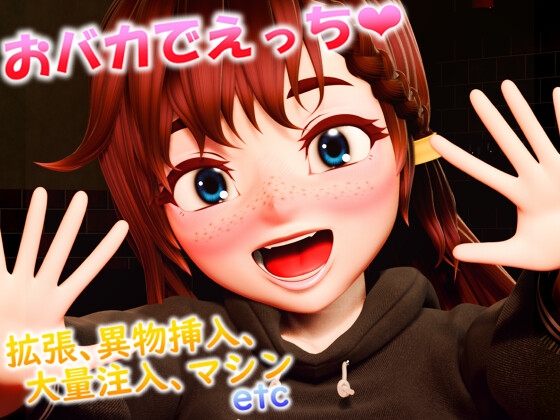
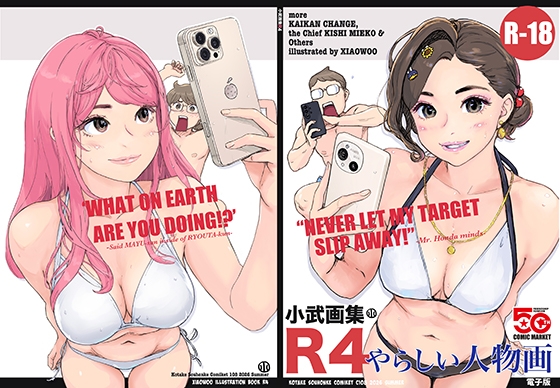

A full-colour A4 art book sits stacked on the circle’s table. Turn the pages and each illustration stands as its own finished image; unlike a manga, you do not follow a story but savour each sheet as a picture. Even for the same artist, characters are finished differently in a manga and an art book, so the collection works as the place to confirm the artist’s side as an illustrator.
Overview
An illustration collection (イラスト集, irasuto-shū) is the umbrella term for an adult art-book format gathering a single artist’s newly drawn and previously published illustrations. It takes a structure of self-contained full-colour (or monochrome) illustrations and is positioned as a separate line from the story-driven eromanga and doujinshi, and from the game-asset-like CG collection.
At its core are the accumulation of independent, self-contained pictorial works; a composition needing no story progression or scene continuity; and a design centred on the display of high-resolution, high-quality technique. Where the manga-form eromanga and doujinshi take narrative continuity as their axis, the illustration collection takes the completeness and pictorial value of the single image, a fundamentally different design logic. Sub-forms include full-colour books (A4 or B5 large format), rough and line-art collections, setting collections, and books mixing newly drawn work with re-collected prior work. In doujin culture the main routes are physical distribution at Comiket and conventions and electronic distribution on DLsite and FANZA; commercial publishers also issue artist art books, original-art collections, and character-design collections.
Etymology
Gashū (“art book”) is a compound of the classical “ga” (picture) and “shū” (collection), a broad concept for a book gathering pictorial works, with a tradition reaching back to Edo ukiyo-e albums. “Illustration collection” prefixes the English illustration, reflecting use in subcultural and doujin contexts. “Fan art collection” prefixes fan art and often denotes a gathering of derivative illustrations of commercial works; out of regard for rights, derivative fan-art books circulate mainly at doujin conventions and on consignment. English uses art book, illustration collection, and fan art collection; the Japanese illustration collection developed as a distinct form within doujin culture, with a distribution base and market scale unlike the Anglophone art book.
History
The pre-history lies in the 1980s practice of distributing art books alongside manga at Comiket and conventions; printing and binding costs were high, so full-colour books were difficult for individual circles, and only some artists distributed small print runs. Through the 1990s, home PCs, colour printers and scanners, and expanded doujin-oriented printing services lowered production costs sharply, and full-colour books became viable for individual circles, raising the share of art books among convention offerings.
In the early 2000s, game-asset and CG-like adult image works split off as the independent CG collection category. In digital distribution (DLsite and others) traditional art books and game-asset CG collections continued to be distributed under one category, while in physical distribution the terminological distinction between “art book” and “CG collection” settled, the difference being roughly that art books pursue pictorial completeness and large-format printing while CG collections pursue mass output at uniform resolution. From the 2010s, work publication on Pixiv and Twitter linked to the book-form release of popular artists’ collections; commercial publishers such as PIE International and Genkosha issued illustrator art books continually, mostly without adult content. From the 2020s, e-book, PDF, and digital art-book distribution on BOOTH, DLsite, FANZA, Patreon, and Pixiv FANBOX became a main route running parallel to print.
Typical composition
A typical collection combines newly drawn illustrations (5 to 20 pieces), selected re-printings of prior work (from doujinshi, commercial magazines, or online), and process material such as roughs, line art, and setting notes. The ratio of new to re-printed work varies. Editorial axes also vary, from collections themed on a single character (original or derivative) to those themed on a subject such as cosplay, harem, or a particular situation. Standard sizes are A4 (full-colour A4 is widely adopted in doujin), B5, and A5, with perfect or saddle binding, full-colour covers, and bodies in full colour or mixed monochrome. Sale prices at conventions and shops centre on 1,000 to 3,000 yen, with high-quality books set higher. Electronic editions are distributed as PDF, sequential JPEG, or dedicated-viewer formats, in versions matching the physical edition, differentiated bonus editions, or electronic-only work.
Sub-forms and adjacent concepts
Against the CG collection, the difference is roughly quantitative versus qualitative orientation: the CG collection outputs many sheets at uniform resolution, while the illustration collection pursues pictorial completeness and per-sheet differentiation. The two are unified under a “CG and illustration” category on distribution platforms but distinguished by convention practice. Against the doujinshi centred on eromanga, which takes narrative continuity as its axis, the collection takes the accumulation of self-contained pictures. Character-setting and worldview-setting collections are positioned as a derivative form, an expansion of the process-material part. Monthly distribution on creator-support platforms such as Pixiv FANBOX, Patreon, and Ci-en includes collection-format work as a subscription model. The dakimakura cover, printing a character’s large illustration onto a body-pillow cover, is sometimes positioned as a merchandise-side derivative, often distributed alongside the same artist’s collection.
Cultural notes
The illustration collection functions as the place to present an illustrator’s style intensively. In manga and game original art, the illustrator works under the constraints of source material and instructions; in a collection, the artist’s own style can be expressed directly, which supports the format’s status as essential to personal branding. Anglophone art book culture developed in parallel across commercial, concept-art, and fan-art lines; the difference is roughly that the Anglophone field is commercial and publisher-led while the Japanese field is doujin and circle-led. Illustration collections carry strong value as collector items, and a particular artist’s Comiket new book, limited-binding edition, or signed copy can command a premium in secondary markets.
Related terms
Updated
References
- 『Comic Market 30's File』 Comiket (2005)
- 『Eromanga Studies』 East Press (2006)
- 『Adult Manga: Culture and Power in Contemporary Japanese Society』 Curzon Press (2000)
Also known as
- art book (doujin)
- illustration zine
- fan art collection
- ja: イラスト集
Related
- CG Collection (CG-shu)
- Training/development eroge
- Action Eroge
- Doujin video (independent adult video)
- Doujin game (Japanese self-published video games)
- Doujin audio (Japanese independent audio works)
- Erotic RPG
- Haramase-mono (impregnation genre)
- Women-oriented AV
- Kichiku-kei (brutal-abuse genre)
- Coupling (CP)
- Retirement Work (AV Final Appearance)