Doujin video (independent adult video)
✎ 本文編集 (admin) 🖼 画像編集 (admin)“Doujin video (independent adult video)” works on DLsite







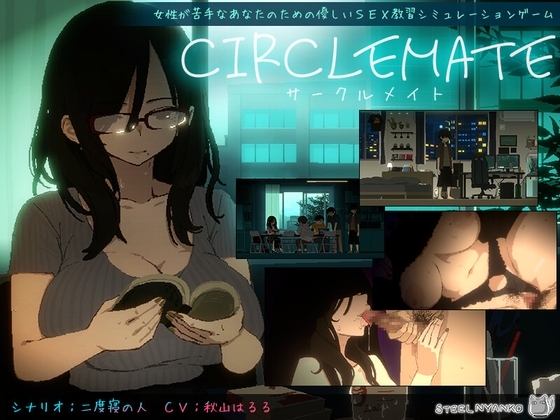
Adult video that bypasses the commercial AV industry’s production, distribution, and labelling machinery. The Japanese name is doujin video, and the category covers everything from one-person live-action shoots to small-circle 3D CG productions, from MMD dance-format adult work to VRoid-based virtual-performer animation. Across thirty years the category has consolidated as one of the principal modes of Japanese adult video production outside the formal industry.
Overview
Doujin video (Japanese: 同人動画, doujin douga) is the term for adult video produced and distributed without passing through the commercial AV industry’s production-and-distribution channel. The category groups three principal classes of work: live-action self-shooting, drawn-or-rendered animation in 3D CG, and the more recent classes of MMD-based animation, Live2D-and-VRoid avatar work, and circle-produced cel-style animation. The category sits alongside doujinshi and doujin games as one of the principal adult-content classes of the wider doujin economy.
Three structural features distinguish doujin video from commercial adult video. First, production sits with an individual creator or a small circle (a dozen people or fewer), without studio, agency, or production company involvement. Second, distribution operates through digital download platforms (DLsite, FANZA Doujin, Ci-en, BOOTH) and convention-circuit physical sales (Comiket and the long tail of specialist events), rather than through industry distribution channels. Third, the category’s editorial freedom is broader, since the formal industry self-regulation bodies do not operate over it; the platform-level guidelines and the criminal-law constraints (Article 175 obscenity and the Child Pornography Act) apply equally to both.
The 2010s shift to digital distribution made the category economically viable as a continuous publishing form. Where 1990s and early-2000s doujin video was a marginal segment, the DLsite-led platform infrastructure of the 2010s onward allowed individual creators to support themselves on the back of a stable subscriber base, and the category is now a continuous mid-scale economic sector within the wider Japanese adult-content market.
Etymology
The label doujin video is constructed by analogy with doujinshi and doujin games, on the model “doujin-[medium type]”. The term consolidated as a platform category label in the late 2000s; the synonymous labels doujin AV, doujin eizou (doujin imagery), and kojin satsuei (personal-shooting) all operate in adjacent registers, with the last specifically signifying the live-action subset.
Kojin satsuei is the industry-internal label for the live-action live-action subset of doujin video, where the production is conducted by an individual or couple in a domestic or quasi-domestic setting. It is conceptually distinct from hamedori, which refers to a shooting technique rather than a production-organisational class. The two overlap considerably in practice but are formally distinct.
MMD refers to MikuMikuDance, the freeware 3D animation tool released in 2008 by Yuu Higuchi. The tool was originally developed for animating the Vocaloid Hatsune Miku, but its broader use as a general-purpose 3D animation environment made it the principal entry point for hobbyist 3D animation in the Japanese amateur scene. The adult use of the tool produced one of the recognised subgenres of doujin video.
History
1990s–early 2000s: VHS and DVD-R
The earliest doujin video phase was the 1990s VHS and DVD-R sub-market. Consumer camcorder availability, DV-format home shooting, and PC-based video editing software made domestic production of live-action material technically possible from the late 1990s; the resulting works were burned to physical media and circulated at conventions and through specialist mail-order. Production quality was substantially below the commercial industry standard, and distribution was constrained by the physical-media format.
Late 2000s: download distribution
The mid-to-late 2000s shift to consumer broadband, the increase in PC video processing capacity, and the adoption of H.264 video compression brought download distribution within technical reach. DLsite consolidated a doujin video category and began the period of sustained growth in titles and revenue. The same period saw the price of 3D animation tools (Lightwave, 3ds Max, Blender, and the later free MMD) fall within hobbyist range, and the 3D CG animation subcategory took shape.
2010s: diversification and scale-up
Through the 2010s, doujin video diversified across its principal subcategories and scaled in aggregate market terms. Consumer-grade full HD cameras and later smartphone cameras raised the live-action production quality to a level comparable with mid-tier commercial AV. The 3D CG animation subcategory matured into a separately recognised genre, with Source Filmmaker (SFM), Blender, and MMD all in widespread use; the subgenre’s distinctive editorial reach into fantasy, SF, and the morphological registers that live action cannot stage gave the category a stable market position that does not overlap with commercial AV.
2020s: VTuber, Live2D, and AI
The 2020s saw the consolidation of Live2D-and-VRoid avatar work as a recognised subcategory, on the back of the wider VTuber expansion. The adult-content variants of Live2D and VRoid production operate as a separate sub-segment from the principal mainstream VTuber economy, which generally excludes adult-content output as a matter of agency policy.
Parallel to this, the increasing availability of AI image and video generation tools (Stable Diffusion, the various SD-WebUI configurations) has produced an AI-generated subcategory whose copyright and ethical position remains contested. The platform-level handling of AI-generated material is still in flux.
Principal subcategories
Live-action self-shooting
Live-action self-shooting is one of the two largest doujin video subcategories. It is defined by individual-or-couple production, by domestic and similarly intimate-scale shooting locations (residences, hotels, outdoor settings), and by the aesthetic of amateur intimacy. The subcategory is closer to the production logic of the OnlyFans and myfans subscriber-platform ecosystem than to commercial AV; many live-action doujin video creators operate across both classes of distribution simultaneously.
Representative sub-types include the hamedori-style POV shoot, the couple-submission category, cosplay live-action work, and the specialised-kink targeting category.
3D CG animation
The 3D CG animation subcategory uses Blender, 3ds Max, Maya, Unity, and Unreal Engine for the production of CG animation work. Production volumes per work are necessarily limited compared with commercial 3D animation, but the medium’s freedom from live-action constraints gives the subcategory a particular market position. Recurring strands include derivative work using mainstream game characters and original CG animation in fantasy and SF settings.
MMD work
The MMD subcategory uses MikuMikuDance and the surrounding Vocaloid character ecosystem for 3D animation. The MMD community is, in its principal form, a non-adult dance-video and PV culture; adult work operates as a derivative sub-segment governed by the redistribution licences of the individual character models, which often explicitly prohibit adult use. The interaction between the community’s licence norms and the adult sub-segment is a continuing source of internal tension within the wider MMD community.
Live2D and VRoid
Live2D and VRoid produce adult video using 2D-illustration-driven and 3D-avatar-driven animation systems. The subcategory consolidated in the 2020s on the back of the wider VTuber-adjacent culture. The mainstream commercial VTuber sector excludes adult work as a contractual matter; the doujin Live2D and VRoid category operates as the parallel adult-content stream.
Self-produced animation
Self-produced cel-style animation work, drawing on traditional and digital cel-animation techniques in a small-circle production register. Production cost per work is the highest of the subcategories and total volume is correspondingly small, but the category includes works at production levels comparable with commercial animation.
Comparison with commercial adult video
Production organisation
Commercial Japanese adult video operates through a layered production system: labels, production companies, studios, contracted exclusive and project performers, and a substantial production crew. Doujin video operates with an individual or small-circle organisational structure throughout. Casting, contracting, shooting, editing, and distribution all follow distinct working logics in the two cases.
Editorial scope
Doujin video sits outside the formal AV industry self-regulation regime, and its editorial reach is correspondingly broader. The applicable constraints are the criminal statutes (Article 175 obscenity and the Child Pornography Act) and the individual platform’s content guidelines (FANZA, DLsite, Ci-en, BOOTH). The platform-level guidelines vary in their permissiveness.
Performer status
Performers in live-action doujin video are typically not bound by the contracted exclusive and project performer status that structures the commercial industry. The 2022 AV Industry Protection Act was drafted around the commercial industry’s working practices, and its application to the small-circle doujin video segment has been a continuing point of regulatory debate.
Distribution
Commercial distribution operates through specialist labels, retail outlets, and platform partnerships; doujin video distribution operates through DLsite, FANZA, Ci-en, the convention circuit, and a long tail of specialist consignment outlets. The two channels overlap in some platforms (FANZA in particular handles both commercial and doujin material) but operate as separate sub-markets in terms of unit scale, audience continuity, and creator-distribution interface.
Cultural reception
Creator-economy integration
Doujin video’s expansion is continuous with the wider creator-economy expansion of the late 2010s onward. Patreon, pixiv FANBOX, Ci-en, myfans, and OnlyFans all operate as continuous-subscription platforms that support doujin video creators on the back of stable subscriber bases. The live-action live-action subset in particular has consolidated a hybrid business model combining subscription, per-work sales, and social-media promotion.
International parallels
The English-language equivalents to doujin video are indie porn, amateur porn, and self-shot porn. The user-submitted segments of Pornhub and similar platforms, and the creator-direct distribution of OnlyFans and Fansly, are the working parallels. The Japanese doujin video category and the English-language indie porn segment developed in parallel from the same underlying technical substrate (consumer cameras, video editing software, online distribution) and share considerable working similarity, though the cultural and market structures differ.
See also
Updated
References
- 『Eromanga Studies』 East Press (2006)
- 『The World of Hentai: A Cultural History of Sexual Anime』 Routledge (2019)
- 『Adult Manga: Culture and Power in Contemporary Japanese Society』 Curzon Press (2000)
- 『DLsite Doujin Video Category Sales Trends』 DLsite official blog (2020)
Also known as
- doujin AV
- amateur doujin film
- independent doujin video
- kojin-satsuei video
- ja: 同人動画
Related
- Illustration collection (doujin art book)
- CG Collection (CG-shu)
- Doujin game (Japanese self-published video games)
- Doujin audio (Japanese independent audio works)
- Haramase-mono (impregnation genre)
- Training/development eroge
- Kichiku-kei (brutal-abuse genre)
- Coupling (CP)
- Company-Employee AV (Shain-mono)
- Namamono (Real-Person Fanwork)
- Action Eroge
- Girlfriend Roleplay Audio (J-ASMR)