Doujin audio (Japanese independent audio works)
✎ 本文編集 (admin) 🖼 画像編集 (admin)“Doujin audio (Japanese independent audio works)” works on DLsite





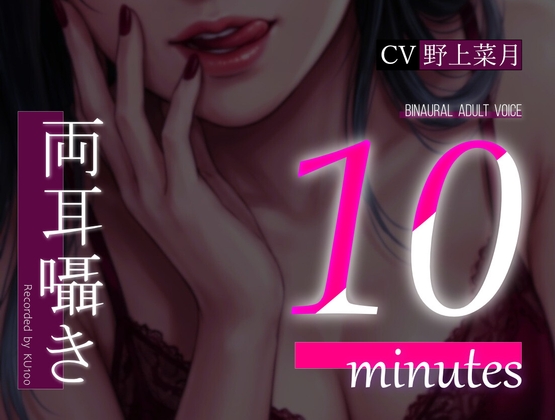
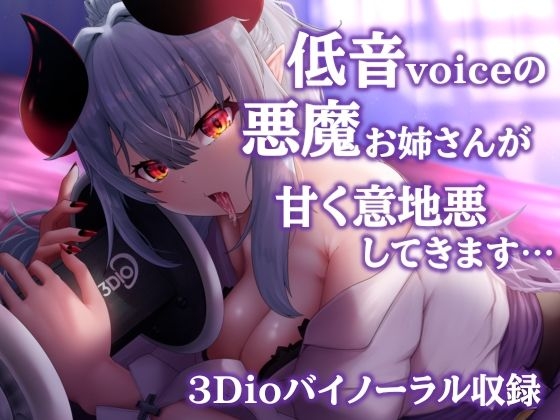

CD-Rs of audio drama that once sat on convention tables for a couple of thousand yen now sit at the top of DLsite’s monthly bestseller charts. A voice actress speaks alone, a writer constructs a situation, a sound engineer adds the cloth-rustling and breathing layer, a mastering engineer balances the stereo image. The form that carries intimacy and explicit content without a single image has grown into a substantial independent sector of the Japanese subcultural economy.
Overview
Doujin audio (Japanese: 同人音声, doujin onsei) is the Japanese term for audio works produced and distributed independently of commercial publishing. In the narrow sense it covers situational voice (often abbreviated shichu-voice), voice drama, and binaural-recorded erotic ASMR; in the wider sense it includes image songs, audio readings, and other non-narrative audio forms. The category, alongside doujinshi and doujin games, is one of the three principal classes of the wider doujin economy.
The distribution backbone is electronic: DLsite (the doujin audio category), FANZA, Voice Garage, and Ci-en handle the substantial majority of sales; convention-floor sales (Comiket, the voice-specific sub-events) provide a secondary channel; specialist consignment outlets (BOOTH, Toranoana, Melonbooks) provide a third. Since the late 2010s, electronic distribution has been the dominant mode, with physical-media sales reduced to a supplementary position.
Production is structured around division of labour between the voice actress, the scriptwriter, the sound-effect engineer, the mastering engineer, and the cover-illustration artist. Continuous circle-based production is the standard form. A substantial fraction of commercial-mainstream voice actresses participate under separate pseudonyms, in a working pattern that is widely acknowledged though not formally documented; the doujin audio sector has developed in close interaction with the voice-talent economy more broadly.
Etymology
Doujin audio is the analogical formation “doujin-[medium]”, following the lineage of doujinshi and doujin games. The label consolidated in the 2000s as both a self-designation by circles and as the platform category name on the principal distribution sites. The synonymous terms onsei sakuhin (audio work), voice drama, and doujin voice operate in adjacent registers.
The English-language landscape for the form is unsettled. Doujin audio, Japanese audio drama, and R-18 audio all see use; the form’s nearest international parallel is the audio porn app market that emerged in the late 2010s, but the underlying production-and-distribution model is distinct enough that the loanword doujin audio has been retained in English-language fan discourse.
History
Early period (late 1990s to early 2000s)
The pre-history of doujin audio is in the small-scale doujin music and voice-drama-CD distribution of the 1990s convention scene. Recording and editing equipment was expensive, commercial voice actress participation was limited, and the resulting market was small. The 2000s shift to home-based DAW production (the digital audio workstation in domestic configurations), affordable condenser microphones, and CD-R-based distribution lowered the technical barrier substantially. Voice actress aspirants, sound-engineering hobbyists, and scenario writers in small-circle configurations began to produce works for the convention circuit.
Adult content was already part of the form at this point. Sexually explicit situational voice and voice drama were distributed under the prefectural youth-protection-ordinance and Article 175 obscenity constraints that governed the wider adult-publication category.
Situational voice (late 2000s)
The late 2000s saw the consolidation of situational voice as the central form of doujin audio. The form is a short voice-only sequence in which a voice actress performs a specific situation (confession, ear-whisper, sickbed visit, sleeping-together, argument, reconciliation) and addresses the listener as the implied partner. Standard recording was stereo, with sound-effect and background-music overlay; runtime ran 10-30 minutes for short works and around an hour for longer ones; pricing at 500-1,500 yen anchored the volume entry tier.
The form developed in parallel for male-target and female-target audiences, with the female-target subset accumulating as “otome-voice” and the male-target subset as the principal “shichu-voice” track. Each sub-stream has its own working conventions and audience.
Download distribution era (early 2010s)
The 2010s shift to DLsite-led download distribution was sharp. The convention-circuit constraints were removed, and continuous small-circle production became economically supportable. DLsite consolidated the doujin audio category as a separate classification in the early 2010s, and monthly distribution volume rose continuously through the decade. The simultaneous arrival of consumer-priced binaural microphones (3Dio Free Space, Roland CS-10EM) and the wider visibility of professional binaural rigs (the Neumann KU 100 dummy head) raised the technical ceiling substantially.
Binaural and erotic ASMR (late 2010s)
Around 2015, binaural-recorded erotic ASMR consolidated as the central genre of the doujin audio market. The pairing of ear-whispered narration, breath, and contact-mimicking effects (ear-licking, ear-cleaning, kissing-microphone) with binaural-spatial-audio capture established a new listening configuration premised on headphone or in-ear monitoring. The DLsite monthly ranking has been substantially dominated by binaural-erotic-ASMR-line works since the late 2010s, with situational voice continuing as a parallel but smaller segment.
Market maturation (2020s)
The COVID-19 pandemic and the resulting increase in domestic listening accelerated the continuing growth of doujin audio through 2020 and 2021. Monthly new-release volumes run into the hundreds of titles, and a stable subscriber-class audience has consolidated around specific voice actresses, circles, and series. The Ci-en and pixiv FANBOX creator-support platforms function as parallel revenue channels, supporting continuous content production through ongoing subscriber engagement alongside per-work sales.
Production
Workflow and division of labour
Standard doujin audio production runs through planning and situation design, scriptwriting, voice-actress casting and recording, sound-effect work and source-material selection, editing, mixing, and mastering, jacket and sample-promo production, and platform-side upload-and-listing. Circle leads typically combine the producer-and-director roles and contract out the voice-actress, illustration, and mastering work. Voice actresses commonly record at home and submit material remotely, allowing circle-and-voice-actress collaboration without co-location.
Recording modes
Three recording configurations are in current use. Stereo uses a single directional condenser microphone and is the standard for situational voice. Binaural uses a dummy head (Neumann KU 100, 3Dio Free Space Pro) or an in-ear bilateral configuration (Roland CS-10EM) for spatial-audio capture; the head-related transfer function is built physically into the recording. Mono uses a single microphone and is reserved for early or low-budget works. Platform-side classification displays each mode separately.
Effects and editing
Sound effects draw on free libraries, commercial sound-effect collections, and original-capture material. The principal effect classes are intimate-presence (cloth-rustling, bedding-movement, kissing-microphone, ear-licking), situational (door-opening, footsteps, ambient room tone, ringtone), and embodied (heartbeat, breath, pulse). Editing applies echo processing, near-microphone breath emphasis, panning, compression, noise reduction, and mastering. Specialist mastering engineers operate as external contractors to the circles.
Sub-forms and adjacent concepts
Male-target and female-target distinction
Doujin audio developed in parallel for male and female target audiences. The male-target subset is labelled shichu-voice, doujin onsei, or ero ASMR; the female-target subset is labelled otome-muke, otome-voice, or drama CD (otome-muke). DLsite operates separate doujin audio categories for the two streams, and the genre conventions within each have diverged substantially. The male-target line emphasises binaural ASMR, ear-licking, and onasapo configurations; the female-target line emphasises romance, story, and relationship dynamics in voice-drama configurations.
Situational voice
Situational voice (shichu-voice) reconstructs a specified scenario in voice-acted form, with the listener placed as the second-person addressee. The second-person address is the central rhetorical mark of the form. Since the binaural-ASMR expansion of the late 2010s, the formal boundary between situational voice and erotic ASMR has substantially blurred, and the umbrella term doujin audio now serves as the working category covering both.
Voice drama
Voice drama uses multiple voice actresses in conversation-and-narrative configurations. The form is the doujin counterpart to commercial drama CDs and stages scripted long-form narrative (an hour to several hours) across multiple performers. The female-target voice-drama subset, including otome-muke drama CDs and situational CDs, operates as a separate sub-market.
Binaural and erotic ASMR
Erotic ASMR, the binaural-led adult-audio segment, is the largest sub-genre of doujin audio. The form centres on ear-whispered intimacy, contact-mimicking effects, and headphone-or-in-ear listening as the premise. The standalone article on erotic ASMR treats the form in detail.
Onasapo
A sub-genre of erotic ASMR and situational voice in which the listener’s masturbation is the explicit organising function of the work. Second-person address and instruction are the formal features. The form sits alongside the nukige game category as the audio expression of the same arousal-and-instruction structure.
Comparison with English-language audio porn
The English-language adult-audio segment developed independently from the late 2010s as an app-based subscription market (Dipsea, founded 2018; Quinn, founded 2019; Bloom Stories; and similar). Japanese doujin audio is structured around per-work sales by individual circles within the doujin-distribution continuum; English-language audio porn is structured around tech-startup app subscription. The principal audience composition also differs: Japanese doujin audio leans male, English-language audio porn leans female. The technical core (binaural recording, voice-actress performance, sound-effect production) is closely similar between the two streams, and the two are best understood as parallel independent developments from a common technical substrate.
Cultural reception
Voice talent economy
The maturation of doujin audio has run in parallel with the diversification of voice-actress career structures. Commercial anime and game voicing remains the principal income source for the upper tier, with doujin audio and erotic ASMR participation as a recognised secondary income channel. Participation under separate pseudonyms remains the standard practice. Specific voice actresses and circles maintain stable continuous audiences, and the doujin audio sector now operates as a recognised continuous segment within the wider voice-talent economy.
Doujin economy
Doujin audio sits alongside doujinshi and doujin games as one of the three principal classes of the wider doujin economy. The continuing scholarly literature on content industry structure treats the three classes as a single integrated case, with doujin audio constituting the most recent and the most exclusively electronic of the three.
Copyright and legal context
Derivative doujin audio works using established commercial characters operate under the tacit-permission economy that governs the wider derivative segment. Adult content is subject to Article 175 obscenity and the prefectural youth-protection-ordinance constraints. Platform-side age verification and self-regulation operate as the working compliance regime. Obscenity-classification of audio-only material relies on supplementary inspection of jacket art, sample-text wording, and title.
See also
Updated
References
- 『Eromanga Studies』 East Press (2006)
- 『Binaural Recording: Theory and Practice』 Focal Press (2012)
- 『The Rise of Audio Erotica』 The New York Times (2019)
- 『Adult Manga: Culture and Power in Contemporary Japanese Society』 Curzon Press (2000)
Also known as
- doujin voice
- independent voice drama
- Japanese audio drama (doujin)
- R-18 audio
- ja: 同人音声
Related
- Ear-Cleaning Audio
- Close-Contact Audio
- Whisper Voice
- Ear-Licking Audio
- Illustration collection (doujin art book)
- CG Collection (CG-shu)
- Doujin video (independent adult video)
- Doujin game (Japanese self-published video games)
- Binaural audio (recording technique)
- Ero ASMR
- Hentai ASMR
- Haramase-mono (impregnation genre)