Ero ASMR
✎ 本文編集 (admin) 🖼 画像編集 (admin)“Ero ASMR” works on DLsite



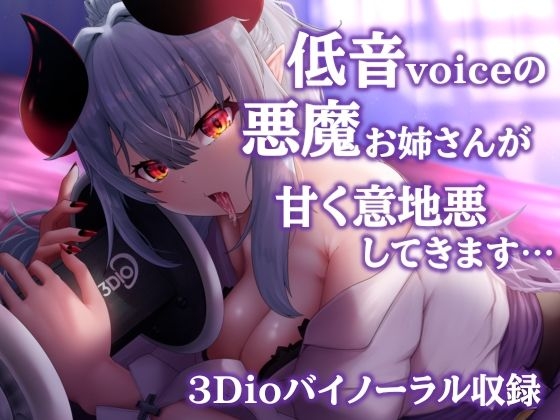




The voice arrives at the right ear, slips behind the head, and exits at the left. The visual is closed off, the framing is total. Ear ASMR went mainstream as a relaxation aid in the mid-2010s; the adult version of the same techniques became, over the same period, one of the largest audio-only adult content categories in the world.
Overview
Ero ASMR (Japanese: エロ ASMR; English working translation: erotic ASMR, R-18 ASMR, binaural erotic audio) is the Japanese-language label for an adult audio genre that takes the binaural recording techniques and intimate voice-acting register of ASMR and applies them to consensual erotic content. The works are sold predominantly on DLsite Maniacs, with secondary distribution through FANZA’s audio category, and form one of the largest adult audio markets in the world.
Three structural features define the form. First, the works are fictional adult content depicting consensual interactions between fictional adult characters; the structure of the genre is built on a frame of mutual interest and shared participation. Second, the production is built on binaural recording — paired microphones at human-head spacing, designed to be heard through headphones, with the resulting spatial illusion of the voice’s position relative to the listener. Third, the voice-actor work is at the centre of the production: whisper, breath control, and the close-microphone register are the working tools of the genre.
The market consolidated through the late 2010s. By 2020 the audio category on DLsite had become a significant fraction of the platform’s adult-content sales, and by 2023 it was a stable mainstay of the doujin economy alongside the older doujinshi and doujin-game sectors. A generation of voice actors, often working under separate stage names from their commercial-anime work, has built sustained careers in the form.
Etymology
ASMR (autonomous sensory meridian response) is the term coined in 2010 by the American ASMR-community organiser Jennifer Allen for a sensory phenomenon — a tingling, calming response to certain auditory and visual stimuli — that did not previously have a clinical or community name. The term was deliberately chosen to be neutral and pseudo-scientific in register, and it has held in international usage ever since. ASMR proper is non-sexual; the calming response and the sexual response are distinct in the sensory literature even where they share triggering inputs (whisper, close attention, gentle touch).
Ero ASMR prefixes the Japanese slang ero (erotic) to the existing English term. The compound first circulated on Japanese fan and creator forums around 2014–2015 as creators began adapting ASMR’s recording techniques and voice register to the existing doujin audio market. The term consolidated on DLsite as a content tag and is now the standard label for the genre. R-18 ASMR (after the standard Japanese age restriction) and binaural voice are common alternates.
In English-language usage the parallel genre is generally referred to as audio porn, erotic audio, or NSFW ASMR. The English-language audio-porn market emerged from a different commercial route — subscription-app platforms aimed primarily at women listeners — and the two industries operate in parallel rather than as direct counterparts.
Lineage
Doujin shichuu voice (2000s)
Japanese doujin audio production has its own history independent of the ASMR moment. Shichuē-shon boisu (situation voice, often shortened to shichu-bo) — short audio works in which a voice actor performs a particular interpersonal scenario, from a confession to a bedside conversation — circulated on early DLsite and at doujin events from the early 2000s. Adult versions of the form were part of the catalogue from the start. The recording was almost always conventional stereo, the production was small-scale, and the works were a relatively niche corner of the doujin economy.
Binaural microphones reach the doujin price point (early 2010s)
Through the early 2010s a generation of consumer-and-prosumer binaural microphones reached the doujin-creator price point. The German-engineering Neumann KU 100 had been a high-end studio standard since the 1990s but at a price out of reach of small-press production; the 3Dio Free Space (a US-made dummy-head with a far lower price), the Roland CS-10EM (an in-ear binaural pair), and similar units made the recording technique commercially feasible for creators working at doujin scale.
The English-language non-erotic ASMR boom on YouTube (2010 onward, post-Allen’s coinage) crystallised the techniques and the voice-acting register that the new microphones could capture. By 2013–2015, Japanese creators were beginning to apply both technique and register to existing erotic doujin formats.
Genre formation (2015–2019)
Through 2015 to 2019 the ero-ASMR category took on a recognisable identity on DLsite Maniacs. Tags consolidated, a working set of conventional scenarios developed, and a generation of voice actors (often using pseudonyms) built sustained presences in the market. By 2017–2019, ASMR-tagged adult audio was driving growth in DLsite’s audio category overall.
Maturity (2020s)
The COVID-19 period, with its sudden expansion of at-home listening and content consumption, accelerated the category’s growth. By the early 2020s ero ASMR was a mainstream component of DLsite’s revenue, a stable employer of voice-acting talent, and the subject of fan magazines, ranking sites, and dedicated review communities. The form has continued to develop sub-specialisations through the 2020s.
Production technique
Binaural recording
The production core of ero ASMR is binaural recording — two microphones positioned at the spacing and orientation of human ears, capturing the spatial cues that the brain uses to localise sound. Two methods predominate. Dummy-head recording uses a head-shaped microphone fixture (the Neumann KU 100, the 3Dio Free Space and Free Space Pro) with the microphones at the artificial head’s ear positions. In-ear binaural recording places miniature microphones in the actual ears of the voice actor, capturing the sound from the position of the actor’s head as they perform.
The recording is intended for headphone playback. Speaker reproduction loses most of the spatial illusion, because the head-related transfer function the recording captures requires the listener’s own head to be receiving the sound from the headphone driver and not from a room-distance source.
Sound design
A finished ero-ASMR work is rarely raw recording alone. Foley work for clothing, bedding, environmental sound; close-mic recording of breath and lip work; sound-effect overlays for kissing, ear-licking, and contact sounds; reverb and spatialisation to place the voice in a notional environment — all are part of the standard production toolkit. The contact sounds are often recorded separately from the voice and mixed in afterward, sometimes using non-anatomical sound sources (fruit, wet cloth) for the texture.
Equipment
The standard kit includes a binaural microphone (Neumann KU 100 at the high end, 3Dio at the doujin standard, Roland CS-10EM at the entry level), close-mic options (Shure SM7B, Neumann TLM 103, Audio-Technica AT4040), a quiet recording environment, and digital editing software (Pro Tools, Adobe Audition, Reaper). The capital cost of entry has fallen substantially through the 2010s and 2020s.
Typical structure
A representative ero-ASMR work tends to follow a recognisable structural pattern.
A scenario opening establishes the relationship and setting: girlfriend, childhood friend, senpai, hitozuma, nurse, kōhai, all standard archetypes. The opening minutes are addressed conversation, often in a frame of returning home or being met after work.
The intimacy build uses ear-proximity whisper, breath, the suggestion of physical closeness through binaural placement of the voice. Distance is the audio variable; what would be a camera move in video work is a microphone-and-voice move here.
The contact sequence introduces the contact sound effects — kiss sounds, ear-licking, the sound of bodies in contact. This is the sequence that distinguishes ero ASMR from non-erotic ASMR.
The intimate scene contains the explicit content. Without the visual register, the work depends on the spoken script, the performer’s voice acting, sound effect design, and the listener’s imagination to convey the scene.
The afterward section returns to conversation, embrace, sleep, and the gentler register that frames the explicit content within an overall arc of intimacy. The afterward is structurally as important as the explicit scene; the genre is not built around isolated peaks but around the framing of intimacy across a complete listening experience.
Total runtimes range from 30 minutes for short works to over two hours for full-length productions, with prices stratifying along the same axis.
Sub-specialisation
The ero-ASMR catalogue has stratified across kink categories, character archetypes, and listener orientations. Mimi-name (ear-licking) specialists, soine (sleeping-together) specialists, bashfulness and shyness specialists, and a long tail of more specialised registers all maintain their own sustained sub-markets. Character archetypes — one-san (older sister), hitozuma, yandere, chijo — supply the role-types that the scenario openings draw on. Onasapo (masturbation-instruction works, see Onasapo) is a clearly distinguished neighbouring genre with its own production conventions.
The market is segmented by listener orientation as well: a substantial parallel market for women listeners has developed over the late 2010s and 2020s, with male voice actors performing in the equivalent scenarios.
International parallel: audio porn
The English-language equivalent market — usually called audio porn or erotic audio — emerged through the late 2010s through subscription apps including Dipsea (founded 2018), Quinn (2019), and Bloom Stories. The English-language market grew with a primary listener orientation toward women and a primary distribution model of subscription rather than per-piece purchase. The Japanese ero-ASMR market grew through doujin per-piece sales toward a primary listener orientation toward men. The two markets share their technical core (binaural recording, voice acting, intimate audio register) but reached the same technical position from different commercial directions.
The parallel evolution is one of the cleaner cases in contemporary adult media of two cultural ecosystems converging on the same production techniques from different starting points. As the platforms continue to develop, the two markets have begun to overlap (translated works, English-language voice actors performing Japanese-style scenarios, Japanese works with English subtitles or English versions).
Cultural reading
Ero ASMR is one of the more interesting recent cases of a form whose distinctive proposition is the listener’s active imagination as the operating partner of the work. Without the visual frame, much of what the scene contains has to be filled in by the listener; the audio supplies a strong scaffold and a continuous sensory presence, but the imagery, the embodiment, the particularity of the scenario remain the listener’s contribution. The form thus inherits, in concentrated form, the reading conventions of kannō shōsetsu (the Japanese erotic-novel tradition) and adapts them to the audio-immersion register of binaural ASMR.
The voice-acting profession’s relation to the form is its own story. The capacity of a voice actor to sustain a binaural performance — to manage breath, distance, and emotional register continuously across forty-five minutes — is a recognised skill set, distinct from the older anime-voice-acting register. Performers who excel in the form often become the centre of a long-running fan base, and the relationship between performer and listener takes on some of the structural features of a sustained subscription-based artistic relationship.
Related Terms
Updated
References
- 『More Than a Feeling: Autonomous Sensory Meridian Response (ASMR)』 PeerJ (2015)
- 『An fMRI investigation of the neural correlates underlying ASMR』 BioImpacts (2018)
- 『Binaural Recording: Theory and Practice』 Focal Press (2012)
- 『The rise of audio erotica』 The New York Times (2019) — On Dipsea, Quinn, and the rise of English-language audio porn.
Also known as
- erotic ASMR
- R-18 ASMR
- binaural erotic audio
- audio porn (binaural)
- ja: エロ ASMR
- ja: 成人向け ASMR