Training/development eroge
✎ 本文編集 (admin) 🖼 画像編集 (admin)“Training/development eroge” works on DLsite


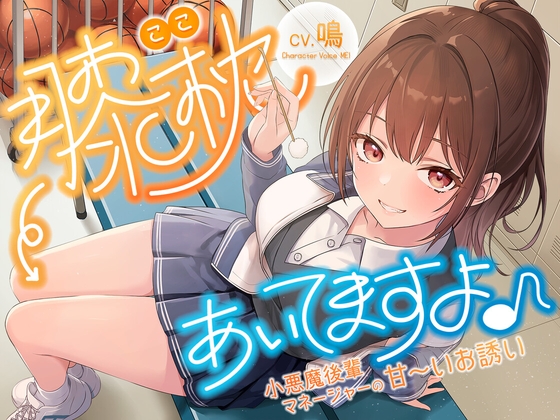
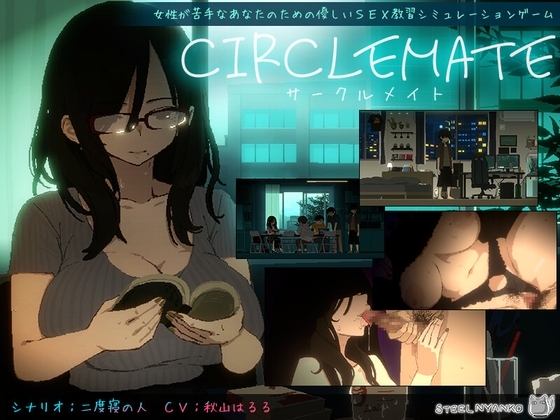
The calendar advances. Week by week the heroine’s parameters shift, affection rises, guilt falls. The accumulation of the player’s choices reshapes a character’s interior into a different contour over a long span of time. Training eroge is the adult-game form that makes that very process of change the core of play.
Overview
Training eroge (育成エロゲ, ikusei eroge) is the umbrella term for adult simulation games that change a character’s abilities, relationship, body, and feelings in stages as time (by week, month, or year) passes. In the commercial eroge field it has a tradition through the strategy parts of AliceSoft’s Rance series and the Princess Maker lineage, and in the doujin game field it developed independently as training-simulation and harem-management sub-genres.
The form rests on three elements: time progression (turn, week, month, year) as the basic design axis; player action choices (training menus, command input) that change character parameters in stages; and the accumulated parameter change as the condition for narrative progress and the unlocking of choices and sexual depiction. As a genre it is typed into character-raising, management-simulation, training-simulation (changing a character in a fixed direction such as obedience or corruption), and body-modification strands; these overlap but are sorted by a work’s principal subject. In commercial eroge, Elf’s Dōkyūsei (1992) and Kakyūsei (1996), AliceSoft’s Rance series and Daiakuji (2001), and Gainax’s Princess Maker (1991) are remembered as representative. In the doujin field the form continues to occupy the top of the DLsite and FANZA monthly rankings.
Etymology
Ikusei (“raising,” “fostering”) is a classical Japanese word. The use of “raising simulation” as a genre name in the Japanese game industry settled after Gainax’s Princess Maker (1991), which simulated raising a female protagonist (the player’s daughter) over ten years and formed the prototype for raising simulations generally. “Training eroge,” “raising sim,” and “training game” settled as industry terms across the late 1990s and 2000s. English uses training simulation, training game, raising sim, and princess maker game for the corresponding territory, but the Anglophone indie equivalents followed a different developmental path and are treated as a parallel field.
History
The genre’s emergence is located in Gainax’s 1991 Princess Maker, an all-ages title that simulated raising the player’s “daughter” over ten years and established the format for raising games generally; later entries in the series included variants with sexual content. In parallel, commercial eroge supplied time-progression systems continually, with Elf’s Dōkyūsei (1992) and Kakyūsei (1996) forming an important source for the later character-raising and training lineages.
In the late 1990s the “training type” developed as an independent sub-genre, with makers such as Black Lilith continuing to release work centred on staged character change, inheriting the basic raising structure while placing the direction of change (obedience, corruption) at the design core. In the 2000s, management and organisation simulations such as AliceSoft’s Daiakuji (2001) and Daibanchō (2003) formed their own sub-genre, sharing a structure that makes territory or organisation management the main axis, subordinate development a secondary axis, and ties management results to the unlocking of sexual depiction.
Through the 2010s, training and raising simulations flourished in the doujin game field as production tools (RPG Maker, WOLF RPG Editor, Tyrano Builder) let individual circles build full simulations. Works such as Teaching Feeling (2015, Ray-Kbys) recorded sales well over 30,000 copies and drove the market’s expansion. From the 2020s the “gradual change” structure spread to eromanga, narou-style adult novels, and doujin audio, becoming a standard staging device for adult expression beyond the game medium.
Typical structure
The basic structure is a time-management system integrating weekly, monthly, or yearly progression; character parameters (affection, obedience, corruption, skill, body type); player action choices (training, training, conversation, gifts, outings); and the unlocking of choices and events according to parameter values. The player allocates limited time resources (weekly action counts, money) while changing the character toward a target. The directions of change resolve roughly into obedience and affection gain, sexual opening, body modification, ability development, and relationship building (harem formation, marriage). The unlocking of sexual scenes is integrated with the raising process: when a parameter crosses a threshold, new scenes and choices open, and the player receives the accumulated effort as a “reward” in the depiction, a central device that draws long play sessions.
Sub-forms and adjacent concepts
The training type, changing a character toward obedience or corruption, is the genre’s representative sub-form; where raising eroge generally includes positive ability development, the training type carries an ethical implication in its direction of change. The two are conceptually overlapping neighbours, and both the position that treats the training type as a sub-genre of training eroge and the position that treats them as independent genres coexist in the field. Management and organisation simulations (Daiakuji, Daibanchō) are positioned as one strand of training eroge, while the Princess Maker lineage of long-term single-character raising forms its own category. Complex works that fold raising elements into adult RPG and action eroge frameworks also persist.
Cultural notes
Training eroge is designed to draw long play: a single clear can require 20 to 100 hours, and with multiple routes and collectibles the cumulative time runs into the hundreds. Because it changes a character’s feelings and behaviour in one direction, the genre, together with the training type, has been a recurring object of expression-ethics debate (“gradual change of consent,” “the agency of the changed character”) in subcultural studies and gender criticism. Anglophone training simulation and raising sim indie games developed their own path from the 2010s through subscription platforms such as Patreon, sharing a technical base with the Japanese form while differing in expressive style and character types, a parallel field of development.
Related terms
Updated
References
- 『The Critical Point of Bishoujo Games』 Hajou Genron (2004)
- 『The Mythology of Computer Games』 PLANETS (2016)
- 『Beautiful Fighting Girl』 University of Minnesota Press (2011)
Also known as
- raising sim (adult)
- training simulation eroge
- sex training game
- ja: 育成エロゲ
Related
- Action Eroge
- Erotic RPG
- Illustration collection (doujin art book)
- Isekai genre (Japanese fantasy/adult setting)
- Mahou-mono (Magic-Themed Genre)
- Fantasy setting (J-eroge and adult game genre)
- Haramase-mono (impregnation genre)
- Live-action eroge
- Women-oriented AV
- Pure-love genre (junai-kei)
- Kichiku-kei (brutal-abuse genre)
- Vampire erotica genre (J-adult media)