Isekai genre (Japanese fantasy/adult setting)
✎ 本文編集 (admin) 🖼 画像編集 (admin)“Isekai genre (Japanese fantasy/adult setting)” works on DLsite
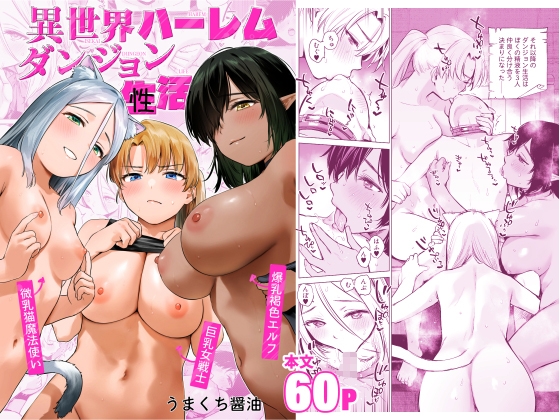
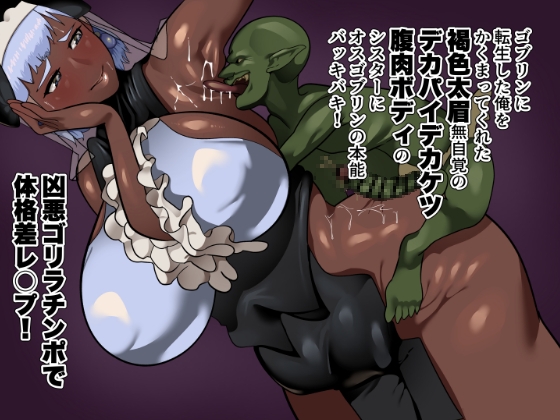
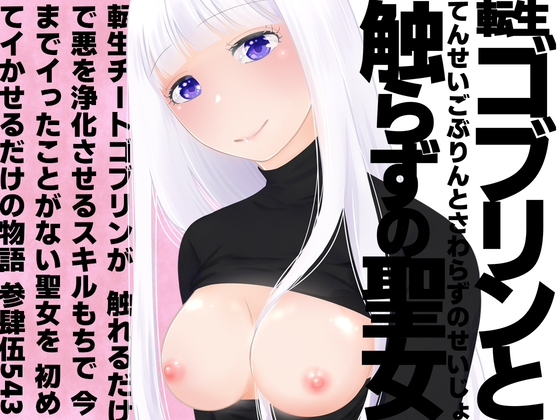
Hit by a truck, you wake lying in the grass of another world. To hand are a sword and magic, a status screen, and more than a decade of accumulated conventions counted from Mushoku Tensei. A modern Japanese man rising in a sword-and-magic world while forming relationships with several female characters became a fixed genre across books, manga, anime, and doujin games.
Overview
Isekai-mono (異世界もの, “otherworld works”) is the umbrella term for a genre sharing the base premise that a modern Japanese character is reincarnated (tensei) or transported (ten’i) into a magic-and-sword, fantasy, or game world. Starting from the works called narou-kei on “Shousetsuka ni Narou,” it grew into a national genre through commercial light novels, manga adaptation, and anime. In the adult context it developed as an independent category across eromanga, doujin games, eroge, and doujinshi.
The base structure has a modern protagonist moved by some trigger (traffic accident, death, summoning magic, immersion into a game world) into a fantasy or game world, with the new life and relationship-building after transfer as the narrative axis. In the adult context, derivative structures are added: relationship-building with multiple female characters running parallel to the protagonist’s rise (harem structure); game settings (status, skills, class, level) applied to sexual capacity; and the destination world’s ethics set looser than modern Japan’s to secure narrative justification for sexual contact. The genre is media-crossing, spanning books, manga, games, and audio, with a common base structure though per-medium design differs.
Etymology
Isekai (“different world,” “the other world”) has a long religious and literary lineage. The modern subcultural “isekai-mono” settled as an independent genre name in the 2010s after the continuous accumulation of “otherworld summoning” and “otherworld reincarnation” motifs in manga, anime, and games from the 1980s on. Narou-kei denotes works posted to the free web-novel site “Shousetsuka ni Narou” (opened 2004) or written under its influence; the term arose spontaneously, its coiner unidentified. English transliterates the form directly as isekai, which settled as Anglophone subcultural vocabulary from the late 2010s as the genre was widely received in Anglophone anime fandom.
History
The pre-history lies in 1980s and 1990s otherworld-summoning motifs in manga and anime, such as CLAMP’s Magic Knight Rayearth (1993-1996), which used movement from the modern world to another world as a narrative device. In games, fantasy RPGs (Dragon Quest, Final Fantasy, Wizardry) popularised the typical image of the sword-and-magic world and formed the ground for the later game-settings (status, skills, class, level) of narou-style isekai.
In 2004, “Shousetsuka ni Narou” opened, building a base for the accumulation of long serial novels anyone could post; through the early 2010s, works sharing the “otherworld reincarnation” and “otherworld transfer” base came to dominate the cumulative rankings and were recognised as an independent line. In October 2012, Rifujin na Magonote’s Mushoku Tensei began serialisation and held the site’s cumulative number-one position from October 2013 to February 2019, positioned as the pioneer and byword of the genre. In parallel, from 2012 Shufunotomo Infos established the Hero Bunko label, systematising the commercial book-publication of narou works; MF Books, HJ Novels, and TO Books followed. In the late 2010s, continuous anime adaptation of works such as Re:Zero (2016), KonoSuba (2016), That Time I Got Reincarnated as a Slime (2018), and The Rising of the Shield Hero (2019) made isekai a widely recognised national genre. In 2016, “Shousetsuka ni Narou” split its ranking system into “works that go to another world” and others, establishing operational treatment of the genre as independent.
From the late 2010s, the adult derivative of narou-style isekai became an independent category across eromanga, doujinshi, eroge, and doujin games, with both derivative-of-commercial and original-setting strands developing. In the doujin-game field, RPG Maker isekai adult eroge grew rapidly on DLsite in the late 2010s; low price (1,000 to 2,500 yen), large volume, and typical genre settings won a stable user base.
Typical structure
The typical reincarnation trigger resolves into traffic accident (colloquially “truck reincarnation”), death or illness, summoning magic, immersion into a game world (VR, accident), and possession of an otherworld body. The chief differentiator is the incorporation of game settings, status, skills, class, level, and magic ranks, taken from fantasy RPG convention to visualise and quantify ability, growth, and relationships. The protagonist’s ability is typed into innate “cheat” power, gradual growth, or the use of modern Japanese knowledge, and the “rising” type (raising social status from low to high) is a central drive. In the adult context, the harem structure of relationships with multiple female characters of varied species and standing is a fixed convention, and the destination world’s looser ethics, slavery, polygamy, social sanction of cross-species relations, secure narrative justification for sexual contact.
Sub-forms and adjacent concepts
The fantasy genre broadly denotes sword-and-magic settings; isekai is positioned as a sub-genre covering the part involving reincarnation or transfer from modern Japan, with pure fantasy lacking those elements sorted separately. The “villainess” sub-genre, in which a female protagonist reincarnates as the villainess of an otome game, is a women-targeted narou derivative that grew rapidly in the late 2010s. “Banishment” and “zamaa” types, in which a protagonist is unjustly expelled and succeeds in the new environment to show up those who expelled him, are typical emotional drives. The combination of TSF (gender transformation) with isekai forms an independent sub-genre, received in English as genderbender isekai.
Reception and cultural notes
Narou-style isekai established a long media-mix chain: web novel to light-novel book to manga to anime to game to merchandise, forming a standard industry flow from the 2010s. The Anglophone reception of isekai expanded through overseas streaming platforms, translated light novels, and fandom discussion, settling as international subcultural vocabulary alongside shonen, shojo, seinen, and moe. The typical structure (cheat protagonist, harem, modern-knowledge dominance) has continually drawn both criticism of thin narrative tension and familiarity and praise of its reliability and accessibility, an ongoing subject of otaku-culture criticism.
Related terms
Updated
References
- 『Otaku: Japan's Database Animals』 University of Minnesota Press (2009)
- 『Beautiful Fighting Girl』 University of Minnesota Press (2011)
- 『The Mythology of Computer Games』 PLANETS (2016)
Also known as
- isekai
- otherworld-setting hentai
- narou-kei
- reincarnation theme
- ja: 異世界もの
Related
- Mahou-mono (Magic-Themed Genre)
- Training/development eroge
- Pure-love genre (junai-kei)
- Kichiku-kei (brutal-abuse genre)
- Action Eroge
- Fantasy setting (J-eroge and adult game genre)
- Erotic RPG
- Priest/Nun Theme (Shisei-mono)
- Haramase-mono (impregnation genre)
- Live-action eroge
- Classroom-setting genre (J-adult fiction)
- Vampire erotica genre (J-adult media)