Eromanga
✎ 本文編集 (admin) 🖼 画像編集 (admin)“Eromanga” works on DLsite
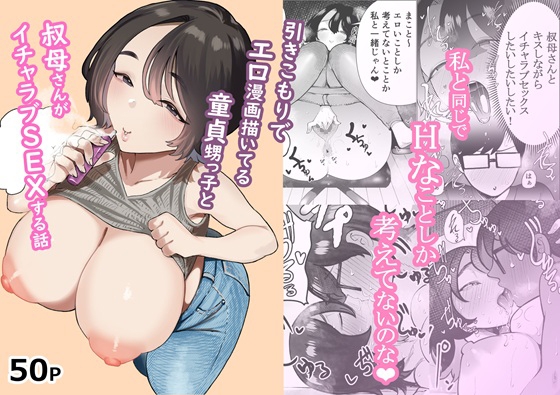
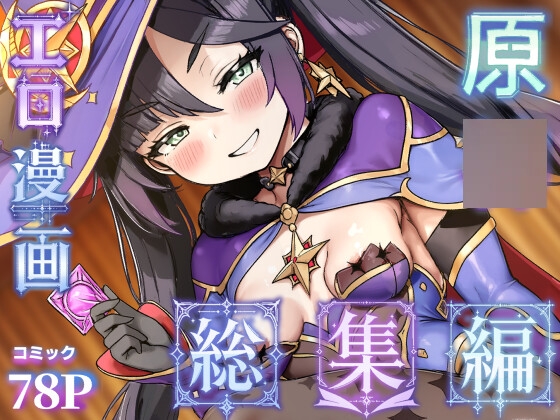
A single artist, drawing on a sheet of paper or a tablet, can stage scenes that no live-action camera could film. The Japanese name for the resulting industry is eromanga, and over fifty years it has built itself into one of the most prolific adult-publishing sectors in the world.
Overview
Eromanga (Japanese: エロ漫画, eromanga) is the Japanese category for adult-oriented manga. The form developed as a distinct publishing sector from the late 1970s and has functioned, in parallel with the commercial Japanese adult-video industry and the doujinshi economy, as one of the principal modes of Japanese adult media. Unlike live-action AV, eromanga can stage anything that can be drawn — anatomically improbable bodies, fantasy and science-fiction worlds, supernatural beings, action sequences impossible to film — and it has built a depth of subgenre and a refinement of conventions that reflect that freedom.
Four formal features mark the medium. First, the still image and the panel-grid produce the work’s temporal logic: time is paced by the reader’s eye, not by an external clock. Second, line work, panel composition, and screen tone do most of the figurative work that camera framing does in live-action media. Third, the medium’s freedom from physical-production constraints opens it to subject matter that live-action production cannot handle. Fourth, eromanga is published into the same regulatory frame as other Japanese adult print under Article 175 of the Penal Code, which means that genital depiction is mediated by a mosaic, white-out, or black-bar convention that is part of the medium’s visual grammar.
Postwar lineage
Earlier roots
The deeper background includes the Edo-period shunga tradition, late-Meiji satirical cartooning, and the prewar enjō manga of cartoonists such as Okamoto Ippei. The continuity to contemporary eromanga is more cultural than direct — these earlier traditions are not the immediate ancestors of the industry as it exists today — but they document the long history of Japanese drawn sexual content as a publishing form.
Kasutori magazines (1946–1955)
The chaos of the immediate postwar period saw the proliferation of kasutori magazines, low-quality pulp publications carrying sexual subject matter alongside low-budget illustration. Cartooning in these magazines was largely incidental rather than central; the period is best understood as a transitional moment between the prewar eros-print tradition and the eromanga form proper.
Sanryū-gekiga (late 1970s)
The eromanga industry as a stand-alone publishing sector dates from the late 1970s, with the sanryū-gekiga (“third-rate gekiga”) movement. The dedicated magazines Manga Daikairaku (founded 1976) and Manga Erogenika (founded 1978) anchored the form, and authors including Dirty Matsumoto, Toshikazu Murasaki, and Hiromi Hiraguchi consolidated the visual register that combined the realist line of gekiga with explicit subject matter. This was the founding period of the industry; later eromanga production traces its visual-grammar lineage from this point.
The early-1980s bishōjo boom
In the early 1980s a new strand emerged: dedicated magazines focused on young female protagonists in a stylised, cute-leaning visual register. Manga Burikko (Byakuya Shobō, founded 1982) and Lemon People (Amatoria, founded 1982) were the central early titles; artists including Hideo Azuma, Aki Uchiyama, and Kei Taniguchi were active in the form. The “bishōjo” label was the period’s industry usage; in contemporary terms, the depicted ages were often visibly under-age, and Japanese law has tightened considerably since. Under the 1999 Child Pornography Act, expanded in 2014, contemporary eromanga must clearly position its subjects as adult; the historical work of this period circulates today only in a regulatory context that has been redrawn around it.
Diversification of the commercial magazine line (1990s onward)
From the 1990s onward, eromanga magazine publishing diversified rapidly. Long-running titles such as COMIC LO, Comic Megastore, and Comic High established their own genre identities. The same period saw the consolidation of genre-tag publishing — magazines and labels organised around married-woman, netorare, chijo, or other thematic specialisations — which is the dominant organising logic of the contemporary industry.
Eromanga and the doujinshi economy
A defining structural feature of Japanese eromanga is its parallel-track relationship with the doujinshi economy. Comic Market (founded 1975) and the wider convention circuit allow non-commercial creators to bring fan-derivative and original adult work directly to readers without commercial-publisher intermediation. Commercial-magazine artists routinely produce doujinshi under different pen names; doujinshi creators are systematically recruited into commercial magazines; the careers of many of the medium’s most prominent authors run between the two sides simultaneously.
This parallel-track structure is not paralleled in other countries’ adult-comics traditions, and it is one of the principal explanations for both the depth of subgenre specialisation in Japanese eromanga and the medium’s continuous formal innovation. The annual circle count at Comic Market sits in the 30,000–40,000 range, and a substantial fraction of those circles produce adult content.
Subgenre depth
Eromanga subdivides into a much deeper genre tag system than live-action AV. Performer-attribute categories — married women, mature women, schoolgirls (always written as adult), office-lady — overlap with act categories (nakadashi, fellatio, bukkake) and kink categories (chijo, netorare, cosplay, tentacles, bakunyu) to produce a tag space many times larger than the live-action equivalent. The medium’s freedom from physical-shoot constraints means that whole categories that would be impossible or impractical to film — fantasy worlds, monster girls, tentacle work, anatomically exaggerated forms — function as established subgenres rather than as fringe variants.
Regulation
Article 175 and modesty rendering
Eromanga is published into the same regulatory frame as other Japanese sexual print: Article 175 of the Penal Code prohibits “obscene” distribution, and the working compromise is that direct genital depiction is rendered under a mosaic, white-out, or black-bar convention. Standards have shifted over time, and digital distribution platforms have their own working norms, but the modesty-rendering convention is part of the medium’s visual grammar.
Zoning
Eromanga is a zoning category in Japanese bookshops: titles are shelved in physically partitioned adult sections. From the 1995 revisions onward, prefectural youth-protection ordinances have enforced a designation regime under which titles can be flagged as “harmful materials” and barred from sale to minors.
Notable cases and political moments
A number of legal cases punctuate the postwar history: the 1991 Saori-jiken case (Sanwa Shuppan, Tokyo Metropolitan Ordinance violation), the 2002 Matsubunkan case (Article 175 prosecution of an eromanga single-volume) — both stand as early reference points. The 2010 proposed revision to the Tokyo Metropolitan Ordinance on Healthy Youth Development (the so-called “non-existent youth” amendment) drew sustained, large-scale opposition from publishers, creator organisations, and readers, and is one of the more politically conspicuous events in the recent history of Japanese adult print.
Outside Japan
In Anglophone reception, the form is conventionally called hentai manga — the hentai loanword carrying the specifically-adult sense in English fan vocabulary. Translation publishers including Eros Comix and Icarus Publishing have brought licensed translations of eromanga to the U.S. market since the 1990s, and online translation networks (legal and otherwise) have made significant portions of the corpus available to English-language readers.
Anglophone audiences treat Japanese eromanga as a culturally specific tradition, distinct from American adult comics and from Western-produced hentai-style work, with its own visual register, its own conventions, and its own canonical artists. The category fit is close enough to the Japanese original that the loanwords have held; the loanword eromanga itself is now in current English use in the same way as hentai manga.
Scholarship
The standard Japanese-language references are Yoshihiro Yonezawa’s Postwar Eromanga History (2010), a chronological account of the genre’s development, and Kaoru Nagayama’s Eromanga Studies (2006), a critical-and-historical treatment of its formal conventions. The two books have functioned as the founding works of an academic literature on Japanese adult comics that is now substantial. Sharon Kinsella’s Adult Manga (Curzon, 2000) introduced the doujinshi side of the form to Anglophone scholarship as part of a wider account of late-1990s manga subcultures, and Frederik Schodt’s Manga! Manga! (1983) had earlier provided general English-language readers with an introduction to the prehistory of the contemporary form.
See also
Updated
References
- 『エロマンガ・スタディーズ: 「快楽装置」としての漫画入門』 East Press (2006) — Standard Japanese-language reference on the history and conventions of eromanga.
- 『戦後エロマンガ史』 Seirinkogeisha (2010)
- 『Manga! Manga! The World of Japanese Comics』 Kodansha International (1983)
- 『Adult Manga: Culture and Power in Contemporary Japanese Society』 Curzon Press (2000)
Also known as
- hentai manga
- adult manga (Japanese)
- 18+ manga
- ja: エロ漫画
- ja: えろまんが