“Jukujo (mature woman)” works on DLsite




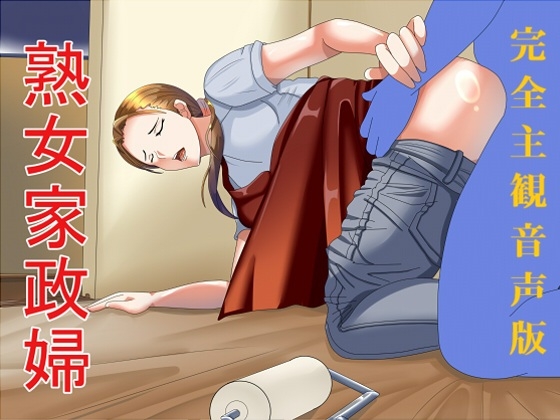



In the late 1980s, a particular set of Japanese adult-video labels began organising their output around an explicitly-not-young female-performer category. The category was named for the maturity itself rather than for any specific demographic-or-relational property. Three and a half decades later, the category persists as one of the more stable independent sub-genres within the Japanese adult-content vocabulary, occupying a position rather different from the Western MILF category that international machine-translation systems frequently treat as equivalent.
Jukujo (Japanese: 熟女, jukujo, literally “ripened woman”; English working translations: mature woman, jukujo loaned directly into English-language commentary on Japanese adult content) names women, conventionally from the late thirties onward, as a distinct character-archetype and genre category. The category is anchored in Japanese-vocabulary by age and maturity rather than by marital status or motherhood, distinguishing it conceptually from the married-woman category (anchored in marital status) and the Western MILF category (anchored in motherhood).
Distinction from the Western MILF
The Western MILF category emerged from the late-1990s American film American Pie (1999), where the acronym (Mom I’d Like to Fuck) was popularised through a memorable film-dialogue moment. The acronym subsequently became a standard tag in Western adult-content vocabulary and entered the Oxford English Dictionary in 2007. The key feature of MILF: motherhood is a definitional requirement of the category.
The Japanese jukujo developed in parallel through the late 1980s onward but is anchored in age and maturity rather than in motherhood. A childless mature woman is straightforwardly jukujo; an unmarried mature woman is straightforwardly jukujo; a widowed mature woman is straightforwardly jukujo. The category is broader than the Western MILF in conceptual scope: motherhood is one possible sub-property within the jukujo category but is not a defining feature of it.
International streaming-platform machine-translation systems frequently treat jukujo and MILF as equivalent for cross-language tag-mapping purposes. This equivalence is an approximation that loses real conceptual content: the underlying categories are similar but not co-extensive.
Age boundaries
The lower age boundary of the jukujo category is typically the late 30s, with the precise lower-cutoff varying by label and by period. Common cutoffs: 35-and-above, 38-and-above, 40-and-above. The upper boundary is open: 50-and-above (iso-ji, “fifty-something”) and 60-and-above (muso-ji) operate as recognised sub-categories within the broader jukujo umbrella.
The age-boundary variation reflects the genre’s organisation by maturity character rather than by sharp demographic boundary. The lower cutoff in particular has drifted somewhat downward across the broader period (1990s lower-cutoffs at 35-and-above have, in some 2010s-and-onward productions, drifted to 30-and-above or even 28-and-above as the category boundary has been re-negotiated).
Etymology
The compound jukujo (熟女) is built from juku (熟, “ripening, maturity, expertise”) and jo (女, “woman”). The juku element’s root meaning is the ripening of fruit, with the metaphorical extension to maturity of skill, experience, and personal development. Classical Chinese precedents for the compound shu nü exist but the contemporary Japanese-vocabulary jukujo, with its specific application to mature-female character-archetype, is a contemporary Japanese-language construction rather than a direct Classical Chinese borrowing.
Pre-jukujo Japanese-vocabulary for older women included toshima (年増, “older woman”, with somewhat dismissive register), chū-nen josei (中年女性, “middle-aged woman”, with neutral-clinical register), and chū-rō (中老, “middle-old”, neutral-formal). The jukujo compound’s positive-and-affirmative register represents a vocabulary-development specific to the late-twentieth-century Japanese adult-content marketplace.
History
Category formation in the AV industry
The explicit emergence of jukujo as an adult-video-industry character-archetype category occurred in the late 1980s. The market saturation of younger-female-focused production through the mid-1980s motivated the development of differentiated-age-focused production lines, with jukujo organising the older-female-focused production. The category’s establishment in industry vocabulary tracked the parallel development of the corresponding labels and product-lines.
1990s expansion
Through the 1990s, the category extended beyond AV production into adult magazines, adult novels, and bookstore-shelf classification. Doujinshi-fair-organisation classification adopted jukujo as an independent category alongside the broader category structure. By the late 1990s, jukujo was a stable feature of the broader Japanese adult-content classification vocabulary.
2000s market consolidation
Through the 2000s, demographic-shift dynamics (consumer-base ageing, broader preference-diversification) supported sustained market growth for the jukujo category. Long-established specialist labels including Madonna (マドンナ) and Center Village (センタービレッジ) anchored continued production, with industry trade publications and specialist guidebooks supporting the broader category visibility.
2010s-onward streaming
The 2010s shift to streaming-platform distribution simplified per-category access. Within the streaming distribution context, jukujo’s per-decade sub-categories (san-ju-ji / san-ji for the 30s, yon-ju-ji / yon-ji for the 40s, iso-ji for the 50s, muso-ji for the 60s) stabilised as independent micro-categories, each with its own production-volume and consumer-base.
Adjacent categories
Hitozuma (married woman)
The hitozuma category is anchored in marital status rather than age; the categorical-content overlap with jukujo is substantial but not co-extensive. The compound hitozuma-jukujo operates as a frequent cross-category tag, with productions targeting the intersection (married women in the older-age range). Independent jukujo (unmarried mature women), widowed jukujo, and other configurations occupy positions outside the hitozuma category.
Gibo (step-mother)
The gibo (step-mother) category is anchored in family-relational positioning. Many gibo productions sit within the broader jukujo umbrella by age, with the additional family-relational dimension driving the narrative configuration. Cross-tagging is standard practice in both commercial and doujinshi production.
The gibo category requires the standard adult-content-content limitation: the depictions are fictional and the family-relational dimension is treated as fictional-narrative content rather than as endorsement of real-world boundary-violation. Producers, authors, and platforms maintain this distinction explicitly.
Genre-studies analysis
Nagayama Kaoru’s Eromanga Studies (2006) treats the jukujo genre as a “counter-genre to youth-idealisation”. The Japanese adult-content marketplace’s dominant orientation toward young-female-focused production gives the jukujo category an inverted-or-counter-positioning: rather than competing within the dominant young-female framework, the category explicitly foregrounds the age, experience, and maturity that the dominant framework de-emphasises. The counter-positioning supports a stable sub-category market and contributes to the broader category-diversification of Japanese adult-content.
Sociological analysis treats the stable jukujo market as reflecting two parallel demographic dynamics: the ageing of the consumer base across the period, and the broader cultural-value shift toward acknowledging continued female-social-visibility across the adult lifespan. The relative weighting of these dynamics is contested in the literature.
Western comparison
The Western MILF category, anchored in motherhood, represents a different cultural-vocabulary trajectory. The 1999 American Pie film-mediated popularisation traces a substantially shorter timeline than the late-1980s Japanese formation of jukujo as an industry-vocabulary category. The two categories developed in substantial cultural-and-linguistic independence and have somewhat different definitional structures, even though contemporary international platforms frequently map them onto each other for cross-language search purposes.
The German reife Frau (“mature woman”), French femme mûre, and parallel European-language vocabulary categories show varying degrees of overlap with the Japanese jukujo and the American MILF. The international vocabulary for the broader category is, on examination, a network of partially-overlapping but not identical local-language categories rather than a single trans-linguistic category.
Ethical framing
Productions in the jukujo category present age-attribute-focused character archetypes. The treatment as a cultural-and-fictional category is the standard editorial frame: the category describes fictional-character-archetype content rather than endorsing or recommending age-based sexual objectification of real women. The distinction between fictional-character-archetype and real-person framing is consistently emphasised in responsible producer-and-platform practice, with the category operating as one of many character-archetype options within the broader adult-content content space.
Related Terms
- Hitozuma (married woman) — adjacent women-category
- Gibo (step-mother) — adjacent family-relational sub-category
- AV actress (av-joyu) — broader performer category
- Shirouto (amateur) — frequently combined performer category
- Bakunyu (very-large bust) — adjacent body-attribute category
- Pocchari (plump) — adjacent body-type category
- Matsuzaka Kimiko — landmark performer in the early jukujo category
Updated
References
- 『Nihon Kokugo Daijiten (2nd edition), 'jukujo' entry』 Shogakukan (2001)
- 『Eromanga Studies: An Introduction to Manga as a 'Pleasure Device'』 East Press (2006) — [Japanese original: エロマンガ・スタディーズ]
- 『Erotic Comics in Japan: An Introduction to Eromanga』 Amsterdam University Press (2021)
- 『MILF, n.』 Oxford English Dictionary (OED Online) https://www.oed.com/dictionary/milf_n
- 『Erotic and Sexual Cultures in Postwar Japan』 Brill (2018)
Also known as
- jukujo
- mature woman
- MILF (Western parallel)
- ja: 熟女
- ja: 熟年女性
- ja: 四十路
Related
- Ojiichan (Older-Man Genre)
- Bishoujo (Anime/Manga/Game Character Archetype)
- Hitozuma (married woman)
- Ecchi (Japanese Softcore Erotic Genre)
- Mind Break (Hentai Tag and Narrative Type)
- Time-Stop Series (Japanese AV Genre)
- Adult Anime (Broad-Sense Animated Erotica)
- Demon Girl Moe (Akuma Chara)
- Bakajoshi (Airhead Girl Archetype)
- Debu Otoko (Fat Bastard / Ugly Bastard)
- Dosukebe (Super-Lewd Character Type)
- Twins Moe (Futago Moe)