“Gibo (mother-in-law / stepmother kink)” works on DLsite
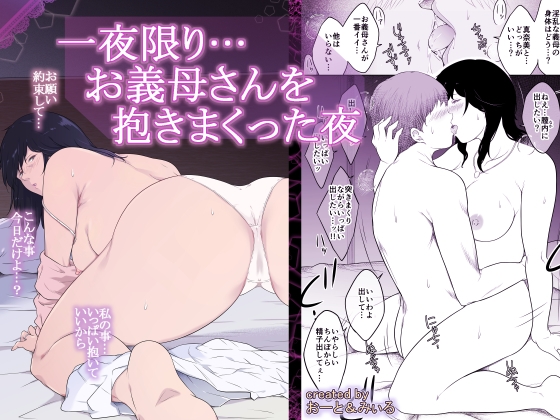
All characters in the depicted-fiction discussed here are fully-fictional adults of legal age, and there is no consanguineous-incest content in the genre as articulated. The category covers stepfamily-fictional narratives with non-blood-related adult characters in family-frame positions; the framework does not endorse, depict, or rely on consanguineous relations.
Gibo (Japanese: 義母, gibo; colloquial: お義母さん, okā-san; English: mother-in-law, stepmother; specific Western register: step-mom) is the Japanese-language kinship-term for a spouse’s mother or a non-blood-related stepmother formed through a parent’s remarriage. In everyday usage, the term functions as a neutral family-relations descriptor; in Japanese adult-fiction vocabulary, the term operates as a category-name for a sub-genre of older-woman (jukujo) fiction in which the female character occupies a non-blood-related family-frame position. The fictional category is structurally analogous to the Western step-mom fiction tradition, with distinctive Japanese narrative conventions.
Overview
The gibo term covers two legal-and-social formations: (1) mother-in-law (the spouse’s mother, the shūtome in traditional Japanese vocabulary); (2) stepmother (a parent’s-remarriage mother, the keibo in Sino-Japanese formal vocabulary). The two have different legal-and-social positions, but both occupy non-blood-related mother-frame positions, which is the cross-cutting feature that the adult-fiction category employs.
The adult-fiction gibo category operates with two operating prerequisites: (a) all characters are adults of legal age (the AV-industry-standard legal-compliance baseline); (b) all family-relations are non-blood (the structural-thematic basis of the category). The kink-thematic anchor is the structural tension between the family-frame proximity (the non-blood-related but family-positioned status) and the non-consanguineous freedom (the absence of blood-family legal-and-cultural prohibitions). The category does not include consanguinity-endorsing content; the structural distinction from any incest-themed material is part of the category’s responsible operation.
Adjacent kinship-terms in the same family include gishi (stepsister / sister-in-law), gimai (stepsister-younger or sister-in-law-younger), and gifu (stepfather / father-in-law). The Japanese category-system runs more finely-differentiated kinship-terms than the corresponding Anglophone vocabulary, which uses step- compounds and -in-law compounds across multiple positions without the same density.
Etymology
Gibo (義母) is a two-kanji compound: 義 (gi, “right relation; legal-or-formal, non-blood relation”) + 母 (bo, “mother”). The 義-prefix indicates the non-blood-legal-or-social formation of the relation, paralleling the function of the Western step- and -in-law descriptors. The gi-prefix-system runs across the full family-relation vocabulary in Japanese, producing gifu (stepfather / father-in-law), gibo (stepmother / mother-in-law), gikei (stepbrother-elder / brother-in-law-elder), gishi (stepsister-elder / sister-in-law-elder), gitei (stepbrother-younger / brother-in-law-younger), gimai (stepsister-younger / sister-in-law-younger).
The English mother-in-law names specifically the spouse’s mother; stepmother names specifically the parent’s-remarriage mother. The Japanese gibo covers both positions, with the broader semantic scope than the English distinction. In adult-fiction contexts, step-mom (Anglophone informal vocabulary) and gibo converge on the non-blood-related-stepfamily-mother category that the fictional sub-genre principally employs.
Distinction from Western stepfamily fiction
Western stepfamily-fiction has a long literary-and-folklore tradition that operates with substantially different framing from the Japanese gibo adult-fiction category. The Western tradition runs the stepmother prominently as an antagonist-figure in folktale (Cinderella, Snow White, Hansel and Gretel) and in much subsequent literary inheritance. The evil stepmother archetype is one of the most heavily-elaborated antagonistic figures in the European folktale tradition (Anna Birgitta Rooth’s 1951 The Cinderella Cycle documents the cross-cultural prevalence of the figure across multiple folktale-families).
In contemporary Western adult-fiction, the step-mom register has developed substantially across the 2000s-and-2010s adult-content commercial landscape. The Western category operates without the kinship-vocabulary-density of the Japanese category, using step-mom / step-mother as the principal descriptor across the configurations. The Western register and the Japanese gibo register share the structural-anchor (non-blood-related family-frame adult woman) while operating in different cultural-aesthetic registers.
Historical and cultural position
Stepfamily structure in family tradition
Across cultures, the formation of family-relations through marriage, remarriage, and adoption is universal. Stepfamily narratives appear in classical and folktale tradition globally, with the Grimm fairy-tale tradition (Snow White, Cinderella) and the Japanese mamako-ijime (stepchild-mistreatment) tales forming the principal European and East-Asian folktale traditions on the theme. The Japanese tradition includes substantial jōruri, kabuki, and ninjō-banashi (sentimental-narrative) literature on stepmother-stepdaughter-and-stepson relations within the broader Edo-period popular culture.
Establishment in adult-fiction
The Japanese adult-fiction gibo sub-genre’s full establishment as a recognisable category parallels the 2000s jukujo (mature-woman) boom and the broader hitozuma (married-woman) category development. Through the late-1990s-and-2000s hitozuma and jukujo genre expansion, the gibo sub-category established itself as a discrete sub-genre with characteristic narrative-conventions.
Notable developments include the 2000s-onward emergence of gibo and okā-san-themed AV-industry labels, the doujinshi convention-floor establishment of gibo as an independent category, and the continuing eroge-and-adult-game development of gibo-heroine-centred titles within the broader fictional-stepfamily narrative framework.
Narrative function
The narrative function the gibo setting carries in the fiction includes: (1) the proximity-and-everyday-familiarity of being in the family-frame; (2) the relational-flexibility of being non-blood-related; (3) the older-woman (jukujo) attributes of age, experience, and psychological maturity; (4) the social-and-moral “taboo” connotation that the family-frame creates as narrative-tension. These four elements combined produce the structural narrative-position that the gibo fictional-character occupies.
Story-types developed for the gibo setting typically employ family-structural-change (a parent’s remarriage, the start of co-habitation with a spouse’s parent) as a story-trigger, with the new family-relation-formation, the mutual distance-and-closeness exploration, and the relation-development functioning as the principal narrative-arc elements.
Ethical framing
The gibo genre operates strictly on the non-blood-related premise. The framework does not include consanguinity-endorsement and does not depict blood-family incest. The narrative-particularity that the genre develops is the non-blood-related family-frame, which is structurally and ethically distinct from any consanguinity-themed material. The fictional-character framing maintains the all-characters-adult-and-non-blood configuration as the genre’s standing operational baseline.
The AV-production-industry compliance baseline (all performers verified-adult, at least 18 years old per Japanese law and the relevant industry-self-regulation requirements) is non-negotiable; the fictional-character-not-blood-related framing is the genre’s structural-thematic-and-ethical position.
Sub-forms
Okā-san-moe sub-form
The eroge / doujinshi gibo character-type. The combination of jukujo age-experience-and-psychological-maturity attributes with the relational-flexibility of the non-blood-related family-frame forms the character-attribute core. Personality sub-types within the form include the “kind gibo”, the “caring gibo”, and the “beautiful gibo” character-variants.
Story-structure sub-form
Works employing the gibo setting as narrative-core typically begin with the family-structural-change (parent’s remarriage, co-habitation with a spouse’s parent). The new family-formation, the mutual relation-exploration, and the relation-transformation provide the structural-narrative arc.
Jukujo / hitozuma composite sub-form
The gibo setting frequently operates as a sub-form within the broader jukujo or hitozuma genre. Composite tag combinations (gibo + jukujo, gibo + hitozuma) and combinations with relational kinks (netorare and adjacent) operate frequently in the contemporary genre vocabulary.
Reception
The gibo kink’s psychological background has multiple co-existing explanatory frameworks within the relevant fan-and-academic literature. The older-woman (jukujo) admiration-and-respect dimension; the family-frame proximity-and-non-blood-freedom combination; the interest in new family-formation processes; the relational-particularity-generated narrative-tension — each contributes partial explanation without amounting to a comprehensive single account.
From a literary perspective, the stepmother-as-narrative-subject has a substantial tradition in world literature, folktale, and performing-arts. The classical stepmother-folktale tradition, the Edo-period ninjō-banashi tradition on stepfamily-and-in-law relations, the modernist family-relation literature: the contemporary Japanese subcultural gibo genre takes its position on this broader literary-historical genealogy.
The continuing ethical question is the genre’s strict maintenance of the non-blood-related premise, which is the responsible-operation prerequisite. The category covers the relational-particularity of the legal-and-social family-frame (the non-blood family form) and does not include consanguinity-endorsement. The distinction is continuously articulated within the genre’s responsible operation and is the basis on which the category functions as a discrete sub-form within the broader fictional family-relation register.
Related Terms
Updated
References
- 『Stepfamilies and the Law』 University of Michigan Press (1997)
- 『Cinderella's Stepsisters: A Feminist Sisterhood for Christian Women』 Pilgrim Press (2007) — Discussion of the stepmother trope in folktale tradition.
- 『The Cinderella Cycle』 Lund University (1951)
- 『Permitted and Prohibited Desires』 University of California Press (2000)
Also known as
- mother-in-law
- stepmother
- step-mom
- in-law mother
- gibo
- ja: 義母
- ja: お義母さん
- ja: 義理の母
Related
- Gishi (stepsister / sister-in-law kink)
- Corset
- Jawline Fetish
- Blazer School Uniform
- Bodikon (Body-Conscious Fashion)
- Sexual Dimorphism Fetish (Dansa Fechi)
- Reading Fetish (Dokusho Fechi)
- Gangimari (Drugged-Face Expression)
- Step-Parent Theme (Giri no Oya-kei)
- Hard Pounding (Gan-tsuki / Geki-pisu)
- Hikikomori Character Moe
- Princess Character (Hime-Kyara)