Blazer School Uniform
✎ 本文編集 (admin) 🖼 画像編集 (admin)“Blazer School Uniform” works on DLsite
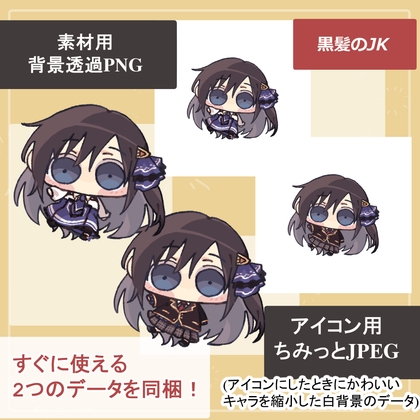
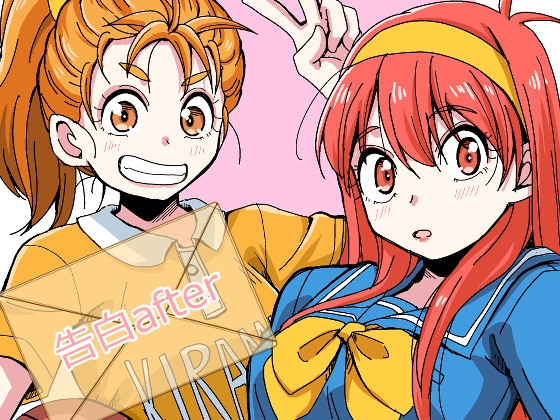
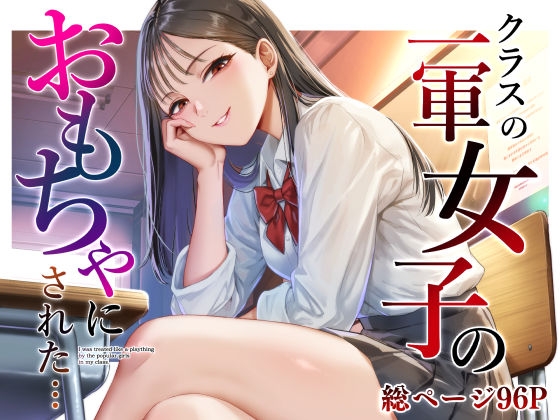

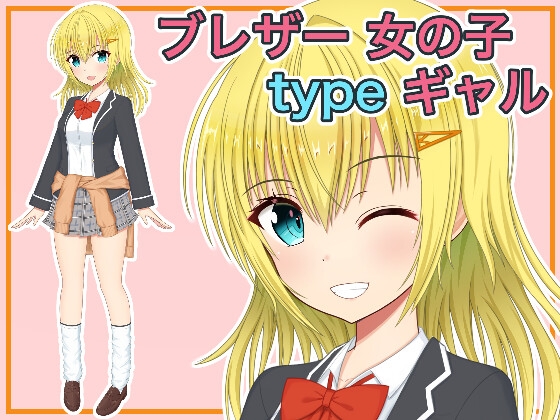

A navy jacket, a checked pleated skirt, a ribbon at the throat. The most photographed Japanese schoolgirl image since the 1990s, and the one that has done the work of replacing the sailor blouse as the contemporary default. Blazer seifuku names that look as a fan-cultural and adult-media category.
Overview
Blazer seifuku (ブレザー制服) is the Japanese schoolgirl-uniform style consisting of a tailored jacket, a button-front blouse, a ribbon or necktie at the throat, and a pleated skirt in a school-specific tartan or solid. The style began to displace the traditional sailor uniform in Japanese secondary schools through the late 1980s and 1990s, and by the 2000s had established itself as one of the two canonical Japanese schoolgirl looks.
In adult media (adult video, adult manga, doujinshi, eroge), the blazer uniform sits alongside the sailor uniform as a costume-genre option with its own register. The sailor blouse reads as nostalgic, traditional, downtown; the blazer reads as contemporary, private-school, “the schoolgirl as she actually looks today”. The pairing supplies adult-media producers with two complementary registers of the same archetype.
Etymology and definition
Burezā (ブレザー) is the standard Japanese loanword for blazer, drawn from English. The English word itself originates from the brightly coloured rowing jackets of the Lady Margaret Boat Club at Cambridge in the nineteenth century, said in folk-etymology to have been “blazing” in colour. The Japanese loan, used in fashion vocabulary from the early twentieth century onward, generalised to mean any tailored single- or double-breasted jacket worn outside an institutional context.
The compound burezā-seifuku (blazer uniform) entered general Japanese vocabulary in the late 1980s as Japanese private secondary schools, and then public secondary schools, began commissioning fashion-designer-led uniform makeovers that replaced their sailor-style uniforms with tailored jackets. The new uniforms borrowed their construction (three-button single-breasted jacket, school-crest pocket badge, tartan or solid pleated skirt, contrast ribbon) from British school-uniform conventions, and adapted them to Japanese institutional and fashion sensibilities.
History
The traditional Japanese girls’ school uniform, the sailor blouse, originated in the early twentieth century in imitation of Western naval-styled children’s wear and was the standard for most of the twentieth century. The shift to blazer-style uniforms began in the late 1980s. Tokyo private schools were the early adopters, with high-profile fashion designers (Hanae Mori, Yohji Yamamoto, among others) commissioned to redesign uniforms in the late 1980s and into the 1990s. The new uniforms became identifying markers for prestige private schools and gradually spread through the system, with public-school adoption following from the 2000s.
The tartan-or-solid pleated skirt, paired with a button-front blouse, a tailored navy jacket, and a ribbon or necktie, became the most-photographed school look of late-1990s and 2000s Japan, displacing the sailor blouse in mainstream visual culture if not in regional and tradition-conscious schools.
Adult-media uptake of the look followed quickly. By the early 2000s, the blazer uniform was a standard alternative to the sailor uniform across the major adult-media formats, conventionally framed as the contemporary schoolgirl in contrast to the traditional sailor.
Fetish register
What distinguishes the blazer-uniform register from the sailor-uniform register, in fan vocabulary, is a combination of four features.
The jacket’s hard, tailored shoulder line and straight front placket produce a more architectural silhouette than the soft fall of the sailor blouse. The contrast between the structured jacket and the pleated skirt is a visual signature that the sailor look does not produce.
The ribbon or necktie at the throat becomes a localised visual focus in a way the sailor’s chest tie does not. Tying, loosening, and removing the ribbon function as discrete narrative beats in adult-media scenes built around the uniform.
The school-specific tartan operates as a tagging device: a particular pattern can identify a particular fictional school, a particular character, a particular cosplay subculture. The pattern carries identity in a way the solid sailor blouse does not.
The blazer reads as the current schoolgirl image, where the sailor reads as the retro one. Sailor-uniform adult media sit in a nostalgia register; blazer-uniform adult media sit in a contemporary register, with the schoolgirl positioned as a present-tense rather than past-tense figure.
A second-order register, common across adult media, focuses on the partial deconstruction of the uniform: the jacket removed to reveal a blouse, the blouse partly unbuttoned, the ribbon loosened, the sweater pulled over the shoulder. The staged dismantling of the layered outfit is much of the costume’s adult-media appeal.
Variants
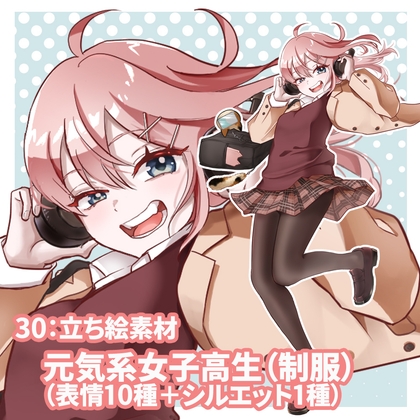
The standard form is the navy jacket with tartan skirt. Grey blazers belong to private girls’ schools with a more reserved register; beige and brown blazers signify the elite “ojou-sama” schools of fan-vocabulary convention; double-breasted blazers signify upper-tier institutions. Necktie-style uniforms read more gender-neutrally; ribbon-style uniforms read more feminine. Sweater-vest-and-blouse summer variants, or jacket-off interior-wear states, define the seasonal and indoor sub-registers.
In adult cosplay production, the blazer uniform is one of the two largest market segments alongside the sailor uniform. Costumes are differentiated by tartan pattern, with specific fictional schools’ patterns (from successful anime, light novels, and visual novels) producing identifiable cosplay sub-cultures of their own.
Cultural circulation
Where the sailor uniform carries the international identification “Japanese schoolgirl” almost regardless of context, the blazer reads, abroad, more like the British or American private-school uniform from which it descends. The blazer’s specifically Japanese character is harder to read at first glance, and the genre’s international reception has been correspondingly slower than the sailor’s. Inside Japanese fan culture, however, the blazer is the more contemporary signifier, and the two costumes have settled into a comfortable division of labour.
See also
Updated
References
- 『学校制服の文化史』 Sōgensha (2012) — Cultural history of Japanese school uniforms.
- 『The Moé Manifesto』 Tuttle Publishing (2014)
- 『Erotic Comics in Japan: An Introduction to Eromanga』 Amsterdam University Press (2021)
Also known as
- blazer uniform
- blazer school uniform
- student blazer
- ja: ブレザー制服
- ja: 学生ブレザー