Naked apron (hadaka apron)
✎ 本文編集 (admin) 🖼 画像編集 (admin)“Naked apron (hadaka apron)” works on DLsite




A front-tying cotton apron, fastened at the neck and the waist. From the front, it reads as a wholly clothed figure at the kitchen counter. From the side, it reads as something else entirely. The Japanese costume convention called hadaka apron — naked apron — sits on the structural ambiguity between those two readings, and the convention’s particular hold on Japanese adult media derives almost entirely from its capacity to switch between the two within a single visual frame.
Overview
Hadaka apron (Japanese: 裸エプロン, hadaka apuron; English equivalents: naked apron, apron-only) is the costume in which a woman wears an apron with nothing, or near-nothing, underneath. In the strict definition, no clothing is worn beneath the apron, including underwear; in looser usage, the term covers variants where minimal items (underwear only, socks only, a collar) accompany the apron. Either way, the costume’s defining feature is that the standard frontal-coverage apron is the wearer’s only meaningful clothing, with the back of the body fully exposed because front-tying aprons are structurally open at the back.
The costume has been established in Japanese adult media since the 1980s. It is most strongly associated with the newlywed wife and housewife archetypes, with the typical scene-staging featuring a wife preparing food in the kitchen while wearing the costume, the entry of the husband from off-frame, and the resulting recognition. The costume has carried into international adult-media vocabulary largely intact as naked apron or hadaka apron, recognised as a Japan-originated aesthetic with no exact equivalent in Western adult-media costume conventions.
The reception structure of the costume rests on three intertwined elements: the contextual doubleness of the apron itself (the most domestic possible piece of clothing in a sexualised configuration), the view-angle dependency of the costume’s coverage (frontal versus side versus rear), and the narrative anchor in the daily routine of cooking and household work.
Etymology and definition
The compound hadaka (裸, “naked”) + epuron (エプロン, the Japanese loanword from English apron) yields hadaka epuron. The term consolidated in 1980s Japanese adult publishing and has remained the standard vocabulary since. In international fan vocabulary, naked apron and hadaka apron operate as the established English-language terms, with both treated as recognisable category labels in adult media databases and review sites.
The strict definition is no clothing beneath the apron. A looser definition admits accessories such as socks, a collar, knee-highs, or stockings provided the apron is the sole substantive garment. Variants where additional clothing (lingerie, panties) is worn under the apron are sometimes called hadaka apron-like but are technically distinct from the strict category. The structural requirement is that the apron be a front-tying garment with an open back, since the back-exposure is structurally constitutive of the costume.
History
The combination of a naked body with an apron has appeared sporadically in Western pin-up and glamour photography across the twentieth century, but as an independent recognised costume category it has consolidated specifically in Japanese adult media. The decisive period was the 1970s and 1980s.
In 1970s Japanese gekiga and seinen adult manga, scenes of the newlywed wife preparing breakfast in a partially-undressed state — somewhere between the morning bathrobe and full clothing — recurred as a narrative beat in newly-married-couple stories. The aesthetic was stable but the costume was not yet fixed at “apron alone”. Through the 1980s, in adult photography and manga publication, the variant in which the wife was wearing only the apron with nothing underneath stabilised as the canonical form, and the category-name hadaka epuron consolidated.
Through the 1990s the AV industry adopted naked apron as a standard scene-element in the newlywed wife and housewife genres, with the kitchen entry by the husband establishing as the canonical scene-staging. In mainstream manga, the costume began to appear as a gag element in non-adult publications, with Nagasarete Airantō (Takeshi Fujishima, 2002–2014), To Love-Ru (Saki Hasemi and Kentaro Yabuki, 2006–2009), and a long list of ecchi-genre series using the costume as a recognisable visual joke that did not require explanation.
The diffusion into Western fan vocabulary picked up in the 2000s, with English-language anime and manga fandom adopting naked apron and hadaka apron as recognised category names. TV Tropes catalogued the trope; doujin search platforms acquired the corresponding tag. The category is now established in international hentai and doujin vocabulary as a Japan-originated aesthetic with the loanword usage stable across language boundaries.
The structure of the appeal
Three structural elements organise the aesthetic’s reception.
Contextual doubleness. An apron is a domestic garment, the most everyday and least sexually charged item of clothing imaginable. The fact that, in the naked-apron configuration, the wearer is otherwise unclothed instantly switches the reading from “domestic activity” to “intimate display”, without the apron itself changing. The single garment carries both readings simultaneously, and the reader’s eye toggles between them. The toggling is the appeal.
View-angle dependency. The frontal view of a naked apron reads as fully clothed: the apron covers the torso and substantial portions of the upper thigh. The side view reads as partially clothed: the apron’s front panel is visible but the side of the body is exposed. The rear view reads as fully naked: the apron’s back is open, the back-tie ribbon being a visual mark rather than a piece of coverage. The costume’s structural geometry encodes the “seen versus unseen” boundary directly. Compositions that exploit the view-angle dependency — a moving figure, a half-turn at the stove, a glance over the shoulder — recruit this structural feature actively.
Narrative anchor. The costume situates the wearer in a specific activity (cooking, household work, kitchen labour) and a specific role (wife, especially newlywed wife). The costume alone, without staging or dialogue, evokes a complete scene-context. The husband-returning-home scenario, the surprise-on-arrival framing, the breakfast-on-the-table situation: all of these read directly from the costume itself. Few other adult-media costumes carry this much narrative weight unaided.
The reception psychology connects to the newlywed-wife active offering and the daily within the intimate tropes that anchor much of the Japanese adult-media domestic genre. Compared with the bedroom-focused intimate aesthetic of much Western adult media, the Japanese genre’s tendency to stage sexual scenes in the kitchen, the living room, and other daily-life spaces is reflected in the naked-apron’s prominent position in the costume vocabulary.
Variants
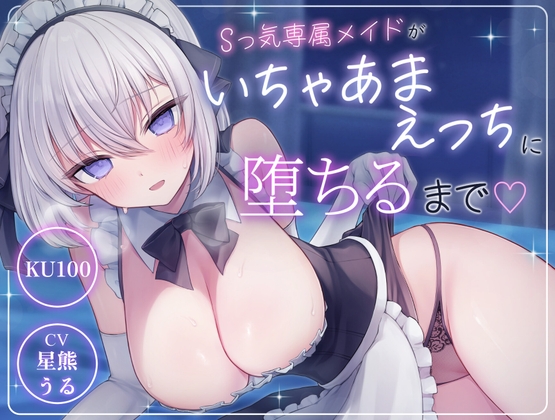
Standard form: nude beneath, apron only. Loose form: minimal underwear beneath the apron. Sock variant: with socks or knee-highs added at the feet. Maid variant: combined with maid costume’s apron-over-dress format, retaining the apron as central but adding the underdress. Collar variant: with a collar added, shifting the costume toward the submissive register. High-heel variant: with high heels added, shifting toward the office-wife or kept-woman register. Morning variant: with the husband discovering the wife on rising from bed. Evening variant: with the husband returning home to find the wife in the kitchen. Family variants: mother-and-daughter, two-sisters, or other multi-figure compositions, with each figure in the naked-apron costume.
Cultural circulation
Naked apron carries a particular weight in English-language fan vocabulary as a marker of “Japan-originated hentai aesthetic”. The category appears in TV Tropes, in Wikipedia’s hentai-related articles, in Western anime and manga fan databases, and in international adult-content tagging systems, consistently positioned as a recognisable Japanese-origin category. The loanword form hadaka apron operates as a vocabulary marker of fan familiarity with Japanese adult-media conventions.
In the cosplay market, dedicated naked-apron-friendly aprons have emerged as a recognisable subcategory: aprons in sheer or translucent fabric, aprons with frilled or ruffled detailing, aprons in maid-uniform-derived patterns. The cosplay-equipment retail market in Japan has standardised on this subcategory as part of its adult-content adjacent stock.
In commercial adult media, the costume remains a fixture of the housewife and newlywed-wife genres, with the recurring scene-staging stable across decades of production. The convention shows no sign of weakening, and the loanword continues to circulate in international hentai vocabulary as a marker of Japanese genre identity.
Related Terms
- Maid — the closest costume relative
- Chakui (clothed play) — the broader category of clothing-retained play
- Chakuero (clothed erotica) — the broader category of clothed-erotic photography
- Cosplay (kosupure) — the role-playing costume vocabulary
- Hitozuma (housewife) — the primary character archetype that the costume anchors
Updated
References
- 『Erotic Comics in Japan: An Introduction to Eromanga』 Amsterdam University Press (2021)
- 『Manga: The Complete Guide』 Del Rey (2007) — Entry on naked apron as a recognised hentai genre
- 『Permitted and Prohibited Desires: Mothers, Comics, and Censorship in Japan』 University of California Press (2000)
- 『The Moé Manifesto』 Tuttle Publishing (2014)
Also known as
- naked apron
- hadaka apron
- apron-only
- ja: 裸エプロン
- ja: 全裸エプロン