“Sailor Seifuku” works on DLsite
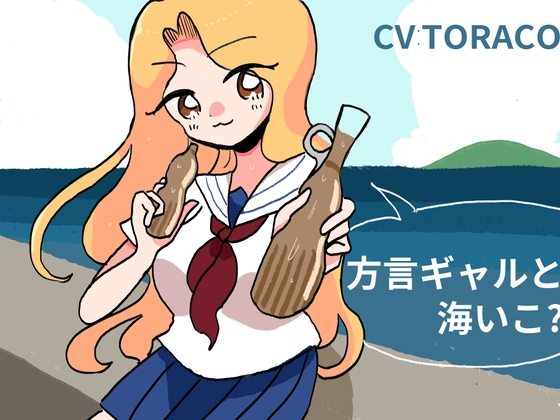

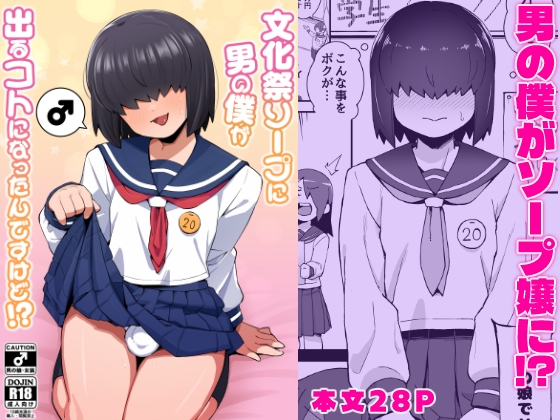
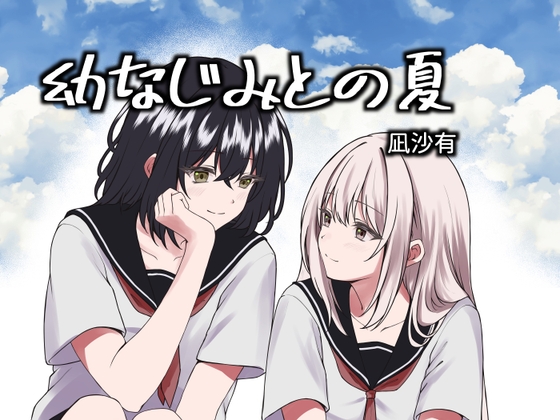


A British Royal Navy uniform pattern, adapted as upper-class children’s wear in the late nineteenth century, adopted as Japanese girls’-school uniforms in 1920–1921, and now carried internationally as the visual icon of the Japanese schoolgirl. Sailor seifuku — the sailor uniform — is one of the more travelled items of clothing in twentieth-century history.
Overview
Sailor seifuku (Japanese: セーラー服, sērā-fuku; literally “sailor clothing”) is the Japanese girls’-school uniform descended from the British Royal Navy sailor uniform. Adopted as Japanese girls’-school uniforms beginning in 1920–1921, the sailor seifuku became, through the rest of the twentieth century, both a routine garment for tens of millions of Japanese schoolgirls and — through animation, film, and tourism imagery — the global visual signifier of the Japanese schoolgirl. In adult-content media, the costume is a recognised fetish-fashion register and an established cosplay category.
The standard parts are: a kakueri (square sailor collar) with two or three white stripes, a chest-patch panel, cuffs, a scarf or tie at the throat, the body of the upper jacket, and a pleated skirt. The colour vocabulary is conservative: navy with white-piped collar in winter, white with navy-piped collar in summer.
The garment is, today, less universal in Japanese girls’ education than it was for most of the twentieth century: from the 1990s onward private middle schools have increasingly adopted blazer-style alternatives. But it remains common enough — particularly in public middle schools and traditional schools — that contemporary Japanese readers recognise the iconography as immediately as their parents did, and that recognition has been carried into the international vocabulary of Japanese popular culture.
This article treats the sailor seifuku as a costume-and-iconography category. In adult-content media — AV, hentai, doujinshi — the costume is invariably worn by adult performers as cosplay, and the cultural category being referenced is the fictional schoolgirl-uniform iconography rather than any actual schoolgirl. Japanese law strictly prohibits the production and distribution of child-pornographic materials, and reputable producers in this category employ adult performers exclusively.
Etymology
Sailor from English (the British Royal Navy sailor uniform), plus seifuku (制服, “uniform”) from Sino-Japanese. Sailor-fuku (without the sei-) is also current. The construction is wasei-eigo in spirit if not in form: the loanword sērā combined with the Sino-Japanese fuku produces a hybrid that names a specifically Japanese adoption of a British original.
The garment’s prototype is the nineteenth-century British Royal Navy enlisted sailor’s working uniform. From the 1840s, British upper-class families dressed their children — boys especially — in Boys’ Sailor Suits modelled on the naval pattern, and Queen Victoria’s ordering of sailor suits for her own children in the 1840s lent the practice royal endorsement. By the late nineteenth century the sailor-suit pattern was standard upper-class children’s wear across northern Europe and North America, and it was from this children’s-wear adaptation that the Japanese girls’-school version drew its design.
History
Adoption: 1920–1921
Multiple Japanese schools claim to be first; the documentary record places the principal candidates within twelve months of one another. Heian Jogakuin (Kyoto) is reported to have adopted the sailor design in 1920 as athletic wear, and Kinjo Gakuin (Nagoya) and Kyoto-fu Ritsu Kyōto Daiichi Kōtō Jogakkō are reported to have adopted it as their school uniform in 1921. Fukuoka Jogakuin introduced a closely related variant in the same period. The “first in Japan” question is unresolvable in fine detail, but the historical fact is clear: between roughly 1920 and 1923, several Japanese girls’ schools simultaneously adopted the British-children’s-wear sailor pattern as their formal uniform.
The reasons most often cited are practical: ease of movement compared to traditional kimono, ease of laundering, and a class-levelling effect (uniform clothing erased visible class differences among students). Through the late 1920s and 1930s the pattern spread across Japanese girls’ middle and upper schools, and regional variants — Kanto-style collars, Kansai-style collars, Nagoya-style collars, Sapporo-style collars, with different stripe counts and ribbon shapes — emerged as schools differentiated their uniforms from those of other schools.
Mid-twentieth century
Through the mid-twentieth century, the sailor seifuku continued to be the standard girls’-school uniform across most Japanese public middle and high schools. Postwar education-system reforms in the 1940s and 1950s preserved the convention rather than replacing it, and into the 1980s the sailor seifuku remained the visible marker of Japanese girls’-school life.
Reframing as cultural icon (1980s onward)
From the 1980s, the sailor seifuku began to be visible to international audiences through several converging channels: the international export of Japanese cinema and animation; the rise of Japanese pop-music idol culture, in which the schoolgirl-uniform aesthetic was commodified for stage performance; and, more darkly, the bursera and enjō kōsai phenomena of the 1990s in which used-uniform sales and dating-with-payment arrangements brought sustained negative publicity. The international visibility of the costume — as both the icon of innocence and the icon of commodified erotic interest — was consolidated through this period.
In adult-content media, the sailor seifuku consolidated as a recognised cosplay-and-staging register from the 1980s onward. The conventions are well-established: an adult performer wears a sailor-style cosplay outfit; the staging references the schoolgirl iconography; the wearer is, as Japanese law requires, of legal age. The international circulation of these productions, and of related anime and manga, has carried the sailor-seifuku iconography to global audiences as one of the principal visual signifiers of Japanese subcultural-erotic registers.
Contemporary status
In contemporary Japanese girls’ education, sailor seifuku coexists with blazer-style uniforms; the latter has gained share since the 1990s, particularly in private middle schools, but the former remains common enough to be recognisable across generations. Internationally, Sailor Moon (1992–) is one of the most influential single vehicles by which the iconography travelled: the title’s combination of sailor uniform and superhero costume placed the Japanese sailor-seifuku archetype at the centre of one of the most widely watched anime series of the late twentieth century, and the international cosplay market still treats the sailor seifuku as a distinct category from generic schoolgirl-uniform aesthetics.
Aesthetic-fetish structure
The costume’s appeal in adult-content media decomposes into four distinct elements.
The first is the framing collar. The large kakueri sailor collar visually frames the face and clavicles together as a single composition. The collar’s white piping isolates the head-and-shoulder region from the rest of the body, producing a visual emphasis on facial expression that more conservative uniforms do not.
The second is the upper-and-lower contrast. The dark, structured upper jacket pairs with the short, light pleated skirt to produce a strong visual contrast between restraint and exposure. The same garment combines the formality of the jacket and the lightness of the skirt, a costume tension internal to the design.
The third is the pleat and motion. The pleated skirt structurally invites motion — pleats fall and reveal in walking, in turning, in sitting — and produces the panchira (under-skirt glimpse) staging convention that has its own large fan tradition in Japanese visual media.
The fourth is the age-coded register. The sailor seifuku is, in nearly all cases, recognised as a uniform of school-age girls. The costume thereby carries a strong age signifier in Japanese cultural reading. In adult-content media, an adult performer wearing the costume reads as cosplay, and the framing convention treats the costume’s age-signifier as part of the cosplay register rather than as a representation of any actual schoolchild.
Forms and variants
- Kanto-style collar: deeper, wider square collar with a ribbon-tie front.
- Kansai-style collar: narrower, shallower square collar with a scarf-loop front.
- Nagoya-style collar: an intermediate between the Kanto and Kansai patterns.
- Sapporo-style collar: a smaller square collar.
- Summer pattern: white body, navy collar.
- Winter pattern: navy body, white-piped collar.
- Sailor-plus-vest: layered with a knit vest, a private-school variant.
- Sailor-plus-cardigan: layered with a cardigan, in older-student or college-style variants.
- Lolita sailor: a fashion subculture’s elaboration of the sailor pattern in lolita fashion’s frilled style.
- Anime-character sailor: cosplay reproductions of specific anime-series sailor patterns.
Cultural framing
The sailor seifuku’s career is one of the more striking cases of inter-cultural costume migration in modern history: from Royal Navy enlisted men, to upper-class British children’s wear, to Japanese girls’-school uniforms, to global pop-cultural signifier of the Japanese schoolgirl. At each stage the costume’s connotations were reset: from naval discipline to childhood innocence, from school discipline to (in international circulation) a complex of nostalgia, fetishisation, and pop-cultural recognition.
The 1990s bursera and enjō kōsai episodes have left the costume’s modern reception with a layered cultural history: the uniform that earlier generations of Japanese women wore as ordinary schoolwear is the same garment that has, through commodification, become a signifier in adult-content registers. This dual history is one of the ongoing themes in critical writing on Japanese clothing-and-gender history, and it underlies the standard caution in writing about the costume that adult-content references concern the iconography, not the actual girls who wore (and wear) the uniform to school.
See also
- Seifuku
- Blazer Seifuku
- Kosupure (Cosplay)
- Panchira
- Chakui (Clothed)
- Bloomer
Updated
References
- 『学校制服の文化史』 Sōgensha (2012)
- 『School Uniforms: A Reference Handbook』 ABC-CLIO (2007)
- 『ジャンル別 AV 大全』 Core Magazine (2014)
Also known as
- Sailor uniform
- Sailor fuku
- Seifuku
- ja: セーラー服
- ja: せーらーふく
Related
- Seifuku (Uniform Costume)
- Blazer School Uniform
- Bloomers (Japanese school PE shorts)
- Cosplay
- Panchira
- Chakui (clothed sex)
- Chakuero (clothed-erotic genre)
- Gym uniform (Japanese school PE attire)
- Bodikon (Body-Conscious Fashion)
- Bunny girl (Playboy bunny)
- Cheerleader fetish
- Naked apron (hadaka apron)