Maid (kink and costume)
✎ 本文編集 (admin) 🖼 画像編集 (admin)“Maid (kink and costume)” works on DLsite
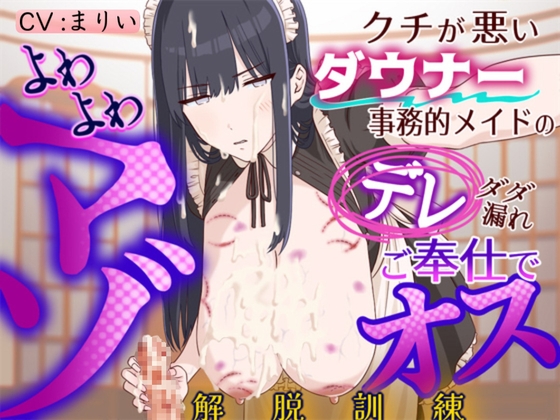
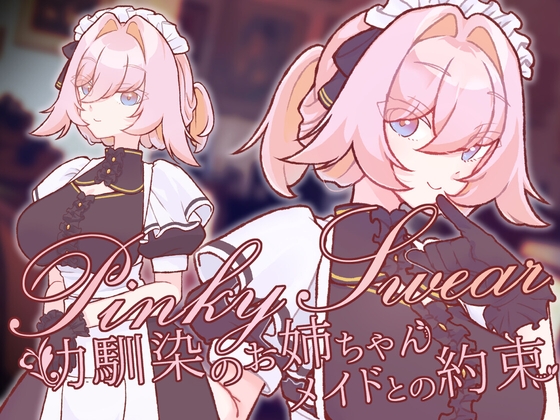
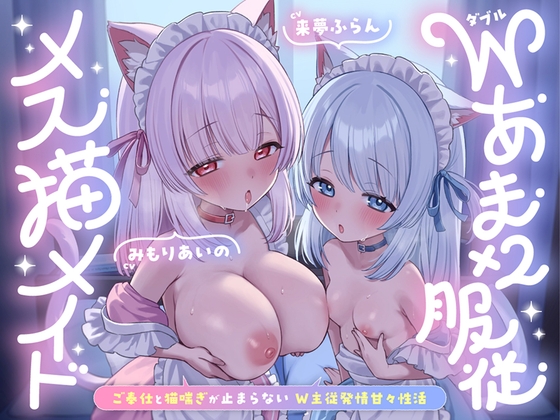
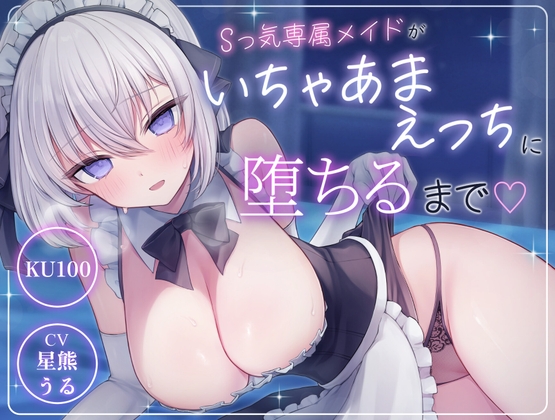
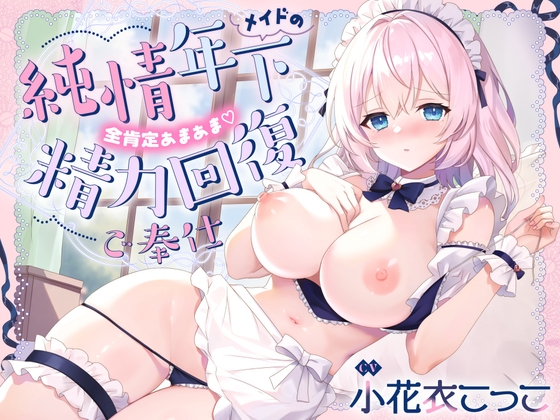
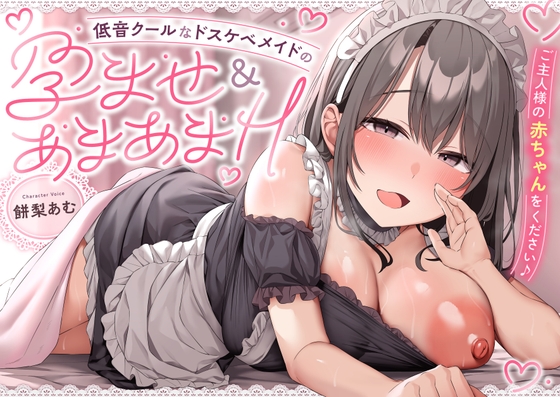
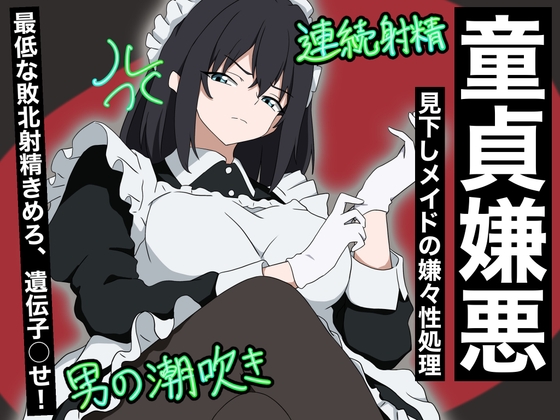
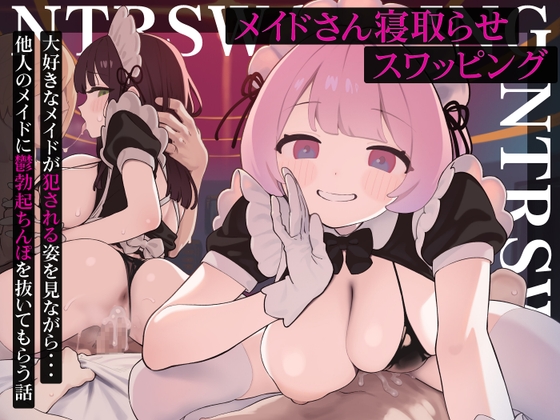
The apron and the lace headpiece travelled a strange route — from the Victorian English class system of the nineteenth century to the Akihabara subculture of the twenty-first — and arrived as a costume-and-character archetype that the Japanese popular-culture vocabulary now treats as one of its standard configurations.
Overview
Maid (Japanese: メイド, meido) is, in the contemporary Japanese subcultural vocabulary, both a costume archetype and a roleplay configuration based on Victorian-era English household-servant uniform: a black ankle-length or knee-length one-piece dress, a white frilled apron, and a white lace headpiece (the mob cap). The same English word covers both the occupational sense (a domestic servant) and the Japanese subcultural-aesthetic sense (the costume archetype derived from the historical servant uniform). This entry concerns the Japanese subcultural sense.
The maid sits, in the kink vocabulary, as a recognised costume-and-roleplay archetype embedded in maid-café service culture, eroge, eromanga, and adult video. The roleplay configuration carries a recognised set of structural elements: the master / mistress (goshujin-sama / ojō-sama) and maid asymmetry, the explicit service-and-deference framing, and the costume’s signalled hierarchical position. The character archetype that the costume supports is one of the most-cited examples of Japanese subcultural costume codification.
Etymology and historical occupational sense
English maid derives from Old English mæġden (“young woman, unmarried woman”), with the “female domestic servant” sense developing in Middle English. In Victorian English class society, maid was the standard label for the female household servant in middle-class and upper-class homes, with detailed sub-divisions by function: housemaid (house cleaning), parlour maid (drawing-room service), lady’s maid (personal service to the mistress), kitchen maid (kitchen work), and scullery maid (the lowest position). Isabella Beeton’s Book of Household Management (1861) is the standard Victorian-period reference work for the household-servant system and is the primary historical source for the costume conventions on which the contemporary maid archetype rests.
In Japan, the equivalent occupational position was the jochū (女中), a domestic servant in upper-middle-class and elite Meiji-and-Taisho-era households. The traditional Japanese jochū costume was generally a kimono with apron (kappōgi), and did not visually resemble the Victorian maid uniform. Only in elite households consciously imitating Western household practice did the European maid uniform appear, and these were exceptional cases. The contemporary Japanese maid archetype is therefore not a continuation of the jochū uniform but a separate import directly modelled on the Victorian English costume.
After the Second World War, the postwar shift to electric appliances and the nuclear family rapidly reduced the jochū as a real occupation. From the 1970s, the maid persisted in Japanese popular culture not as a real occupation but as an aestheticised character archetype in literature, manga, and animation.
Twentieth-century reconstruction
Manga and anime use
The reconstruction of the maid as a contemporary Japanese subcultural archetype began with 1970s shōjo manga: Ryōko Yamagishi and Moto Hagio, among others, produced works set in European aristocratic milieux with butler-and-maid character configurations, and these works fixed the maid costume in Japanese visual-subcultural memory as a romantic-aesthetic rather than occupational form.
Through the 1980s, the maid appeared in juvenile fiction, manga, and console-game RPGs. By the late 1990s, the eroge and bishōjo-game industry had stabilised the maid as an independent character-type, with titles structured around the maid-protagonist relation and a recognisable visual and personality signature attached to the type.
Maid-café emergence
In March 2001, the maid-café Cure Maid Café opened in Akihabara, Tokyo. The café was conceived as a real-space realisation of the maid character archetype that had stabilised across the previous decade’s manga, anime, and games. Staff wore Victorian-style maid uniforms; customers were addressed as goshujin-sama (master) or ojō-sama (mistress); the service ritual was structured around the master-and-maid asymmetry.
From 2004 through 2006, the maid café spread rapidly across Akihabara, at peak reaching over eighty establishments in the district and establishing Akihabara as the world’s principal concentration of the form. The maid café was not merely a themed restaurant but a real-space implementation of the costume-and-roleplay configuration that had developed in 2D media — and it provided a feedback mechanism by which the 2D archetype was continuously reinforced and refined by real-space practice.
Adult-media use
The maid’s emergence as a recognised sub-category in adult media intensified in parallel with the early-2000s maid-café boom. Prior pink-film and 1980s AV-era productions had used the jochū / housekeeper role, but these were generally in kimono or contemporary-housekeeper costume and not in the Victorian maid form. The Victorian maid form’s appearance as a recognised adult-media costume category dates principally from the mid-2000s.
By the late 2000s, AV releases dedicated to the maid costume were a recurring product line; eroge with maid-café settings and maid-character protagonists were continuously released; eromanga and doujinshi placed the maid-character in service-relationship narratives. The shared element across these media is the goshujin-sama / meido asymmetry: the costume signals a relationship-shape (servant-and-master) that the productions then dramatise in sexual register. The kink-vocabulary places the maid configuration as a recognised member of the wider kosupure (costume-and-roleplay) category.
Costume variants
The Japanese maid costume has stabilised in two principal stylistic variants.
Victorian maid type: black long-sleeve full-length one-piece dress, white frilled apron, white mob cap headpiece. This is the conservative-traditional form, closest to the Victorian source and adopted by the more traditionalist Akihabara maid cafés.
Modern maid type: short-skirt mini-length dress, decorative frills, paired with stockings or garter belt. This is the Japanese-subcultural-derived variant, which departs substantially from the Victorian source and emphasises the visual-sexual register. Cosplay-costume manufacturers’ “maid uniform” products are mostly of this type.
The companion butler (shitsuji) and valet costume archetypes are paired with the maid in some configurations, particularly in works aimed at female audiences. The two-fold service-asymmetry — household-servant relations doubled across both male and female servant roles — extends the basic configuration into more elaborate forms.
Theoretical readings
Hiroki Azuma’s Dōbutsuka suru Postmodern (2001; English translation Otaku: Japan’s Database Animals, 2009) treats the maid as one of the principal examples of the “moe attribute” — a database element that postmodern otaku consumption draws on as a building block of character construction. The costume, in Azuma’s analysis, operates as a compressed signifier of both character archetype and relational role; the visual element carries the work of relational-narrative compression that, in earlier narrative media, would have required pages or scenes of exposition.
Tamaki Saitō’s Sentōbishōjo no Seishin Bunseki (2000; English translation Beautiful Fighting Girl, 2011) and successor essays read the maid as a doubled-position figure: simultaneously the protected-and-served and the protective-and-serving, with the relational ambiguity itself functioning as part of the character’s appeal. The maid’s appearance both in female-protagonist works (where she is the maid-character protagonist) and in male-protagonist works (where she is the household maid) makes the configuration a particularly flexible carrier of the underlying relational asymmetry.
Western parallels
In Western adult-culture vocabulary, the “French maid” costume occupies a roughly parallel position — a recognised costume archetype based on Victorian or French maid uniform, used in costume-play and Halloween contexts and recognised in the broader kink-vocabulary. The Japanese maid configuration is distinguished by the depth of its narrative-and-character integration: the maid is not merely a costume but an established character-archetype embedded in eroge, eromanga, anime, and the real-space maid-café institution. The Western parallel is the costume; the Japanese form is the costume plus the character archetype plus the real-space implementation.
Related Terms
- Cosplay (kosupure) — broader practice
- Miko (shrine maiden) — adjacent traditional-costume archetype
- Naked apron (hadaka apron) — adjacent apron costume
- Chakui (clothed sex) — broader clothed-erotic category
- Sailor seifuku — adjacent school-uniform archetype
- Eroge — production medium where the archetype is anchored
- Eromanga — parallel production medium
Updated
References
- 『Mrs. Beeton's Book of Household Management』 S. O. Beeton (1861)
- 『Class and Servants in Victorian England』 Sutton Publishing (1995)
- 『Beautiful Fighting Girl』 University of Minnesota Press (2011)
- 『Otaku: Japan's Database Animals』 University of Minnesota Press (2009)
Also known as
- Japanese maid costume
- maid roleplay (Japanese)
- akihabara maid
- Victorian maid (Japanese subcultural)
- ja: メイド
- ja: めいど
- ja: 女中