Gangimari (Drugged-Face Expression)
✎ 本文編集 (admin) 🖼 画像編集 (admin)“Gangimari (Drugged-Face Expression)” works on DLsite
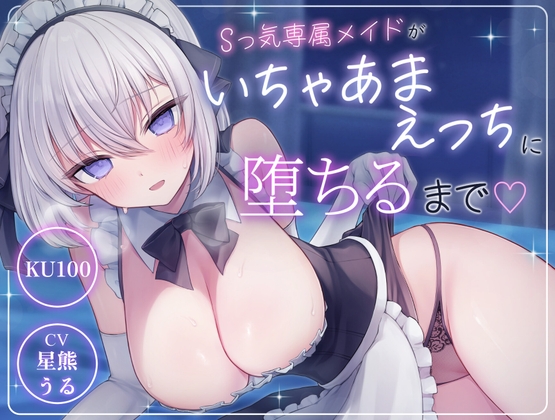
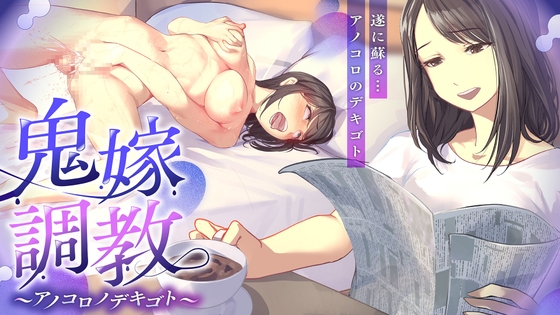
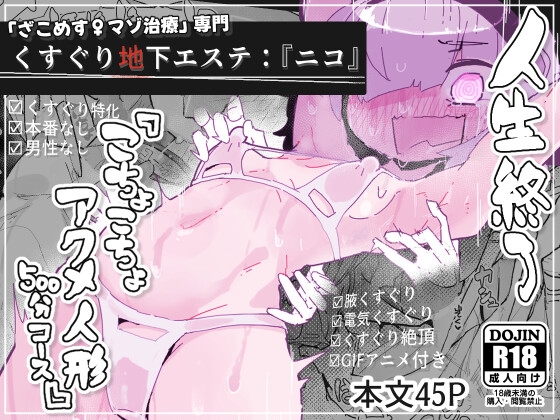
The character’s eyes have stopped focusing. The mouth hangs slightly open at a slack angle. The pupils have rotated into something that is not quite an eye any more. Whatever was going on a few panels ago has stopped going on, and what remains is the face of a person who is no longer running the executive functions that ordinarily run a face. Gangimari names that face.
Overview
Gangimari (Japanese: ガンギマリ顔) is the Japanese adult-manga, doujinshi, and eroge visual sign-set for the face of a character whose self-control has been removed by drugs, extreme arousal, hypnotic conditioning, or similar fictional means. The conventional markers are a vacant gaze, abnormally-shaped pupils, a slack mouth (frequently in a sideways smile), and accompanying signs of involuntary bodily response. The set crystallised in the 2010s and is now one of the standard facial-sign-sets in contemporary Japanese adult-fiction visual vocabulary, parallel to and distinct from the older ahegao sign-set.
The sign-set’s primary fictional function is to mark a character as durably altered. Where ahegao marks a momentary orgasmic state from which the character will return, gangimari marks an altered baseline state that the character is now in, and from which return is uncertain or impossible. The distinction is one of the central craft conventions of contemporary Japanese adult manga.
Etymology
The compound gangimari derives from the intensifying prefix gan- and the verb kimaru (決まる), which in drug-related slang means to take effect, to take hold. Kimari is the nominal form. The construction gan-gimari therefore reads as thoroughly-having-taken-effect. The original slang denoted the state of a person on whom a recreational drug has fully taken hold; the adult-fiction usage extended the term to mark the face of a character whose self-control has been broken by any fictional cause: biyaku (aphrodisiacs), saimin (hypnotic conditioning), mind-control marks, or extended physical conditioning.
In English-language doujin-translation communities, the loanword gangimari circulates alongside drugged face, wasted face, and similar descriptors. The Japanese term has become recognisable as a category-name in English-speaking adult-fandom vocabulary, parallel to the earlier internationalisation of ahegao.
The sign-set
The conventional rendering of a gangimari face has a small canonical vocabulary.
The eyes are the central marker. The conventional renderings include: heart-shaped pupils (“heart-eyed”, a 2010s-onward standardisation that marks the character’s cognitive evaluation as having collapsed into pure-sensation-tracking); triple- or quadruple-white-eyed renderings, in which the iris has rolled upward or to the side and the visible eye is mostly sclera; the absence of the highlight dot that ordinarily marks a living, present-tense gaze in the manga visual grammar.
The mouth is the secondary marker. Unlike ahegao, the gangimari mouth is not actively performing the protruded-tongue gesture; it is slack. The corners may hang at uneven heights, producing a faintly asymmetric smile that does not match standard expressive grammar. Drool, saliva, or the lingering wetness of the lips frequently accompany the slack mouth.
The bodily accompaniments are tertiary markers. Involuntary nosebleed, drool, tears, an unfocused tracking gaze that does not follow what is in front of it: the additional signs all mark the suppression of executive control over the body, and they support the central facial sign-set.
Distinction from ahegao
The two sign-sets are routinely conflated in casual fan discussion and the distinction is sometimes lost, but the structural difference is real and is maintained by the more careful work in the genre.
Ahegao marks a peak-orgasm state. The face is convulsed in a particular set of involuntary contractions; the eyes are rolled, the tongue is protruded, the cheeks are flushed, the drool is fresh. The state is, by structural assumption, temporary; the character will return from it when the immediate physical cause subsides.
Gangimari marks an altered-baseline state. The face is at rest at the new equilibrium; the eyes are not convulsed but vacant; the tongue is not protruded but slack; the cheeks may be flushed but the flush is sustained rather than peak-momentary. The state is, by structural assumption, durable; the character may have crossed into a baseline that she cannot return from, or whose return path is unclear.
The two sign-sets are often deployed adjacent to one another in the same work, with ahegao marking peak moments and gangimari marking the eventually-stabilised post-conditioning state of a character at the end of a choukyou (training) arc or a mesu-ochi arc.
History
The sign-set’s consolidation in adult manga and doujinshi is closely tied to the rise of the pharmacological, hypnotic, and mind-control sub-genres in late-2000s and 2010s Japanese adult fiction. As these sub-genres expanded their share of the genre’s output, the visual problem of marking the successful completion of conditioning (the post-arc state of a character now permanently altered) became one of the genre’s recurring craft problems. Gangimari settled, through iteration across producers, as the standard solution.
Rito Kimi’s Eromanga no Hyōgen Gihō (2017), a systematic visual-taxonomy of contemporary adult-manga craft conventions, treats gangimari as one of two related but distinct facial-sign families (alongside the ahegao family) and traces the heart-pupil sub-marker’s standardisation through the late 2010s. The same period saw the heart-pupil marker imported into eroge sprite art as a standard indicator of route-complete conditioning, marking the character as now permanently inside the gangimari baseline.
Reception
The supporting psychology of gangimari reception runs along three lines.
The first is self-control-loss as fascination: the genre’s investment in a character whose previous high-self-control state has been broken. The taller the character’s prior frame (the model student, the disciplined doctor, the dignified noblewoman, the principled wife), the steeper the fall the gangimari sign-set marks, and the more substantial the genre’s affective payload.
The second is irreversibility: the structural assumption that, unlike the temporary ahegao state, the gangimari state is durable. The sign that the character is now this person, that the former state will not return on its own, is a substantial part of what the genre marks. This makes the sign-set particularly central to fictions of conditioning and possession.
The third is the ethics-bracket function the sign-set sometimes performs: a character in the gangimari state has, by structural definition, suspended ordinary cognitive consent-related faculties, and the sign-set inside fiction is sometimes deployed in ways that bracket the standard consent question that adjacent scenes would otherwise raise. Real-life conditions, by contrast, treat states resembling the fictional gangimari as states in which valid consent is absent and cannot be ethically presumed. The fiction-to-real-life boundary is, accordingly, one of the genre’s most explicit asymmetries.
Sub-types
Drug-themed gangimari uses biyaku (aphrodisiac) framing as the in-story cause.
Hypnotic-themed gangimari uses saimin (hypnotic-conditioning) framing as the in-story cause and is conventionally a sustained state across an arc rather than a momentary one.
Heart-pupil gangimari foregrounds the heart-shape-pupil sub-marker and is the most internet-recognisable form of the sign-set.
Conditioning-completion gangimari concludes a choukyou-arc or a mesu-ochi-arc and marks the character’s permanent transition to the conditioned baseline.
See also
Updated
References
- 『エロマンガの表現技法』 Ōta Shuppan (2017) — Systematic taxonomy of adult-manga facial-expression sign-sets.
- 『Erotic Comics in Japan: An Introduction to Eromanga』 Amsterdam University Press (2021)
- 『Adult Manga: Culture and Power in Contemporary Japanese Society』 Curzon Press (2000)
Also known as
- gangimari
- gangimari face
- drugged face
- altered-consciousness expression
- ja: ガンギマリ顔
- ja: ガンギマリ
Related
- Ahegao
- Boyish (anime character type)
- Kemonomimi (beast-ear character)
- Meganekko (glasses-girl)
- Negao kink (sleeping face fetish)
- Shimapan
- Jawline Fetish
- Demon Girl Moe (Akuma Chara)
- Bakajoshi (Airhead Girl Archetype)
- Blazer School Uniform
- Chijoka (Becoming a Lustful Woman)
- Sexual Dimorphism Fetish (Dansa Fechi)