Ahegao
✎ 本文編集 (admin) 🖼 画像編集 (admin)“Ahegao” works on DLsite
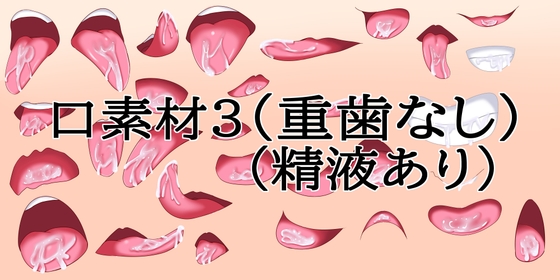
A tongue past the corner of the mouth, eyes rolled upward, flushed cheeks, drool falling. Few visual signs in subculture transmit the idea of “the height of pleasure” as quickly as ahegao does, and the speed is the point.
Overview
Ahegao (Japanese: アヘ顔, ahe-gao) is a stylised facial expression used in adult manga, doujinshi (self-published comics), adult video games, and adult anime to denote sexual climax or extreme arousal. The word is a compound of the onomatopoeic moan ahe-ahe and kao (face). The expression is built from a recurring set of elements — rolled-back or unfocused eyes, a tongue extended past the corner of the mouth, flushed cheeks rendered with diagonal strokes, droplets of sweat or saliva, downturned eyebrows — combined together into a single readable symbol.
What ahegao does, formally, is compress climax into one panel. In a medium constrained by panel count and reading speed, that economy is decisive: a single ahegao tells the reader that a character has reached a peak without the artist having to draw the surrounding sequence in detail. From the reader’s side, the expression functions as a kind of stop sign. Its appearance is recognised instantly and confirms that the scene’s climax has arrived.
Ahegao is not a realistic depiction of the body in orgasm. It is a stylised aggregate of several physical responses — pupil dilation, salivation, flushing, involuntary expression — selected and exaggerated for legibility. As such it sits in the lineage of manpu: the manga symbol vocabulary that includes sweat drops, motion lines, and the cross-shaped vein on the forehead. Ahegao is the manpu of climax.
Etymology and emergence
The fixed word ahegao is hard to date precisely, but it can be traced through 2000s amateur and industry talk in the Japanese eromanga and doujinshi worlds, and was settled in widespread usage by the late 2000s. Rito Kimi’s Ero-Manga no Hyōgen Gihō (“Drawing Techniques of Eromanga”, 2017) gives the most systematic published account of the expression’s component drawing conventions and historical formation, and is the standard reference inside the field.
The expression has older roots. Several pre-modern Japanese erotic prints (shunga) by Hokusai, Utamaro, and others depict orgasmic faces with rolled eyes, protruding tongue, and flushing — but as individual artists’ technique, not as a codified visual symbol. In the postwar adult-manga lineage, exaggerated climax expressions developed gradually through the 1980s and 1990s in the work of artists such as Utamaro, Kei Kitamiki, and Machui, each of whom pushed pleasure-faces further in distinctive directions. By the 2000s these strands had converged into the recognisable ahegao symbol, sufficiently standardised that artists, editors, and readers could refer to it as a single thing.
The leap into international circulation came in the 2010s, when translation and unauthorised distribution of Japanese doujinshi and adult anime carried the expression — and the romanised loanword ahegao — into English-speaking and Chinese-speaking online culture. Reddit-style forums and image boards then amplified it. Around 2018, the so-called “ahegao hoodie” — a print garment manufactured chiefly in mainland China for export through online marketplaces — moved the expression onto Western streetwear and turned it into a more or less mainstream subcultural sign, considerably outside its original adult-fiction context.
Variants
Ahegao double peace (アヘ顔ダブルピース)
The composition in which the character makes a “peace sign” with both hands while pulling the ahegao expression. The format and the phrase emerged in the doujinshi and eromanga worlds at the turn of the 2010s and is associated in particular with the artist Dunga. The frisson of the composition lies in the contradiction between the deliberately performed peace sign and the involuntary expression of climax — two layers of consciousness held in the same frame.
Mesu-gao / zecchō-gao
Adjacent terms used as near-synonyms. Mesu-gao (“female-animal face”) connotes a particular reduction to bestial femininity and is most often used in mesu-ochi (“falling into the female”) narrative arcs. Zecchō-gao (“climax face”) is the more neutral, descriptive term, used when the writer wishes to refer to the expression without the additional gendered framing.
Tongue-and-drool variant
The subset of ahegao that foregrounds the protruding tongue and falling saliva. This is the standard variant in chijo (sexually aggressive woman) and inran (lascivious) genres, where the expression is read as the character’s active pursuit of pleasure rather than collapse into it.
Rolled-eyes / fainting variant
The subset that foregrounds the rolled-back eyes and momentary loss of consciousness. This variant dominates in choukyō (training) and bondage genres, where it is read as the visual marker of consciousness breaking down under accumulated stimulus. Akume-gao, with akume derived from the French acmé, is sometimes used as a synonym in this register.
Critical reception
Subculture studies treat ahegao as one branch of the manpu tradition — the symbol vocabulary that gives manga its characteristic shorthand. As ordinary manpu let general-audience manga synchronise the reader to a character’s surprise, anger, or fatigue without spelling them out, ahegao does the same job for sexual climax: instantaneous synchronisation between reader and character at the genre’s structural high point.
Gender criticism reads the symbol along several axes. One reading takes ahegao as a marker of female subjectivity dissolving into pleasure, watched and consumed by the male reader; here the expression is part of the genre’s wider vocabulary of conquest. A second reading, drawing on accounts from women, queer readers, and trans readers, treats ahegao as a vehicle for self-projection — a way to inhabit the experience of release without the narrative apparatus that surrounds it. The two readings are not exclusive, and the same expression supports both modes of identification simultaneously.
Ahegao is closely tied to particular plot types — inran, chijo, mesu-ochi, choukyō — and its appearance at the climactic panel of those works has become a near-formal convention. In genres that emphasise innocence or first experience, ahegao is correspondingly suppressed, so that the presence or absence of the expression itself signals which genre a given work belongs to.
In the international circulation of the 2010s and 2020s, ahegao has become one of the more recognisable Japanese loanwords in English-language adult vocabulary. The “ahegao hoodie” moment marked its transition from in-genre symbol to broader internet-cultural sign, and brought with it a recurring conversation on Western platforms about content moderation and advertising standards: whether ahegao imagery, separated from its narrative framing, should be treated as adult content per se. That argument is unresolved and is itself part of the loanword’s career outside Japan.
See also
Updated
References
- 『エロマンガ・スタディーズ』 East Press (2006)
- 『エロマンガの表現技法』 Ohta Publishing (2017) — Systematic survey of the drawing conventions and historical formation of the ahegao expression.
- 『Manga: A Critical and Cultural History』 Continuum (2010)
Also known as
- ahegao face
- ja: アヘ顔
- ja: あへ顔