Debu Otoko (Fat Bastard / Ugly Bastard)
✎ 本文編集 (admin) 🖼 画像編集 (admin)“Debu Otoko (Fat Bastard / Ugly Bastard)” works on DLsite
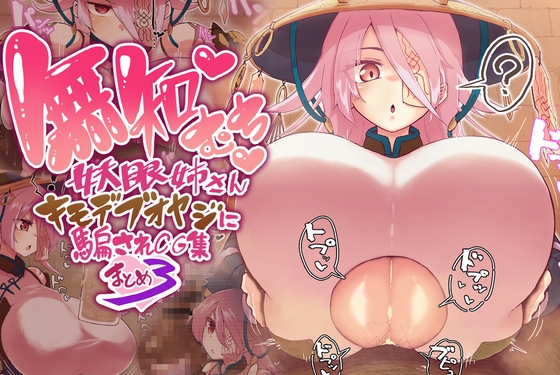
The heroine on the page is not paired with a slender, polished young man. She is paired with a heavyset middle-aged man, sweating, breathing audibly, occupying space the heroine doesn’t. The reader has bought the work for that exact pairing. Debu otoko names the character-type that anchors one of Japanese adult fiction’s most reliably supplied subgenres.
Overview
Debu otoko (Japanese: デブ男, literally “fat man”) is the Japanese adult-manga, doujinshi, and eroge character archetype for an obese, often middle-aged or older male character positioned in sexual contact with a young, slender heroine. The archetype maps closely onto what the English-language doujin-translation community calls ugly bastard, a tag that has stabilised over the 2000s and 2010s as the English equivalent of the Japanese genre marker. Some Japanese variants use kimo-debu (literally “creepy-fat”) to emphasise the unattractive-by-design quality of the character.
The archetype is the male side of a paired construction: debu otoko × bishoujo. Neither half of the pair functions as a standalone genre marker in the same way; the visual and narrative work the archetype does depends on its juxtaposition with an attractive female character whose surrounding fictional context (often a school setting, often a familiar two-dimensional heroine adopted into a doujinshi parody) reinforces the contrast. The article describes the archetype as a male character type and is distinct from debu-sen, the woman-side preference for heavy male partners, which is a different fan-vocabulary item with the opposite affective valence.
What “fat” means here
Japanese has several available registers for body weight. Pocchari (ぽっちゃり) is the soft, affectionate register; himan (肥満) is the clinical, medical register; debu (デブ) is the colloquial-to-pejorative register. Debu otoko takes the debu register and pulls it into character-design vocabulary, where it functions as a genre-marker rather than a neutral descriptor.
In drawn-fiction practice, the debu otoko archetype is typically rendered with the following marker-set: middle age or older; concentration of body fat at the abdomen and hips; thinning or absent head hair; emphasised sebaceous skin texture; perpetually slack-jawed or smirking facial expression; clothing of low style register (cheap shirt, slack-cut trousers). The fat itself is not the only marker; it is one of several markers of contrast with the heroine. The compound term kimo-debu foregrounds the unattractive-by-design framing, and is sometimes the more accurate name for the archetype in question.
The contrast device
The structural function of debu otoko in adult-manga and doujinshi is to maximise visible contrast with the heroine. The slender, polished, conventionally-attractive bishoujo sits on one pole; the debu otoko sits on the opposite pole; the visible distance between them across the page is what the work is selling. The contrast generates the reader’s primary engagement: the eye registers the disparity in a single glance and processes it as sexual tension.
In doujinshi practice, particularly in derivative work based on popular anime and game properties, the debu otoko character is conventionally an addition that the original work does not contain. The reader’s investment in the original heroine is preserved and is then placed against a partner figure who is, in the most literal sense, the least suitable mate the work can supply. The deliberateness of the mismatch is the genre’s defining move.
The position of the debu otoko in the narrative is conventionally one of social proximity to the heroine: teacher, neighbour, stepfather, employer, family-friend uncle. The proximity makes the contact narratively plausible (the character exists in the heroine’s day-to-day environment) while the role itself supplies the genre’s recurring tension between authority-position and physical-revulsion.
Industry context and adult-video
Patrick Galbraith’s Erotic Comics in Japan (2021) places debu otoko in the wider context of adult-manga character taxonomy, where the genre’s character types are organised less by reference to real-world attractiveness criteria and more by their function as efficient visual devices in the work’s interior economy. The archetype is, in this reading, optimised for genre purposes (contrast magnitude, narrative-justification, reader-immersion) rather than for any external standard. The same point is made in the older Japanese-language adult-manga criticism that Galbraith builds on, including Yamato Nagayama’s Eromanga Studies (2006).
In commercial adult video, the parallel category exists as kimo-men (creepy-face) or metabo (metabolic-syndrome-physique) male performers. Rio Yasuda’s Nihon Erobon Zenshi (2019) traces the diversification of male performer casting in the 2000s and identifies the kimo-debu × bishoujo video subgenre as a deliberate translation of the adult-manga pairing into live-action format. Casting decisions in this subgenre maximise body-shape and age contrast between male performer and female performer, and the genre’s appeal is explicitly the visual contrast.
The mainstream adult-video industry, however, continues to favour conventionally-attractive male performers. The debu otoko live-action subgenre is a deliberate niche occupying a small but stable corner of the market, driven by demand carried over from adult manga and doujinshi audiences.
English-language and Chinese-language counterparts
Ugly bastard is the standardised English-language doujin-translation tag for the same character type. The English term centres the ugliness dimension rather than the fatness dimension and is broader than the Japanese debu otoko: it covers thin, conventionally unattractive male characters as well as fat ones. The English category is, in this sense, closer to the Japanese kimo-men (a category that includes both fat and thin unattractive male characters) than to the strict debu otoko.
Chinese-language fan-translation communities use chǒu dàshū (醜大叔, “ugly uncle”), féi zhái (肥宅, “fat shut-in”), and chǒu nán (丑男, “ugly man”) for related archetypes. Féi zhái foregrounds the otaku-shut-in dimension, chǒu dàshū foregrounds the middle-age dimension; neither maps precisely onto the Japanese term but each covers an overlapping segment of the same character-type space.
Why the contrast registers
The reception conversation around debu otoko tends to converge on four explanations.
The first is the contrast-as-tension argument. The visible disparity between the two characters generates an interpretive challenge for the reader, and the work’s continued display of the pairing across panels is read as an extended licence for the contrast. The implausibility of the pairing is the engine.
The second is the netorare/exploitation-fiction continuity argument. The genre overlaps substantially with cuckold-themed and forced-themed adult fiction. The further the heroine is from the debu otoko on conventional attractiveness scales, the stronger the displaced-protagonist or displaced-reader sense of loss that the genre’s adjacent subgenres operate with.
The third is the self-insert argument, more contested but consistently noted. A non-trivial fraction of the readership is presumed to be aware that they do not fit the conventional adult-fiction male-protagonist mould, and the genre’s framing of the debu otoko as the figure who nonetheless reaches the bishoujo supplies a fantasy of access otherwise denied by the standard romance-genre conventions.
The fourth is the anti-canonical-attractiveness argument. After decades of standard heroic-figure male protagonists in adult fiction, an audience exists for the deliberate inversion. The debu otoko, kimo-men, and elderly-male archetypes operate together as the inverse of the standard male-lead aesthetic, and the durable supply suggests the appetite for the inversion is independent of the appetite for the standard.
Adjacent archetypes
The wider character-type space contains a small cluster of related archetypes. Kimo-men (the unattractive-faced male character) overlaps but does not require fatness. The elderly-male archetype (ojii-chan-mono, “grandfather-themed”) shares the social-position-marker structure but centres on age rather than weight. Debu-sen (woman’s preference for heavy male partners) inverts the affective valence: the debu in debu-sen is the positively preferred, not the deliberately-mismatched, half of the pairing.
See also
Updated
References
- 『Erotic Comics in Japan: An Introduction to Eromanga』 Amsterdam University Press (2021) — Discusses character-type taxonomy in adult manga.
- 『Adult Manga: Culture and Power in Contemporary Japanese Society』 Curzon Press (2000)
- 『Otaku: Japan's Database Animals』 University of Minnesota Press (2009)
- 『日本エロ本全史』 Ōta Shuppan (2019) — Industry history of Japanese adult publishing and casting taxonomy.
Also known as
- debu otoko
- ugly bastard
- fat bastard
- fat-man character archetype
- ja: デブ男
- ja: キモデブ
Related
- Demon Girl Moe (Akuma Chara)
- Bakajoshi (Airhead Girl Archetype)
- Dosukebe (Super-Lewd Character Type)
- Twins Moe (Futago Moe)
- Gangimari (Drugged-Face Expression)
- Step-Parent Theme (Giri no Oya-kei)
- Gap Moe (Gyappu Moe)
- Haraguro Moe (Two-Faced Character Appeal)
- Kemonomimi (beast-ear character)
- Ahegao
- Kemono
- Yandere