“Kemono” works on DLsite
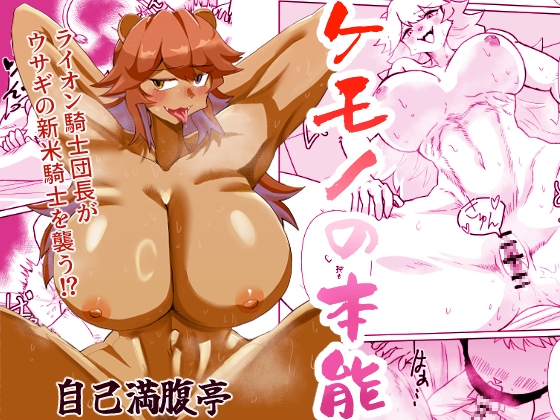
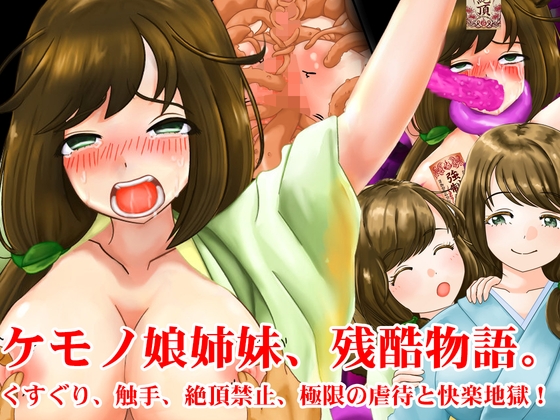
In Japanese subculture, kemono names a category of character — and a category of fan — that runs parallel to Western furry fandom but has its own conventions, its own events, and its own aesthetic emphasis. The two communities now interact continuously, but they are not the same.
Overview
Kemono (Japanese: ケモノ, kemono; literally animal / beast) is the Japanese subcultural category for anthropomorphic-animal characters and the fan community organised around them. The category covers characters that combine animal physical features (fur, tail, fangs, animal ears, four-legged body type) with anthropomorphic attributes (bipedal stance, language, human-style clothing). The most visible Japanese-language fan event is Kemoket (founded 2003), which now draws several hundred participating circles per session and is held semi-annually in Tokyo.
The category sits alongside the larger Western furry fandom, but the two are not identical. They share the underlying material — anthropomorphic-animal characters — and they interact continuously through online platforms (pixiv, Twitter/X, FurAffinity), but they have different histories, different aesthetic emphases, different community infrastructures, and slightly different conceptual scopes.
The Japanese kemono community generally treats the category as a visual-aesthetic register: the appeal is in the anthropomorphic-character drawing tradition, and the boundary of the category is the boundary of that drawing tradition. Western furry fandom historically treats furry as a wider lifestyle-and-identity category covering fursuit performance, fursona role-play, convention culture, and a richly developed sociological self-understanding. The two traditions overlap, but the kemono category is more narrowly aesthetic than the wider Western furry one.
Within the category, characters are often described on a spectrum from kemono-yori (closer to the animal, with more pronounced animal features) to hito-yori (closer to the human, with more human-like proportions). Where on this spectrum a fan’s preference falls is a recognised distinguishing feature within Japanese kemono fandom.
Etymology
Kemono (獣) is an old Japanese word — ke (毛, “fur”) + mono (物, “thing”) — meaning furred creature, and is the general native Japanese word for beast or animal. Its capture as a subcultural category name is comparatively recent; the katakana spelling ケモノ stabilised in the 1990s and 2000s as the genre-specific marker for “anthropomorphic-animal-character fandom” in Japanese subculture, distinguishing the subcultural use from the broader native-vocabulary sense[citation needed].
Derived terms current in Japanese kemono fandom include kemonā (ケモナー, “kemono fan”), kemono-homo (“kemono homosexual content”, a subgenre tag), and Kemoket (the convention name, kemono + -ket on the model of Comiket).
The English-language counterpart term is furry, a 1980s North American coinage from science-fiction-fandom circles. The Japanese kemono and the English furry overlap in subject matter — both centre on anthropomorphic-animal characters — but each has retained its own community infrastructure and its own conceptual emphasis. Inside Japanese-language discussion the two are sometimes carefully distinguished, sometimes treated as effectively synonymous; the answer depends on the specific writer’s emphasis.
History
Pre-history: Japanese anthropomorphism
Animal-and-human boundary-crossing has a long pre-history in Japanese culture. Mythological shinju and shin-shi (divine animals — Inari’s foxes, Hachiman’s doves, Kasuga’s deer); isōrui konin-tan (animal-marriage tales) in classical setsuwa collections (Konjaku Monogatari, Uji Shūi Monogatari); pictorial traditions of anthropomorphic animals (Chōjū-jinbutsu-giga, the twelfth-century scrolls; the bakemono-emaki monster scrolls of the Edo period; the comic art of Kawanabe Kyōsai) — all contribute to a long-running Japanese visual-and-narrative tradition of human-animal mixed beings.
In the modern era, Disney and Warner Bros. animation established post-war anthropomorphic-animal characters as a global mass-cultural staple, and Japanese animation incorporated the idiom from its earliest postwar releases — Tezuka Osamu’s Jungle Emperor Leo (1950s onward), Fujiko Fujio’s Perman and Kaibutsu-kun, and many others. By the late twentieth century, anthropomorphic-animal character work was an integrated part of mainstream Japanese popular culture, available as a familiar visual register for any subcultural community to take up.
Western furry fandom (1980s–)
The Western furry fandom emerged from the North American science-fiction convention circuit of the 1980s. Sub-communities of fans interested in anthropomorphic-animal characters — initially within wider SF and fantasy fandom — separated as their own community space in the early 1980s, and the first dedicated ConFurence convention was held in California in 1989. Through the 1990s the community institutionalised: Anthrocon (1997–) in the United States, Eurofurence (1995–) in Europe, dozens of regional gatherings. Within the community, yiff emerged in the 1990s as the in-community term for sexually-themed furry content[citation needed].
Japanese kemono fandom (1990s–)
The codification of kemono as a Japanese subcultural category took place in the late 1990s and early 2000s. Online communities formed on personal websites and text-based forums; specialist costume manufacturers and printers serving Comic Market and other doujinshi events began producing kemono-specific products; commercial adult-manga magazines began running occasional kemono-themed special issues. The 2003 founding of Kemoket marked the consolidation of the community’s institutional infrastructure, and Kemoket has since served as the kemono fandom’s anchor event in the same way that Yuricon serves yuri fandom and Yaoi-Con served the yaoi fandom of the early 2000s.
Through the 2000s and 2010s, commercial kemono-themed adult-manga anthologies (e.g. issues of Comic Bavel’s anthropomorphic specials), kemono-themed adult games, and dedicated kemono illustration collections established a stable commercial base for the genre alongside its doujinshi anchor.
International interaction (2010s–)
From the 2010s, online image-sharing platforms — pixiv, Twitter/X, FurAffinity — have enabled continuous interaction between Japanese kemono artists and Anglophone furry artists. Japanese artists publish for English-speaking audiences and vice versa; cross-translation of community vocabulary is routine; and the boundary between the two communities has become permeable in a way that earlier print-and-convention-era boundaries were not.
The conceptual gap remains visible. Japanese kemono fandom continues to be primarily a visual-aesthetic-and-character-design register, anchored in drawn media (manga, illustration, doujinshi, adult games). Western furry fandom remains a wider lifestyle-and-identity category covering fursuit construction and performance, fursona role-play, convention culture, and the social-psychological infrastructure that the FurScience / International Anthropomorphic Research Project has been mapping since the 2010s. The visual material that travels between the two communities is largely shared; the surrounding fandom infrastructure is not.
Forms and variants
Kemono (the central category)
Anthropomorphic-animal characters with explicit animal physical features. The spectrum from kemono-yori (animal-leaning) to hito-yori (human-leaning) is internal to this category, and Japanese kemono fans typically self-identify with a preferred position along it.
Kemonomimi (animal-eared)
Characters with human bodies and only animal ears (and sometimes tails) added — the most human-leaning end of the spectrum. Neko-mimi (cat-ears), kitsune-mimi (fox-ears), inu-mimi (dog-ears), usagi-mimi (rabbit-ears), and others. This subcategory is much more diffused into mainstream Japanese subculture than the broader kemono category — kemonomimi characters appear routinely in non-kemono-specific anime, manga, and games — and the relationship between kemonomimi and kemono proper is one of the fandom’s standing internal conversations.
Jūjin (the older term)
Jūjin (獣人, “beast-person”) is an older Japanese vocabulary item for human-animal mixed beings, with a more mythological-and-fantasy register than the subcultural-and-aesthetic kemono. The two terms are sometimes used interchangeably and sometimes carefully distinguished.
Monster girls / half-beasts
Monster girls (a category that includes jingo — supernatural creatures — alongside animal-human mixes) overlap partially with kemono but extend the field to include non-animal supernatural beings (yokai, fantasy creatures, mythological beings).
Fursuits (Western register)
The English-language furry community’s distinctive performance-costume practice, in which fans wear full-body anthropomorphic-character suits at conventions and meetups. Japanese kemono fandom intersects with this practice through cosplay culture but does not have the same large-scale fursuit-construction-and-wearing tradition that anchors Western furry fandom.
Cultural framing
Cultural-anthropology readings
The cultural-anthropological literature on anthropomorphic-character fandom places the kemono / furry tradition at the intersection of several long human cultural patterns: animal-and-human boundary exploration, totemism (the symbolic identification of human groups with specific animal species, well-documented across many traditional cultures), and the more recent post-industrial pattern of animal characters serving as expressive vehicles for human emotional life that human characters cannot quite carry. None of these accounts is a complete explanation, and the literature treats the kemono / furry phenomenon as legitimate as a contemporary cultural form rather than as a deviation needing to be explained away[citation needed].
Social-psychological research
The International Anthropomorphic Research Project’s FurScience programme has, since the 2010s, conducted ongoing quantitative research on the Anglophone furry community’s demographics, social structure, and psychological characteristics, generally framing it as a normal cultural community rather than as a clinical condition. Comparable systematic research on the Japanese kemono community is less developed.
Connection with contemporary art
Several twentieth- and twenty-first-century Japanese artists working in fine-art contexts — Murakami Takashi (the DOB-kun series), Nara Yoshitomo (animal-tinged child figures), Mr. (animal-eared girls) — have produced work that intersects with the kemono visual register. The relationship between this fine-art tradition and the subcultural kemono drawing tradition is one of the standing topics in writing on contemporary Japanese visual culture.
Ethical framing
Two distinct ethical considerations recur in writing on the genre. First, real-world animal sexual interest (zoophilia) and anthropomorphic-character fandom are categorically different: the latter concerns fictional drawn or animated characters that do not exist as living beings. Conflation of the two should be avoided. Second, character-design choices in adult kemono content — particularly age framing — are subject to the same ethical-fictional-content questions that govern adult fiction generally, and Japanese law’s strict prohibition on real-child-pornography production and distribution applies fully. Discussion of fictional-content frame is one of the standing internal topics in the community.
See also
Updated
References
- 『FurScience! A Summary of Five Years of Research from the International Anthropomorphic Research Project』 FurScience (2016)
- 『エロマンガ・スタディーズ』 East Press (2006)
- 『Fur and Loathing on the Internet: Anti-Furry Sentiment and Fandom Identity』 Archives of Sexual Behavior (2019)
- 『Kemoket Official Website』 https://kemoket.com/
Also known as
- Kemonomimi
- Anthropomorphic animal characters (Japanese)
- Furry (Japanese style)
- ja: ケモノ
- ja: けもの