“Shokushu (Tentacle)” works on DLsite

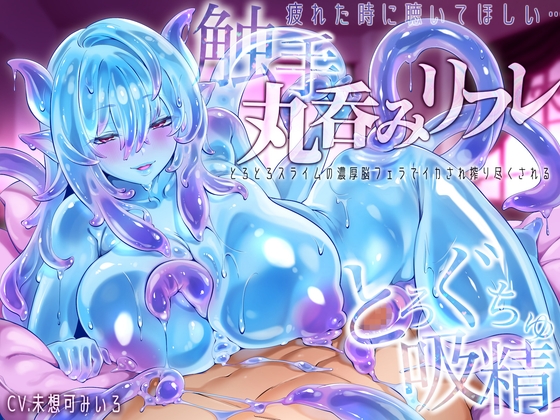
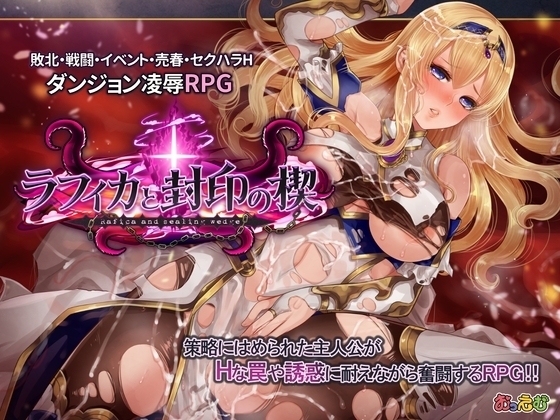
In 1814 Katsushika Hokusai published a single woodblock print of an octopus and a diving woman. Two centuries later, the visual idea it crystallised — non-human limbs as an erotic subject — is a global hentai category with its own labels, conventions, and audience. Few cultural exports trace as cleanly from one image to a genre as shokushu does.
Overview
Shokushu (Japanese: 触手) is the ordinary Japanese word for tentacle — the elongated appendage of an octopus, squid, or cnidarian — and is also the genre label for the strain of Japanese adult fiction in which such appendages, attached to non-human creatures (real or invented), bind, restrain, and sexually engage human characters. In English the genre is generally referred to as tentacle erotica, tentacle hentai, or simply tentacle; the romanised loanword shokushu circulates in fan-translation contexts but has not displaced the English name.
The genre’s defining formal property is the displacement of the male partner. Where conventional pornography depends on a human body as the active agent, shokushu substitutes a non-human one — an octopus, an alien, a sentient plant, a machine — whose multiple flexible limbs allow simultaneous contact at several body sites and produce a visual register that human-on-human staging cannot reproduce. The result has obvious narrative consequences (the absence of a human partner permits scenarios that human-only pornography cannot frame) and equally obvious medium consequences: tentacle scenes are difficult to stage in live action and natural in drawn or animated forms, which is why the genre is overwhelmingly anchored in doujinshi, commercial manga, adult anime, and adult video games rather than in live-action film.
Etymology
Shokushu is a two-character compound — 触 (“touch”) + 手 (“hand”, here “limb-shaped organ”) — that entered modern Japanese in the late nineteenth century as a translation term in zoology, used for the arms of cephalopods (octopus, squid) and the tentacles of cnidarians (jellyfish, sea anemone, hydra). Its adult-fiction sense is a metaphorical extension of this zoological vocabulary, and is documented in subcultural use from at least the 1980s.
The compound expressions shokushu-play (触手プレイ), shokushu-mono (“tentacle stuff”), and shokushu-kan (“tentacle violation”) are post-1980s industry coinages produced as the genre crystallised. Their construction is parallel to other Japanese adult-fiction compounds.
The English tentacle derives from Latin tentaculum (“a feeler”), an eighteenth-century coinage in zoology. The English-language genre labels tentacle erotica and tentacle hentai arose in late-1990s and early-2000s Anglophone fandom as direct genre-naming for the imported Japanese material.
History
Hokusai’s Tako to Ama (1814)
The conventional starting point for any genealogy of shokushu is Katsushika Hokusai’s woodblock print Tako to Ama — “The Diver and Two Octopuses”, widely known in English as The Dream of the Fisherman’s Wife — produced in 1814 as part of his three-volume erotic (shunga) anthology Kinoe no Komatsu. The print depicts an ama (female pearl-diver) in sexual contact with a large octopus, with a second smaller octopus attending. The image is accompanied by a long text in which all three figures, in turn, vocalise their pleasure.
Tako to Ama was not an anomaly in its own time. Octopuses appear elsewhere in late-Edo shunga, and human-creature contact had been part of the East Asian erotic-art repertoire since the Heian period. What gave Hokusai’s print its later canonical status was its travel: through the late nineteenth-century Japonisme exchange it entered European awareness as a leading example of Japanese erotic art, and through twentieth-century shunga scholarship it was confirmed as an art-historical centrepiece. By the early twenty-first century Tako to Ama was a routine inclusion in major museum exhibitions of shunga — at the British Museum (2013), the Honolulu Museum of Art (2014), and elsewhere — and was the single image most often cited in Western scholarship as the visible ancestor of modern tentacle erotica.
Pre-modern parallels
A wider, looser pre-history sets Tako to Ama in context. Sea-monster encounter narratives in classical Japanese tale collections (Konjaku Monogatari, Uji Shūi Monogatari), East Asian dragon and serpent iconography, and European maritime monster prints all contributed to a long-running visual vocabulary of human bodies in contact with multi-limbed non-human ones. In none of these traditions does the contact have the codified erotic-genre status it later acquires in postwar Japanese subculture, but they form the broad background against which Hokusai’s print, and its descendants, become legible.
Twentieth-century groundwork
In the twentieth century, tentacular and creature-contact imagery moved through several adjacent genres. H. P. Lovecraft’s cosmic horror tradition (The Call of Cthulhu, 1928, and successors) gave Western horror its tentacle-creature register. Postwar Japanese horror manga — particularly the work of Kazuo Umezu, Hideshi Hino, and Daijiro Morohoshi from the 1960s onward — developed parallel non-human-contact imagery, sometimes with erotic colour. By the late 1970s, both lineages had given enough vocabulary that an explicitly erotic creature-contact subgenre was a standing possibility.
Genre formation: 1980s–1990s
The codification of modern shokushu as a recognised hentai subgenre dates to the late 1980s. The decisive work is generally taken to be Toshio Maeda’s manga Urotsukidōji (1986), adapted to a long-running OVA series from 1989. Urotsukidōji fixed the genre’s visual language — multiple flexible appendages, sustained restraint, scenarios in apocalyptic or supernatural frames — in a form that subsequent works would directly inherit. Within a few years, Inju Gakuen (“Lust-Beast Academy”, 1992), La Blue Girl (1992), and other titles consolidated the OVA-led format, and adult game studios (Cocktail Soft, ELF, others) carried the imagery into eroge.
The 1990s also brought structural recognition in Japan’s amateur publishing economy. From around Comic Market 50 (1996) onward, shokushu was treated as a stable subdivision of the eroge and adult manga zone at major doujinshi events, sufficient that organisers could plan for it as a known quantity rather than an idiosyncratic fringe.
International reception
Shokushu was among the first hentai subgenres to be recognised abroad as distinctively Japanese. In the late 1990s and early 2000s, English-language anime and manga audiences encountered tentacle hentai through OVA imports (Urotsukidōji among them), through scanlated doujinshi, and through online image boards, and the romanised loanword hentai itself became attached, in many Western contexts, to the tentacle imagery as a stand-in for hentai as a whole.
In parallel, the art-historical recognition of Tako to Ama in Western museums (the British Museum’s 2013 Shunga exhibition was the watershed) provided the genre with an unusual bridge between high-art legitimation and low-genre identity. Tako to Ama hangs as a centrepiece of Edo-period art scholarship and stands as the originary work of an internationally circulated hentai subgenre simultaneously, and few cultural objects occupy that double position.
Forms and variants
Marine-creature variant
The traditional form, in direct genealogical descent from Hokusai’s print: octopuses, squid, and other sea-life as the non-human partner. The setting is typically aquatic — the ocean, an underwater grotto — and the visual logic emphasises the wet, glistening surfaces that make the imagery readable on the page or screen.
Plant variant
Vine, root, bud, or other plant structures as the non-human element. The associated narrative settings are forests, ruins, or otherworldly landscapes; the visual rhythm emphasises slow encroachment rather than aquatic motion.
Mechanical and constructed variant
Robotic appendages, tentacled machines, or sentient artificial creatures. Common in science-fiction-frame eroge and cyberpunk-flavoured hentai. The mechanical variant tends to inhabit narratives of laboratory experiments, captured-by-machines scenarios, and (frequently) mind-control plots.
Fictional-creature variant
Invented monsters, demons, alien lifeforms, kemonomimi boundary creatures. The category is the most flexible visually, and the most reliant on the artist’s individual design sense.
Composite genres
Shokushu is regularly combined with other hentai conventions: tentacle + bondage, tentacle + transformation, tentacle + mind control, tentacle + impregnation. The genre is unusually amenable to composition, because the non-human element absorbs many of the framing roles ordinarily occupied by a human partner and leaves the human partner free to be the narrative focus.
Critical reception
Two interpretive frames recur in academic and critical writing on shokushu.
The first reads shokushu through constraint and expression. Japan’s adult-content regulatory regime — built around the prohibition on uncensored depiction of genitalia — pushed adult fiction toward visual conventions that did not depend on the depicted body parts being the focus of the frame. The genre that resulted has produced visual rhetoric of unusual richness, in which staging, costume, expression, and creature design carry signal that under another regulatory regime might be carried by genitalia themselves. Tentacle imagery is a striking case: it offers the reader an erotic register in which the centre of attention is, by construction, not a censored body part.
The second reads shokushu through consent and genre ethics. The non-human partner in tentacle erotica is, by stipulation, not capable of consent in the human-relational sense, and the human partner is generally framed as overwhelmed rather than welcoming. Critics have asked whether the genre, taken as a body of fiction, codes pleasure-without-consent in a way that should give readers pause. The defenders’ response has typically appealed to fictional vs. real-world distinction (fiction explores scenarios that should not be enacted) and to the genre’s position in a longer art-historical lineage in which non-human-contact imagery functioned as fantasy figuration rather than ethical model. Both positions remain in play and the debate has not resolved.
See also
Updated
References
- 『Tako to Ama: Hokusai no Shunga』 Shinchosha (2010) — Cultural-historical study of Hokusai's The Dream of the Fisherman's Wife.
- 『Japanese Erotic Fantasies: Sexual Imagery of the Edo Period』 Hotei Publishing (2005)
- 『Shunga: Sex and Pleasure in Japanese Art』 British Museum Press (2013)
- 『Adult Manga: Culture and Power in Contemporary Japanese Society』 Curzon Press (2000)
Also known as
- Tentacle
- Tentacle erotica
- Tentacle hentai
- Tentacle porn
- ja: 触手
- ja: 触手プレイ