Kousoku (restraint / bondage)
✎ 本文編集 (admin) 🖼 画像編集 (admin)“Kousoku (restraint / bondage)” works on DLsite

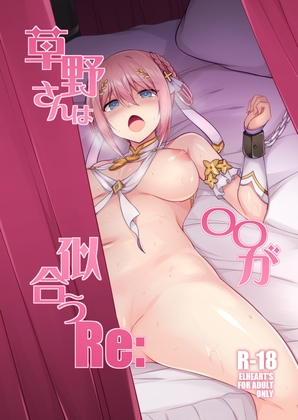
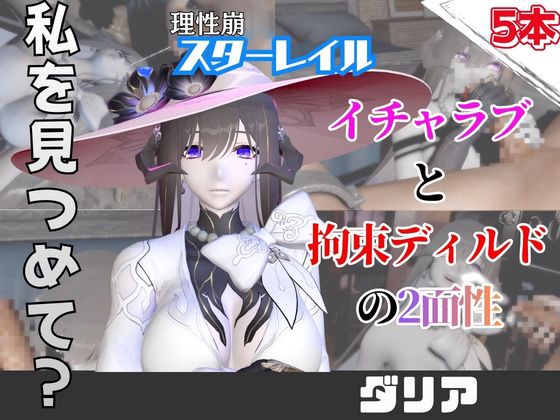
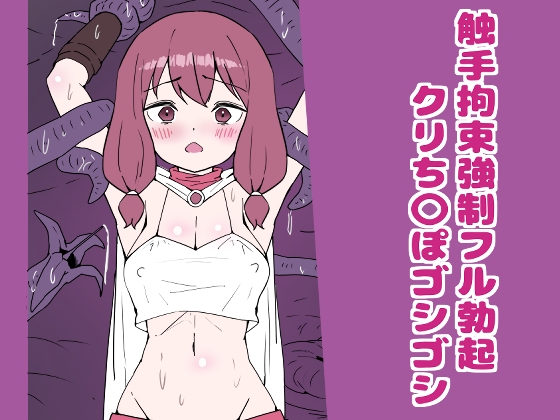
The coldness of the metal at the wrist, the tension of the leather strap, the lines drawn by the rope. Restricting motion produces an aesthetic of its own. The Japanese term kousoku (Japanese: 拘束, kōsoku) covers restraint and bondage as both the physical technique and the SM-aesthetic register that it underwrites. The corresponding English term bondage names what kousoku covers in the contemporary international BDSM vocabulary, with bondage additionally functioning as the B in the BDSM acronym. All practice described in this entry is consensual-adults-only practice operating within the SSC and RACK consent-and-safety frameworks. The article is descriptive rather than instructional.
Overview
Kousoku names the technique-and-aesthetic of physically-restricting the receiving partner’s body-motion through rope, leather strap, handcuffs, chains, or specialised restraint devices. The category functions as one of the central elements of contemporary SM practice and as one of the principal sites at which the role-play-configuration is given physical-implementation. The Japanese-specific tradition of kinbaku (緊縛, Japanese rope bondage) sits within the broader kousoku category as the most-developed Japanese cultural-and-aesthetic tradition.
The significance of restraint is layered into three functional dimensions. The visual-aesthetic dimension: the configuration of the receiving partner’s body becomes a constructed-and-presented visual configuration. The role-play dimension: the consensual power-asymmetry of the configuration is given physical-anchoring through the restraint. The sensory-concentration dimension: the limitation of motion produces concentrated-attention on the somatic-sensory experience that the restrained partner is encountering.
Within responsible BDSM-practice communities, restraint operates within the SSC (Safe, Sane, Consensual) and RACK (Risk-Aware Consensual Kink) consent-and-safety protocols. Both protocols centre on the pre-scene consent-discussion, the awareness of physical-risk-factors, the continuous monitoring of the receiving partner’s condition, the availability of emergency-release tools, and the after-care arrangement.
A structurally-significant point that is easy to misread: while the visual configuration suggests that the agency sits with the partner applying the restraint, the actual operating distribution of agency in responsible-practice communities places the ultimate veto with the restrained partner. The safeword that the restrained partner holds is the structural-baseline of the consensual practice, and the start-continue-stop of the scene is the restrained partner’s decision rather than the applying partner’s. The visual surface and the operating-agency-distribution are deliberately mismatched, and the community-practice-vocabulary is explicit about this mismatch.
Etymology
Kousoku combines 拘 (kō, “to capture, to seize”) + 束 (soku, “to bundle, to tie”). The compound has been in Japanese-and-Chinese legal-and-general usage since classical Chinese, with the original meaning being “to apprehend a person and restrict motion” without specific consensual-practice connotation. The modern Japanese legal-vocabulary and general-vocabulary inherited the term in this baseline sense.
Through the late-20th-century SM-cultural development, kousoku was re-articulated as a central technical term in the field. The 1950s and 1960s SM-magazine and photography vocabulary established the contemporary usage.
The English bondage derives from Middle English vocabulary for “state of subjection” or “servitude”. The late-20th-century BDSM-subculture re-defined the term as the technical-vocabulary for consensual-restraint-practice, with the term subsequently functioning as the B in the BDSM acronym in the contemporary international vocabulary.
History and development
Tool-tradition genealogy
The implements used in restraint practice carry distinct regional-and-period traditions. In Japan, the Edo-period torimewa (捕縄, arrest-rope) discipline of warrior-class police-practice anchored the hemp-rope tradition. The 20th-century kinbaku tradition reworked this rope-tradition into the contemporary aesthetic system. In Europe and North America, the leather-strap, handcuff, and chain-tradition developed alongside the Industrial Revolution metal-and-leather manufacturing, producing its own aesthetic-and-functional traditions.
The plant-fibre (rope) Japanese tradition and the leather-and-metal Western tradition differ substantially in visual-and-tactile aesthetic. The Japanese tradition develops the organic-line aesthetic of rope pressing into and visibly-marking the skin; the Western tradition develops the architectural-form aesthetic of hard implements covering and configuring the body. The two visual-aesthetic traditions are now in mutual circulation within the international community-practice.
Postwar Japanese SM-culture establishment
The Japanese establishment of restraint-themed work as a recognised SM-aesthetic category centred on the magazine Kitan Club (奇譚クラブ, founded 1947 by Akebono Shobō). The rope-artists and photographers active in the magazine’s pages established the standard visual-vocabulary of postwar Japanese SM aesthetic.
Dan Oniroku’s serialised novel Hana to Hebi (“Flower and Snake”, beginning 1962 in Kitan Club), Itō Seiu’s seme-e tradition, and the 1970s Nikkatsu Roman Porno film-production cycle established restraint as a central element of Japanese SM-representation.
BDSM-subculture formation
The late-20th-century English-language BDSM-community developed alongside the gay-leather-community trajectory and the second-wave-feminism debates. The community’s stabilised-vocabulary, standardised-tool-categories (cuffs, chains, spanking-benches), safety-protocols, and education-workshop-cycle developed in this period.
From the 1990s onward, specialist-supplier infrastructure for the field developed internationally, and medical-grade-material high-quality restraint-tools became widely-available.
Form-categories
By implement
- Rope restraint: hemp and cotton rope. The traditional Japanese kinbaku is the central case.
- Leather-strap restraint: leather cuffs, belts, and harnesses. The Western BDSM tradition’s centre.
- Metal restraint: handcuffs, chains, iron rings. Distinguished by mass, cold-sensation, and difficulty-of-emergency-release.
- Furniture-restraint: restraint-chairs, restraint-beds, restraint-boxes. Structures designed to immobilise specific configurations.
- Self-restraint: solo-practice. Particularly demanding on safety-management for obvious reasons.
By body-region
- Wrist-and-ankle restraint: the standard single-region form.
- Full-body restraint: composite restraint configurations.
- Posture-fixed restraint: forms that hold specific body-postures (spanking-bench, posture-frame).
Combined with sensory-deprivation
Restraint configurations are frequently combined with blindfolds, ear-plugs, and gags. The deprivation-of-other-sensory-channels produces concentrated-attention on the somatic and pressure sensations that the restraint creates.
Safety vocabulary
Practice requires explicit attention to the running-paths of major nerves and blood vessels, to the prevention of circulatory-failure and nerve-damage, and to the continuous monitoring of the receiving partner’s physical-and-psychological state. Inappropriate-pressure on the major neural-and-vascular paths of the wrist, upper arm, and thigh can produce permanent functional damage, and the operating standard of responsible practice is that learning takes place under the guidance of experienced teachers rather than from text-descriptions.
Pre-scene safeword confirmation, the standby availability of emergency-release scissors and keys, the principle of never-leaving-the-restrained-partner-alone, and the arrangement of post-scene after-care all operate as standard baseline-requirements in responsible practice.
This entry is descriptive rather than instructional. Anyone interested in practical engagement should pursue systematic learning through an experienced teacher rather than from text descriptions.
Adjacent traditions
Kousoku sits at the centre of SM culture, and connects closely with the adjacent traditions of kinbaku, choukyou (discipline-training), and kankin (confinement). The kinbaku tradition specifically, as the Japanese-cultural form of restraint, has developed its own internationally-recognised identity as shibari and operates as a distinct cultural-export tradition within the broader international restraint-practice.
In Japanese doujinshi and adult-manga search-tag systems, kousoku appears as a high-frequency standalone tag, functioning as the search-and-filter starting-point for the related-tag combinations (kinbaku, choukyou, SM, etc.).
Related Terms
- Kinbaku
- SM culture
- Choukyou (training)
- Kankin (confinement)
- M-man (mdan)
- M-woman (mjo)
- Blindfold (mekakushi)
- BDSM
Updated
References
- 『Screw the Roses, Send Me the Thorns』 Mystic Rose Books (1995) — Foundational English-language BDSM practice guide.
- 『Different Loving』 Villard Books (1993)
- 『BDSM: A Guide for Explorers of Extreme Eroticism』 Daedalus Publishing (1992)
- 『日本緊縛史』 Kawade Shobō Shinsha (1995)
Also known as
- bondage
- restraint
- binding
- ja: 拘束
- ja: ボンデージ
- ja: 束縛プレイ