“Hair kink (kami fetish / trichophilia)” works on DLsite

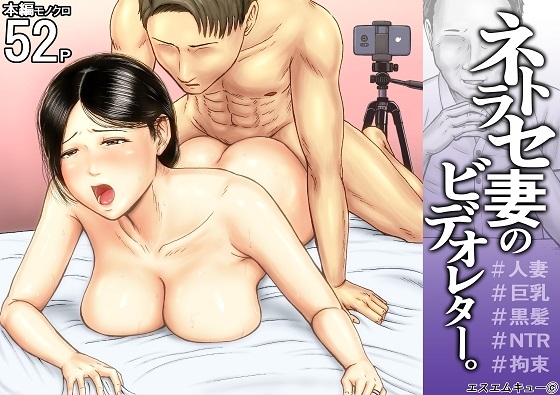

Among parts of the body, the head-hair is the most freely reshapeable. Length, colour, and bound-or-unbound configuration change the impression instantly, and the head-hair has long carried dense sign-content as a sexual marker.
Kami fetishi (Japanese: 髪フェチ, kami-fetishi; English: hair fetish, hair fetishism; clinical: trichophilia, from Greek thrix / tricho- “hair” + philia “love”) is the kink category in which the length, colour, texture, hairstyle, and gestures-toward-hair function as the principal object of arousal. As one of the foundational forms of body-related fetishism — a recognised cross-cultural category of sexual-psychology — the hair-kink has been the subject of attention from psychology, cultural anthropology, and religious-history disciplines.
Overview
The hair-kink’s objects include head-hair physical properties (length, colour, texture, density, straight-or-curled), hairstyles (long, short, twin-tail, pony-tail, braided), gestures toward hair (combing, tying, untying, washing, cutting), and the touch-and-contact involving hair. Visual, olfactory, and tactile registers each independently or in combination provide the arousal-channel.
The head-hair has a distinctively-high mutability compared to other body-parts. Length, colour, and form are deliberately manipulable; the time-axis through which hair grows-and-can-be-cut provides a temporal dimension. This mutability gives the hair-kink a dynamic-and-temporal character distinct from the kink-categories attaching to fixed body-parts (breast, buttock, and foot fetishes, where the underlying anatomy is essentially fixed). Hairstyle-change, hair-growth-process, and cutting-gesture each become independent thematic objects within the kink.
The head-hair is also strongly socially-and-religiously coded across cultures. In many traditions, hairstyle signifies status, age, marital position, and religious affiliation. The cultural-development of the hair-kink is inseparable from this historical depth of hair-as-sign.
Etymology
Kami fetishi combines Japanese kami (hair) with the Japanese abbreviation fetishi (from English fetish). The compound stabilised in the 1990s-onward Japanese subcultural-and-publication vocabulary.
Fetish derives from Portuguese feitiço (“charm”, “object with magical power”), in turn from Latin facticius (“artificially made”). In the 15th-and-16th-centuries, Western observers of West African religious practice adopted the term for the cult-objects encountered there. The 19th-century French psychologist Alfred Binet (1857-1911), in his foundational paper Le Fétichisme dans l’amour (1887), introduced the term to sexual-psychology, establishing the modern concept of fetishism as a sexual-psychological category.
The clinical-and-academic term for the hair-specific kink is trichophilia (Greek thrix / tricho- “hair” + philia “love”). Hair fetishism is the more common informal-and-Anglophone vocabulary equivalent. The related-but-distinct trichotillomania (compulsive hair-pulling) is a separate psychiatric category and is not confused with trichophilia in the clinical literature.
History and development
Classical and medieval hair-representation
Cultures across antiquity have engaged hair as a sexual-aesthetic object. Greek sculpture-and-poetry attended carefully to the flowing curls as a principal element of female beauty. The Indian Kāmasūtra (c. 3rd-4th century CE) describes gestures-toward-female-hair as part of the sexual-gestural vocabulary. Medieval European Christian culture positioned women’s hair ambivalently as a temptation-symbol, with religious-practice mandating covered hair for married women.
Islamic-cultural-region veiling practices for women’s hair, Eastern-European Jewish religious practice of married-women’s hair-shaving-and-wig-wearing, and adjacent religious practices construct hair as a sexual-signifier through public non-display, producing the paradoxical cultural circuit in which non-display elevates the private-context sexual-value of hair.
The Japanese black-hair tradition
The Japanese cultural position of hair as sexual-and-aesthetic object has a distinctive historical depth. Heian-period aristocratic women’s long black hair functioned as a central element of beauty-evaluation, with the Genji Monogatari and Makura no Sōshi including frequent thematic treatment. The saying “kami wa onna no inochi” (“hair is the woman’s life”) encapsulates the durable Japanese aesthetic position of black-hair as defining-feature.
In Edo-period shunga and ukiyoe, black-hair appears as the central element of female-representation, attentively rendered. Utamaro’s beauty-portrait works repeatedly take hair-arranging gestures, disheveled-hair, and hair-untying actions as principal compositional subjects. The Edo-period female-hair-arranger profession (onna-kamiyui), the social-coding of mage (topknot), and the Meiji-period debate over hair-cutting reform together produce a dense cultural-historical layer on Japanese hair-attention.
The pre-modern aesthetic of long-black hair has continued through to the contemporary cosplay culture and adult-content production, in the kurokami-rongu (“black-hair-long”) and kurokami-seiso (“black-hair-pure”) character-types that remain durable categories.
19th-century psychological articulation
In the late-19th-century development of psychiatry and sexual-psychology, fetishism as a general category became academically-articulated. French psychologist Alfred Binet, British sexual-psychologist Havelock Ellis (1859-1939), and German psychiatrist Richard von Krafft-Ebing (1840-1902) treated hair-fetishism and adjacent fetishism-forms as psychiatric-disorder categories in the initial framing. Ellis’s Studies in the Psychology of Sex (1897-1928) includes case-study material on hair-fetishism.
In late-20th-century-onward psychiatric practice, the position has shifted: consensual adult fetishistic practice is no longer treated as pathology. The American Psychiatric Association DSM-5 (2013) and the WHO ICD-11 (2018) only classify fetishism as a paraphilic disorder when the configuration causes distress or impairment to the individual or to others. Aigner et al.’s 2003 review article Trichophilia (International Journal of Psychiatry in Clinical Practice) provides a contemporary psychiatric overview noting that the majority of hair-fetishism cases fall within the non-pathological kink-range.
Sub-categorisation
The hair-kink sub-categorises along multiple axes.
By hairstyle
- Long hair: attachment to head-hair length itself as visual-attribute
- Short hair: attachment to short-hair, with continuity to the nape zone
- Bob: attachment to chin-aligned hair-length
- Twin-tail: two-bunched configuration; strongly-categorised in Japanese subcultural production
- Pony-tail: single-bunched back-of-head configuration; associated with athletic-and-healthy coding
- Braid: braided-configuration attachment
- Bun / Yakai-maki: bound-up configuration; strongly-associated with formal-or-traditional dress
By colour
- Black: traditional Japanese aesthetic-ideal; pure-and-classical coding
- Brown / chestnut: accessibility-and-contemporary coding
- Blond: Western-cultural-reference and exotic-coding
- Silver / white: 2D-representation distinctive; mystic-and-non-everyday coding
- Red / pink / etc.: anime-and-cosplay culture distinctive
By texture
- Straight: attention to clean-aligned hair
- Wave / curl: attention to dynamic-form
- Wet hair: attention to moist-and-luminous hair; connects with sweat and bath-context
- Disheveled-or-just-woken hair: attention to private-and-everyday hair
By gesture
- Combing hair: gesture-toward-hair-with-hand-or-comb attachment
- Smelling hair: olfactory-channel attachment, including shampoo-fragrance
- Cutting hair / having hair cut: gesture-of-cutting attachment; connects with loss-and-submission and SM-culture in some cases
- Growing-out hair: time-process attachment
- Pulling hair: gesture-of-hair-pulling attachment; connects with dominance-and-submission registers
Cultural reference
Treatment in AV and adult-content
The Japanese AV industry has long employed “kurokami-seiso” (black-hair-pure), “kurokami-rongu” (black-hair-long), and “bishōjo-rongu-hea” (beautiful-girl-long-hair) as discrete category-vocabulary. Through the 1990s-onward period, productions centring hairstyle-and-colour-marker as the principal appeal-element have stabilised as a continuing genre. Long-black-hair particularly operates as the visual-sign-of-purity-and-innocence, with contrastive sexual-development providing the genre’s principal narrative-structure.
In adult doujinshi and adult-manga, hairstyle-and-colour rendering aligns tightly with character-type-vocabulary. The black-hair-long = pure; twin-tail = energetic; silver-hair = mysterious sign-correspondences operate as a cross-genre expression-convention.
2D representation and attribute-system
In Japanese anime, manga, and game representation, hairstyle and hair-colour function as high-resolution character-personality signals. With the 1990s-onward establishment of the otaku-culture zokusei (attribute) concept, combinations like “black-hair-long”, “silver-hair-twin-tail”, etc. operate as independent kink-objects in fan-vocabulary.
In cosplay culture, wig-selection ranks alongside costume as a principal-element. This fact concretely indicates that hair operates beyond mere body-attribute to constitute an independent sign-system.
Adjacent kink-cluster
The hair-kink frequently operates in composite with adjacent body-area kinks. The nape kink shares a continuous body-area with hair; the gesture-of-tying-hair-up to reveal the nape operates as a kink-bridge between the two. Uniform and chaku-ero clothing-kinks combine with specific hairstyles for further categorisation. Co-occurrence with foot and adjacent body-part kinks is also observed.
Anglophone academic literature
Anglophone sexual-science and psychiatric literature has long treated hair-fetishism (trichophilia / hair fetishism) as a case-study object. Beyond Aigner et al.’s 2003 review, Ellis’s classical studies and intermittent subsequent contributions accumulate. In cultural-anthropology, Hiltebeitel and Miller’s 1998 edited collection Hair: Its Power and Meaning in Asian Cultures operates as a representative comprehensive treatment of religious-and-social meanings of hair across Asian cultures.
Related Terms
- Nape (unaji) — adjacent body-area, frequently combined
- Twin-tail kink — discrete-categorised hairstyle kink
- Short-hair kink — short-hair sub-form
- Cosplay — culture in which wigs operate alongside costumes
- Foot fetish (ashi) — adjacent body-part fetish category
- Uniform (seifuku) — clothing-fetish frequently combined with hair-attention
- Chaku-ero — clothing-and-hair composite-kink area
Updated
References
- 『Trichophilia. A psychiatric overview of the fetishism of hair』 International Journal of Psychiatry in Clinical Practice (2003)
- 『Studies in the Psychology of Sex』 F. A. Davis (1897-1928)
- 『Le Fétichisme dans l'amour』 Revue Philosophique (1887) — Foundational paper introducing fetishism to sexual-psychology.
- 『Hair: Its Power and Meaning in Asian Cultures』 State University of New York Press (1998)
Also known as
- hair fetish
- hair fetishism
- trichophilia
- hair kink
- kami fetish
- ja: 髪フェチ
- ja: 黒髪フェチ
- ja: 髪フェティシズム