Nape (unaji)
✎ 本文編集 (admin) 🖼 画像編集 (admin)“Nape (unaji)” works on DLsite
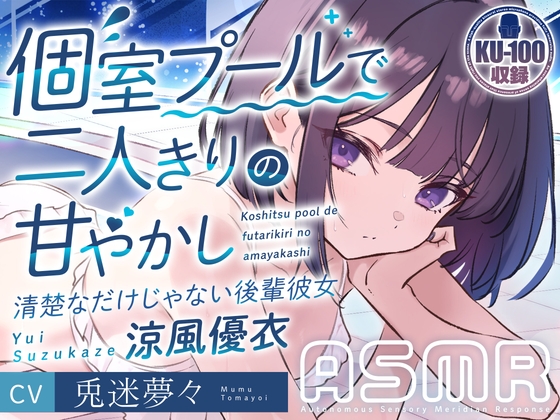

A summer-festival night, hair pinned up over a yukata, white skin glimpsed in the turn of a head. In the lineage of Japanese bodily aesthetics, this region has held a distinctive place. Small as a visible part, it is a rare patch of skin deliberately disclosed by dress, a site on which the gaze concentrates, with a long tradition behind it.
Unaji (Japanese: うなじ, 項; English: nape; Latin: nucha) is the colloquial name for the posterior surface of the neck, from the lower back of the head to the region of the seventh cervical vertebra. “項” (unaji) is the classical written form, “襟足” (eriashi, hairline at the nape) a related concept tied to kimono culture, and “後頸部” (koukeibu) the formal anatomical name, all coexisting as expressions for the same or adjacent region.
Overview
The nape belongs to a small body region, yet it has held a distinctive aesthetic value as a body surface deliberately exposed in kimono and Japanese-hairstyle culture. While the front and sides of the neck are a visual region continuous with the head and face, the nape functions as an “inner” bodily sign visible only from behind. This is closely related to a Japanese aesthetic that prizes the “reverse”, the “depth”, and the “interior”.
As to etymology, the form is presumed to combine the archaic una (“behind”) with a demonstrative suffix. It is an old native word frequent in classical literature, with attested appearances in Heian-period poems and tales.
Anatomical range
The range the nape designates is bounded roughly by the posterior neck surface from the lower back of the head to the shoulders, and from the hairline (eriashi) to around the seventh cervical vertebra (vertebra prominens). Beneath lie the principal neck muscles (trapezius, splenius capitis, splenius cervicis), with the cervical vertebrae, spinal cord, and major vessels deeper still. On the surface, the shape of the hairline, skin quality, and the smoothness given by subcutaneous fat are elements subject to aesthetic evaluation. The shape of the hairline at the nape (W-type, M-type, widow’s-peak type) is a body feature of large individual variation.
Cultural-historical position
In traditional Japanese dress (the kimono), the female body is broadly concealed by a high collar, long hem, and wide sleeves. Within this dress system, the body parts often deliberately exposed are limited to four regions: the face, the fingers, the instep over the tabi sock, and the nape.
The nape in particular is necessarily opened to the gaze in the hair-up styles of kimono dress (shimada, marumage, and others). In the pleasure-quarter culture and kabuki dance from the Edo period onward, hairstyles and collar-drawing that deliberately emphasise the nape (dressing the collar down toward the shoulders to expose the neck) were systematised as techniques for staging a woman’s allure.
The “collar-drawing” (eri o nuku) technique of kimono dressing means lowering the back collar toward the shoulders to widen the exposed range of the nape. Characteristic of the dress of professional women such as geisha, maiko, and oiran, the degree of exposure is adjusted by the depth of the draw. This “depth of collar-draw” continues as an important index of aesthetic sense in contemporary kimono-dressing instruction. Tea ceremony, dance, and traditional-culture kimono dressing tend toward a modest draw, while the dressing of geisha and courtesans tends toward a deeper one, establishing a convention of context-dependent use.
Development as a sexual sign
The nape has traditionally functioned as a bodily sign symbolising “allure”. Idioms such as “the nape stands out” and “a beautiful nape” are incorporated into the Japanese vocabulary of bodily evaluation as concise expressions of a woman’s attractiveness.
Several contexts coexist: a traditional discourse holding the nape of a mature woman (married woman, mature woman (jukujo)) to be especially aesthetically valuable; a discourse valuing the white smooth nape of a young woman; and one positioning it as a universal aesthetic sign regardless of age. These persist in contemporary Japanese discourse on bodily aesthetics as a multilayered evaluation system attuned to age, dress, and occasion.
Treatment in sexual representation
In adult representation, the nape is foregrounded less as an independent fetish domain than in combination with kimono, yukata, and disrobing scenes. In kimono staging in adult video and gravure, the gaze toward the nape, kissing (seppun) it, and contact with it are incorporated as standard scenes.
In manga and anime too, the nape functions as an important drawing element linked to kimono and hairstyle depiction. Staging such as “a kiss on the nape” and “a stray strand of upswept hair falling on the nape” recurs frequently in both erotic and girls’ manga.
In industry vocabulary, independent classifications such as “nape genre” or “nape fetish” are limited; the nape tends rather to function as a secondary staging region subsumed under broader genres such as kimono staging, married-woman staging, and clothed-erotic (chakuero) staging.
Aspect of sensitivity
The nape, a region of relatively dense superficial sensory nerves, shows high sensitivity to light touch and temperature. The skin of the posterior neck is thin with relatively high nerve-ending density, so responsiveness to light contact, breath, and lip contact is pronounced. It is also a delicate region prone to provoking pain under strong stimulation, so light lip contact, tongue contact, and fine fingertip touch are preferred as sexual stimulation. In BDSM-style staging within restraint contexts, hair-pulling at the posterior neck and the combination with collars and chokers form a separate axis of foregrounding.
Related terms and adjacent concepts
Evaluative terms adjacent to the nape (“hairline”, “beautiful hair”, “white skin”, “black hair”, “upswept hair”) interconnect in a web within the discourse of kimono aesthetics. A distinctive position of the word unaji is that it belongs to a lineage of native-Japanese bodily-evaluation words, unlike “beautiful + part” terms such as beautiful legs (bikyaku) and beautiful breasts.
Related Terms
- Married woman (hitozuma) — an evaluation object combined with kimono culture
- Beautiful legs (bikyaku) — an adjacent bodily-evaluation word
- Erogenous zone (seikantai) — a related region of bodily sensation
- Back (senaka) — the continuous body surface below
Updated
References
- 『Geisha』 University of California Press (1983)
- 『The Empire of Signs』 Hill and Wang (1982)
- 『Gray's Anatomy』 Elsevier (2020)
Also known as
- nape
- back of the neck
- nape of the neck
- ja: うなじ
- ja: 襟足