Fighting-game erotic fan art
✎ 本文編集 (admin) 🖼 画像編集 (admin)“Fighting-game erotic fan art” works on DLsite
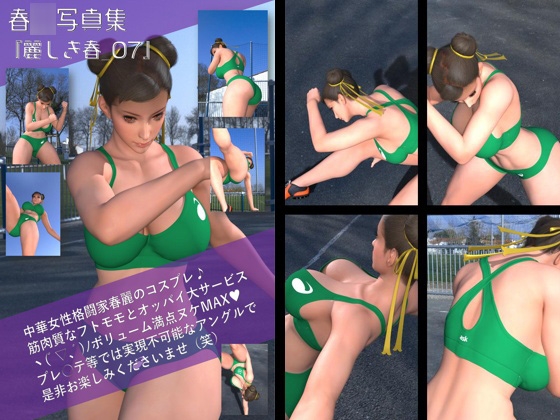
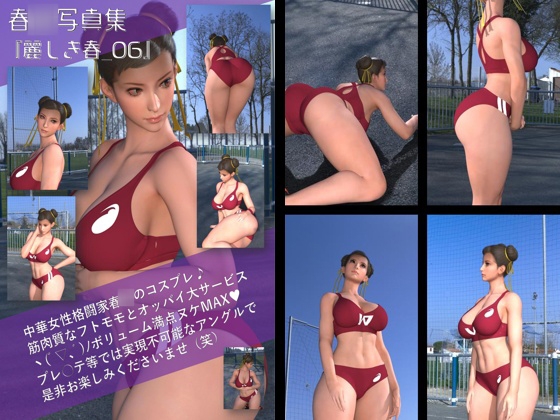
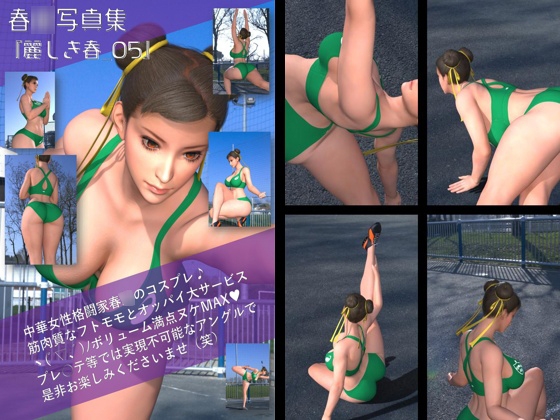

The moment she enters the stage, a thigh shows through the slit of a blue cheongsam, and braided hair rises in the air on a spinning kick. The fighter on screen throws male characters one after another and turns back to the camera in a victory pose. After the match cuts to black, another scene rises in the player’s head. Fighting-game erotic fan art is the umbrella term for adult derivative work, fan art, and doujin games centred on the female characters of fighting games.
Overview
This is a long-running derivative field that arose alongside the 1990s golden age of arcade fighting games. Capcom’s Street Fighter II (1991) Chun-Li, SNK’s Fatal Fury series (1992) Mai Shiranui, Namco’s Tekken series Nina and Anna Williams, and Sammy’s Guilty Gear series Dizzy and I-No, strong fighting heroines became regulars of derivative work. The chief carriers are doujinshi, eromanga, doujin games, cosplay, and adult CG collections, and the field has held a stable presence at Comic Market from the 1990s to the present. All characters are fictional adults.
Core structure: combat costume and physical strength
A fighting-game female character combines a revealing combat costume and the physical strength to beat men. Chun-Li’s cheongsam and stockings, Mai Shiranui’s kunoichi outfit with thigh and hip slits, Ibuki’s ninja garb, Juri’s leotard, the combat dress often prioritises visual appeal over protective function. At the same time these characters are placed in their fictional worlds as strong enough to defeat male fighters: Chun-Li an Interpol officer, Mai a master of ninjutsu, Nina an assassin, Lili of Tekken fighting Kazuya and Heihachi to a draw. The heroine’s overwhelming strength does not contradict her sexual appeal but coexists with it, and the image of the strong, beautiful warrior forms the core object of derivative work.
The 1990s: Chun-Li and Mai Shiranui
Chun-Li, the original character of Street Fighter II (1991), gained worldwide recognition with the blue cheongsam and bun hair as signs. From 1992, many Comic Market circles centred on Chun-Li appeared, and new work continues to the present. Mai Shiranui, added in Fatal Fury 2 (1992), became SNK’s signature heroine with a red-and-white Japanese-style kunoichi costume and a full figure; the stress on her chest movement, the victory stance, and the somersault of her “Ninja Bee” special drove derivative enthusiasm, and her appearing beside Chun-Li in crossover works such as Capcom vs SNK became an iconic composition for fans. Through the 1990s the “game” category of Comic Market held a stable scale of fighting-game titles, recognised as one of the genre categories.
Developments from the 2000s
Namco’s Tekken series became the core of 3D fighting, with Nina, Anna, Xiaoyu, and Lili as derivative subjects, alongside Sega’s Virtua Fighter Sarah Bryant from the early period. Arc System Works’ Guilty Gear and BlazBlue lines, with their manga-style cast, strongly drove the derivative market, with Dizzy, I-No, May, and Litchi as subjects. Fighting-game-themed doujin games (chiefly R-18 simulation and violation-type works) arose from the 2000s, with circles producing works structured around defeating a fighting heroine; these connect to the wider hentai culture and are recognised abroad as Japanese fighting-game derivative work.
Reception: the strong woman brought down
What places fighting-game derivative erotica in a special position is that its subject is strong in the source. The structure in which a warrior able to beat male characters, rather than a woman met in daily life, becomes the object of sexual contact in derivative work evokes a layered desire: the pairing of strength and beauty, the narrative of defeat, the exchange of initiative. Fighting-game costumes are also popular in cosplay and cosplay AV, and the genre’s reception has continued through two strands, real-world costume reproduction and two-dimensional derivative work.
Related terms
Updated
References
- 『Street Fighter II Official Settings Collection』 Capcom (1992)
- 『Fatal Fury: Mai Shiranui setting materials』 SNK (1992)
- 『Adult Manga: Culture and Power in Contemporary Japanese Society』 Curzon Press (2000)
Also known as
- fighting game R-18 doujinshi
- Chun-Li and Mai parody content
- fighting-game fan art
- ja: 格闘ゲームとエロコンテンツ
Related
- Ryona
- Ecchi (Japanese Softcore Erotic Genre)
- Hana to Hebi (Flower and Snake)
- Haramase-mono (impregnation genre)
- Idol-producer theme (J-adult media)
- Sacrificial-victim genre (J-hentai)
- Training/development eroge
- Illustration collection (doujin art book)
- Isekai genre (Japanese fantasy/adult setting)
- Live-action eroge
- Female-teacher genre (J-adult fiction)
- Women-oriented AV