“Doujinshi” works on DLsite



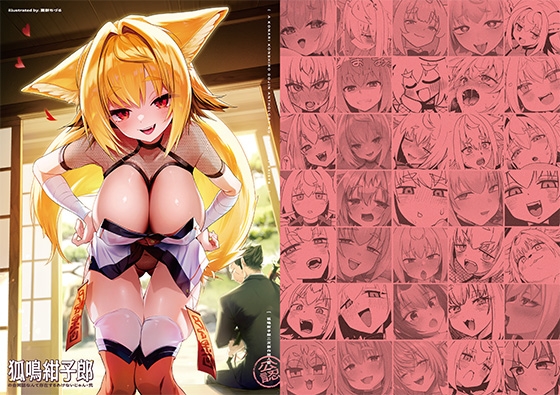
Twice a year, the largest amateur-publishing event in the world fills Tokyo’s Big Sight convention complex. Over three or four days, more than half a million people attend Comic Market — Comiket — to buy, sell, and read self-published booklets that the formal publishing industry would never produce. The publications are doujinshi, and they belong to a tradition that, in print form, is now over a century old.
Overview
Doujinshi (Japanese: 同人誌, dōjinshi) is the standard Japanese term for a fan-edited, self-published periodical or volume. The word covers a vast and structurally heterogeneous range of publications: literary little-magazines, manga zines, scholarly mimeo journals, fan-derivative comics, photo collections, technical handbooks, music criticism, transit-history pamphlets, and (the most internationally visible part of the iceberg) adult fan-derivative comics. Print runs span from a few dozen to several thousand. Authors, editors, and printers are typically a single small group — often one person doing all three — and distribution runs through a parallel infrastructure of conventions, specialist bookshops, and online platforms.
What makes the doujinshi economy structurally distinctive is its separation from the commercial publishing industry. Doujinshi authors typically do not have editors imposing rewrites; they do not sign contracts that constrain what they may write next. The price of that independence is that doujinshi must be financed and produced by their authors and circulated through informal channels. The benefit is that the form has, for nearly half a century, served as Japan’s principal outlet for what mainstream publishers cannot or will not print: fan-derivative reimagining of commercial works, yaoi and yuri male-male and female-female romance, eromanga of every subgenre, and large quantities of original work that would not survive a commercial editor’s first read.
The principal distribution channels are: the convention circuit (Comic Market, Comitia, and a long tail of genre- and franchise-specific events), specialist doujinshi bookshops (Toranoana, Melonbooks, K-Books, Lashinbang), and online platforms (DLsite, FANZA Doujin, BOOTH, pixiv FANBOX). Adult-content doujinshi are gated by age verification at the point of sale, and seijin-muke / R-18 / R-18G labelling is the standard for adult-content packaging.
Etymology
Doujin (同人) is a Sino-Japanese compound — 同 (“same”) + 人 (“person”) — that goes back to classical Chinese vocabulary, and is conventionally traced to the Yijing’s Tongren hexagram. Its modern sense — fellow enthusiasts, people united by a shared interest — was settled in late-nineteenth-century Japanese literary discourse, when newly forming Western-influenced literary societies adopted the word for themselves. Doujinshi, then, is the magazine of a doujin, the periodical produced by a circle of people united by a shared interest.
History
Meiji and Taishō: literary doujinshi (1885–c. 1925)
The first widely cited modern Japanese doujinshi is Garakuta Bunko (“Junk-Drawer Bookshelf”), published in 1885 by the literary circle Ken’yūsha. Successor publications — Shirakaba (“White Birch”, 1910–1923, the publishing vehicle of Mushanokōji, Shiga, and the Shirakaba School), Seitō (“Bluestocking”, 1911–1916, edited by Hiratsuka Raichō and the early Japanese feminist movement), Shinshichō (“New Currents of Thought”, 1907–, the publishing vehicle of Tanizaki, Akutagawa, and others) — placed many of the major writers and thinkers of modern Japanese literature on doujinshi platforms before their commercial debuts. Doujinshi in this period were predominantly literary, and functioned as the primary publishing venue for experimental, avant-garde, and politically inflected work that the commercial press would not print.
Postwar: manga doujinshi (1950s–1960s)
The postwar manga boom — Tezuka Osamu’s career launch from 1947, the rental-comic culture of the late 1950s, the proliferation of university manga clubs in the 1960s — produced the first wave of dedicated manga doujinshi. The institutional infrastructure of the form (manga clubs at universities, school-based mimeo printing, regional fan-circle networks) consolidated through the 1960s, and laid the groundwork for the convention circuit that would emerge in the next decade.
1975: the Comic Market and the founding of the modern circuit
On 21 December 1975, in a small meeting room at the Japan Fire Service Hall in Toranomon, Tokyo, the first Comic Market was held. Thirty-two participating circles and approximately seven hundred attendees were on hand. The event was organised by the manga-criticism collective Meikyū (Yonezawa Yoshihiro, Shimotsuki Takanaka, Harada Hisao and others), and was conceived as a venue at which manga criticism and creation could be conducted outside the editorial scope of commercial magazines.
Half a century later, Comic Market is one of the world’s largest amateur-publishing events, drawing hundreds of thousands of attendees per multi-day session and operating as the institutional anchor of Japan’s modern doujinshi economy.
1980s onward: derivative-fiction (nijisousaku) and adult content
From the 1980s, nijisousaku — derivative fiction reusing characters and worlds from commercial works — became one of the dominant modes within the doujinshi economy. Mass-readership commercial works generated waves of derivative work in their wake: Captain Tsubasa (1981–) anchored the first such wave, followed by Saint Seiya, Yoroiden Samurai Troopers, Yū Yū Hakusho, and many others. The pattern — commercial hit, followed by proportionate volume of derivative work — has been observable continuously since.
Adult-content derivative work expanded in parallel, codifying the subcultures that have become the doujinshi economy’s most internationally visible features: yaoi (female-authored male-male romance), yuri (female-female romance), and the wider field of male-reader-oriented adult fan-derivative comics covering netorare, chijo, kyonyuu, bukkake, and many other thematic categories. Each successive flagship commercial work — Neon Genesis Evangelion (1995), Love Live! (2010–), Kantai Collection (2013–), Fate/Grand Order (2015–), The Idolmaster — generated proportionate volumes of adult derivative work, and the heroines of major commercial works are still routinely referred to inside doujinshi space by character-name + bon (“the X book”)[citation needed].
Digital era (2000s onward)
The 2000s shifted the form’s distribution decisively. pixiv (founded 2007) opened an online posting platform for visual fan-work. DLsite and FANZA Doujin opened digital distribution platforms for whole doujinshi sold as downloadable products. By the late 2010s, digital sales exceeded paper sales for many circles, and the convention floor had become one channel among several rather than the primary one. The contemporary doujinshi economy operates on a dual print-and-digital model, with the convention circuit as much a community ritual as a sales channel[citation needed].
Forms and variants
Original-fiction doujinshi (ichiji-sousaku)
Doujinshi presenting the author’s own original world, characters, and stories. Frequently the launching platform for what subsequently become commercial-manga careers, and the venue for original work that does not fit a commercial editor’s typology. The literary lineage of Garakuta Bunko and Shirakaba survives in this segment.
Derivative-fiction doujinshi (nijisousaku)
Doujinshi reusing characters and worlds from commercial manga, anime, video games, and other source materials. The largest segment of contemporary doujinshi, and the one most closely entwined with the commercial publishing industry. Adult-content derivative work occupies a major part of this segment.
Criticism and study (hyōron / kenkyū)
Doujinshi devoted to manga criticism, game studies, technical writing, transit history, regional history, and other non-fiction registers. The direct lineage from Meiji literary doujinshi is most apparent here.
Adult-content doujinshi (seijin-muke)
Doujinshi containing sexual content, in either original or derivative registers. Sales are gated by age verification, and packaging is labelled seijin-muke, R-18, or R-18G (the latter for content with violent or grotesque imagery). The economy of adult-content doujinshi is large enough to anchor several of the major specialist bookshops and online platforms by itself.
Cultural framing
The copyright question
Derivative-fiction doujinshi sit on a delicate legal foundation. The general rule is that they are produced without the original works’ rights-holders’ formal consent, and would in principle be vulnerable to copyright-infringement action. The functioning rule, however, is what scholarship sometimes calls the “tacit-permission economy”: rights-holders rarely act, in part because action against derivative fans tends to damage the wider commercial-fan relationship that the original work’s commercial success depends on, and the resulting equilibrium has held for several decades. Some publishers (Nintendo, Konami, CyberAgent, others) have moved toward formalising this equilibrium with explicit derivative-work guidelines, and the legal-cultural arrangement is now more articulated than it was a generation ago.
Industry-traffic and career paths
Authorial flow between doujinshi and commercial publishing is steady. Many commercial-manga authors had earlier doujinshi careers, and many doujinshi authors are subsequently commercial-published. The convention circuit functions, in practical terms, as one of the principal scout-and-recruit pipelines of the commercial-manga industry, and this in turn is one of the more durable structural features of the contemporary Japanese cultural economy.
International circulation
From the 2000s, doujinshi has become legible internationally — in part through scanlation networks that translated significant portions of the corpus into English and other languages without rights-holders’ consent, and in part through the wider international rise of Japanese-pop-culture consumption. Convention infrastructure modeled on doujinshi events now exists in Taiwan (Comic World Taiwan), in Hong Kong, in Indonesia, and in lighter form within North American and European anime-and-manga conventions. The romanised loanword doujinshi is now in current use in English-language fan vocabulary.
See also
Updated
References
- 『Adult Manga: Culture and Power in Contemporary Japanese Society』 Curzon Press (2000)
- 『The Moé Manifesto: An Insider's Look at the Worlds of Manga, Anime, and Gaming』 Tuttle Publishing (2014)
- 『戦後マンガ50年史』 Chikuma Shobō (1995)
- 『What is the Comic Market?』 Comic Market Preparatory Committee https://www.comiket.co.jp/info-a/WhatIsJpn202001.pdf
- 『Garakuta Bunko』 (1885) — First widely cited modern Japanese doujinshi.
Also known as
- dōjinshi
- Self-published zine
- Fan-created publication
- ja: 同人誌
- ja: どうじんし