Yuri
✎ 本文編集 (admin) 🖼 画像編集 (admin)“Yuri” works on DLsite

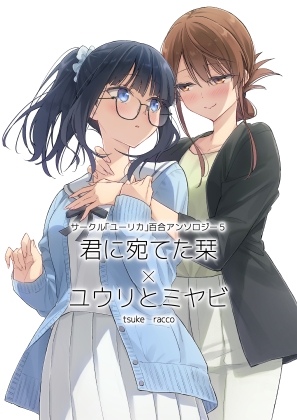
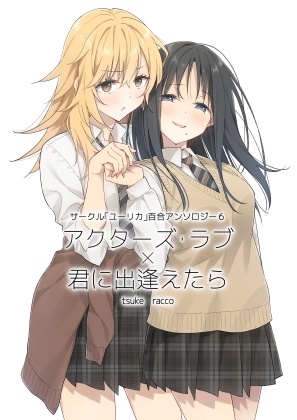
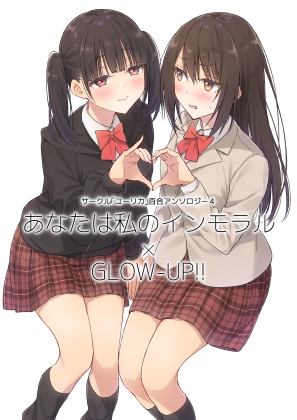
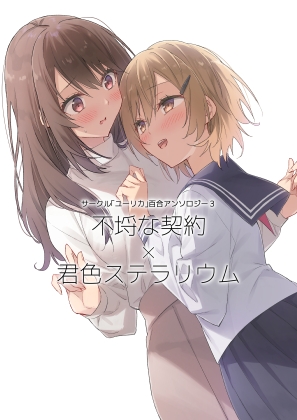
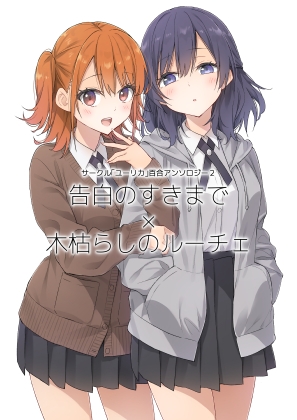
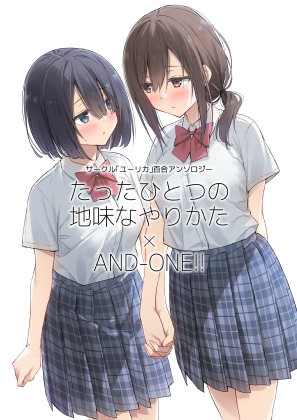
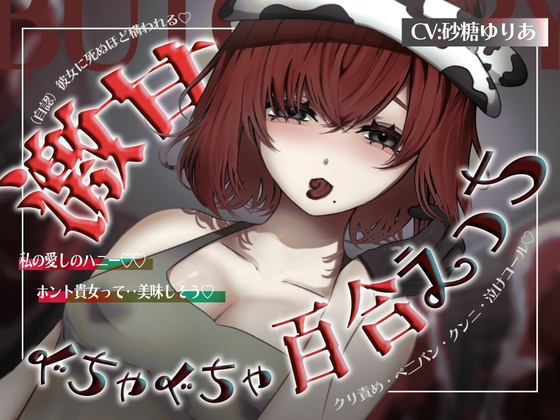
A schoolyard, two girls, an unspoken understanding. The Japanese narrative tradition that turns that scene into a full genre — with its own magazines, its own conventions, its own export market — calls itself yuri, and its origins reach back as far as the early-twentieth-century girls’-school novel.
Overview
Yuri (Japanese: 百合, “lily”) is the Japanese narrative genre devoted to romantic and erotic relationships between female characters. It spans manga, prose fiction, anime, video games and visual novels, and runs the full register from chastely emotional schoolgirl romance to sexually explicit adult work. In English-language fandom the genre is also called Girls’ Love (GL), and the older Western coinage shōjo-ai is sometimes used for non-explicit work — though shōjo-ai is a Western term, not a Japanese one, and inside Japan “yuri” is the inclusive cover term.
Yuri is the structural twin of BL (Boys’ Love) — the parallel female-female genre to BL’s male-male — and the two are routinely discussed together as the two halves of Japan’s same-sex narrative tradition. The two genres share a publishing infrastructure (specialist magazines, doujinshi conventions, anime adaptations) but differ markedly in tone, in their relationship to identity politics, and in the distribution of their authors and readers.
The internal range of yuri is wide. At one pole lie works often called spiritual yuri, focusing on emotional intimacy without sexual content — the genre’s institutional anchor and the form most suitable for general bookstore distribution. At the other pole lies adult yuri (hentai yuri), in which sex is the primary content. The two ends share genre vocabulary, conventions, and a substantial overlap in readership.
Etymology
The use of yuri — “lily” — as a designator for female-female intimacy in Japanese print is generally traced to 1976, when Bungaku Itō, the editor of the gay men’s magazine Barazoku (“the rose tribe”, Daini Shobō), labelled the magazine’s letters page for women readers Yurizoku no Heya (“the lily tribe’s room”). The pairing of bara (rose) for men and yuri (lily) for women drew on a longer European iconographic tradition in which the lily, Lilium, signified purity and was associated with the Virgin Mary, and on the floral imagery already conventional in 1970s shōjo manga as a symbol of girls’ bonds.
Whether this 1976 use was understood as naming a genre or merely labelling a column is debated; the strict primary-source evidence is largely Itō’s own retrospective accounts[citation needed]. What is clearer is that yuri did not begin to function as a stable genre label until the late 1990s and early 2000s, when amateur internet communities began using it as the standard cover term for what had previously been described in patchworks of vocabulary — S relationships (see below), kurasumeito (classmate) stories, and so on.
History
Pre-history: Esu culture and the girls’-school novel
The deep ancestor of yuri is the S (or esu) culture of late-Meiji and early-Shōwa girls’ schools. S — short for sister — denoted formalised, quasi-sisterly intimate bonds between girl students, and was the central subject of the early-twentieth-century girls’-school novel. Nobuko Yoshiya’s Hana Monogatari (“Flower Tales”, serialised 1916–1924) is the canonical example: a sequence of stories about close, often elegiac female bonds in school settings.
Yoshiya’s work fixed the iconography that would become standard yuri material a century later — the boarding school, the senior–junior pair, the letter-and-gift economy of intimate correspondence, the lyrical language of inner life. Modern yuri inherits each of these elements directly, and the schoolgirl setting in particular is so dominant that any historical account of the genre is partly a history of the Japanese girls’ school as a literary stage.
Mid-twentieth-century shōjo manga
Yuri’s second wave of ancestors lies in the shōjo manga of the 1970s, where same-sex romantic plots first reached the mass-market comics format. Ryōko Yamagishi’s Shiroi Heya no Futari (“Two in the White Room”, 1971) — a tragic romance between two students at a French boarding school — is the most often cited milestone, and is conventionally treated as the first postwar shōjo manga to depict a female-female romance as its central subject. The same period produced shōjo manga whose female bonds, while not exclusively romantic, were inflected with strong same-sex undertones: Riyoko Ikeda’s The Rose of Versailles (1972–1973), her Brother, Dear Brother (Onīsama e…, 1974), and works in similar registers.
These works did not understand themselves as genre yuri; the term was not yet in circulation. But they fixed the visual and emotional vocabulary on which the later genre would build, and they produced the cohort of artists and readers who would carry the material forward.
The genre forms: 1990s and 2000s
Yuri began to emerge as a labelled genre, rather than a thematic tendency, in the late 1990s. The decisive popular work was Oyuki Konno’s Maria-sama ga Miteru (“Maria Watches Over Us”, Shūeisha Cobalt, 1998–2012), a long-running light-novel series set in a Catholic girls’ school and built around the formalised “sister” (sœur) system that bound senior to junior. The series sold over six million copies and was adapted to anime in 2004; for many readers — Japanese and international — it was the work that made yuri a category they could ask for at a bookshop.
The first dedicated yuri magazines followed almost immediately. Yuri Shimai (“Yuri Sisters”, Magazine Magazine, 2003) is generally taken as the founding title; on its closure in 2004, its successor Comic Yuri Hime (Ichijinsha, 2005–) carried the line forward and remains in print as the central commercial venue for the genre. Yuri Tengoku (Sun Publishing, 2003) ran in parallel.
Diversification (2010s onward)
The 2010s broadened the genre on multiple axes. Takako Shimura’s Aoi Hana (“Sweet Blue Flowers”, 2004–2013) and Nio Nakatani’s Yagate Kimi ni Naru (“Bloom Into You”, 2015–2019) addressed lesbian identity from inside the romance frame, with particular attention to the experience of working out same-sex attraction as a question of self-understanding rather than as a thematic given. Bloom Into You sold more than two million copies and was adapted to anime in 2018.
Cross-genre yuri followed: works such as Whisper Me a Love Song (Eku Takeshima, 2019–) and I’m in Love with the Villainess (Inori, 2018–) embedded yuri relationships in band stories, isekai light novels, and other commercial frames, signalling yuri’s diffusion from a niche specialist genre into a more general available register.
Forms and variants
Commercial yuri
Commercial yuri is anchored by Comic Yuri Hime, joined by Ichijinsha’s Yuri Heroines line, Shinchōsha’s BUNCH COMICS yuri slots, Futabasha’s Monthly Action yuri serial slots, and a steadily expanding roster of dedicated lines at other publishers. The format is conservative — monthly or bimonthly serialisation followed by tankōbon collection, alongside original light-novel imprints — but the commercial commitment is now stable enough to support full-time yuri-specialist authors.
Yuri doujinshi
Yuri is a substantial presence in doujinshi culture. At Comic Market a dedicated yuri zone draws several thousand circles, divided between original-yuri and fan-derivative yuri. The fan side has historically been driven by series in which female bonds are textually present but not explicitly romantic: Sailor Moon (1992–1997, especially the Haruka–Michiru pairing), Revolutionary Girl Utena (1997), Maria-sama ga Miteru (1998–2012), Girls und Panzer (2012–), Love Live! (2010–), Kiniro Mosaic (2010–), Is the Order a Rabbit? (2011–), and the Pretty Cure franchise.
Adult yuri
Adult yuri is a distinct sub-tradition with its own commercial and amateur circuits. The defining structural feature is that male characters are excluded from the sexual frame entirely; the stock acts include kunnilingus, mutual stimulation, and toy-mediated contact, and the visual register is calibrated around female-female intimacy throughout. Adult yuri serves both female readers (as same-sex erotic narrative) and male readers (as a fantasy register), and the two readerships have produced visibly different style traditions inside the same nominal subgenre, leading some critics to argue that they should be treated as separate genres altogether[citation needed].
International reception
Yuri began to circulate internationally through anime fandom in the late 1990s and early 2000s. The romanised form yuri travelled directly into English-language fandom; Girls’ Love / GL is also widely used, particularly in commercial-publishing contexts; and shōjo-ai circulated for a period as a Western coinage for non-explicit yuri, although it has fallen out of use in recent years as Japanese vocabulary has displaced it.
The American critic Erica Friedman founded Yuricon in 2000 and has been the central English-language voice on the genre since; her By Your Side: The First 100 Years of Yuri Anime and Manga (Journey Press, 2022) is the first comprehensive English-language history. James Welker (Kanagawa University) is the leading academic voice, with sustained scholarly work on yuri’s place in Japanese queer culture. Translation programmes by Seven Seas Entertainment, Yen Press, and Kodansha USA have brought the central canon into English. Chinese-language translation, both in Taiwan (Sharp Point Publishing) and on mainland online platforms, is extensive, and the loanword baihe (百合, the Mandarin reading) has become standard in Chinese-speaking fandom.
Yuri, lesbian fiction, and lesbian AV
Yuri shares territory with two other forms of female–female cultural representation but is distinct from each.
Lesbian literature, in the Anglophone tradition of Adrienne Rich, Audre Lorde, and Sarah Waters — and in the Japanese parallel tradition of Yūko Kakefuda and others — addresses lesbian existence as a political and biographical fact, foregrounding identity. Yuri, historically, has framed female-female relationships as fictional possibility-space rather than identity testimony. The line has softened since the 2010s, as identity-conscious yuri (Bloom Into You, Whisper Me a Love Song) has joined the genre’s mainstream, but the centre of gravity is still narrative-led rather than identity-led.
Lesbian AV — the live-action adult-video category in which two women perform sexual scenes — is a separate commercial genre, oriented primarily toward male viewers and built on the conventions of pornographic film. Yuri is text-and-image based, oriented toward narrative and emotional identification, and serves a substantially different audience, even where there is partial overlap in subject matter.
Critical reception
The academic critic Yukari Fujimoto’s Watashi no Ibasho wa Doko ni Aru no? (“Where Is My Place?”, 1998) gives the canonical Japanese reading of female-female bonds in shōjo manga as the precursor of modern yuri. The 2014 special issue of Eureka (Yurīka) on “yuri culture in the present” remains the most-cited general critical anthology in Japanese, and is the standard starting reference for studies of yuri as a self-aware contemporary genre.
Yuri occupies an unusual position in postwar Japanese popular culture: a same-sex narrative genre that mainstreamed without becoming primarily identity-political, that imported a European floral metaphor as its name, and that has been carried outward as an export category by the same channels that carried yaoi, BL, shōnen manga, and anime.
See also
Updated
References
- 『By Your Side: The First 100 Years of Yuri Anime and Manga』 Journey Press (2022)
- 『Queer Voices from Japan: First-Person Narratives from Japan's Sexual Minorities』 Lexington Books (2007)
- 『私の居場所はどこにあるの? 少女マンガが映す心のかたち』 Gakuyō Shobō (1998)
- 『ユリイカ 2014年12月臨時増刊号 総特集◎百合文化の現在』 Seidosha (2014)
Also known as
- Girls' Love (GL)
- Shoujo-ai
- ja: 百合
- ja: ガールズラブ