Nukige
✎ 本文編集 (admin) 🖼 画像編集 (admin)“Nukige” works on DLsite

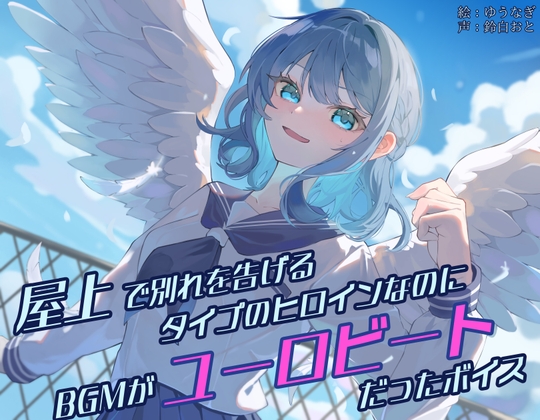
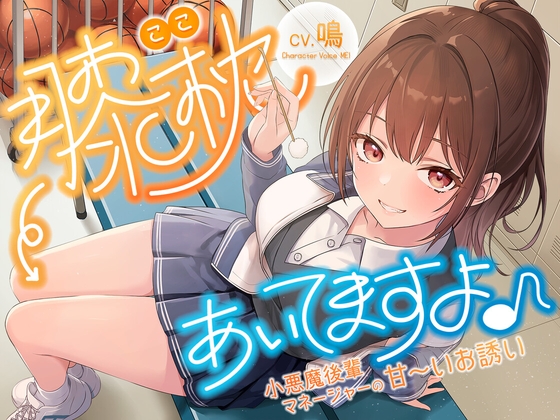
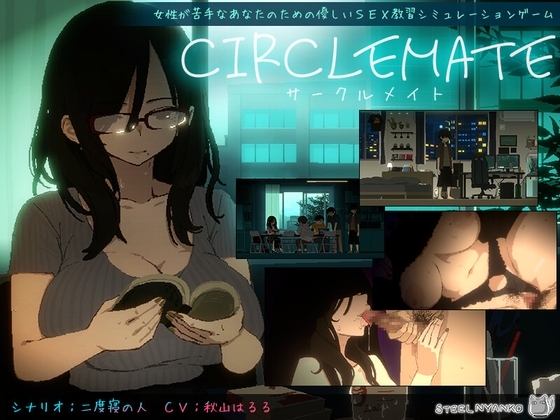
A friday evening, three free hours, the choice between a long literary visual novel and something shorter. The longer work has its own season of consumption; the shorter has its own market, its own studios, and its own working name. Nukige is the working name in the Japanese-eroge tradition for the second category.
Overview
Nukige (Japanese: 抜きゲー, nuki-gē; English working translation: stroke game, explicit-content eroge) is the Japanese-eroge sub-genre that prioritises explicit erotic content over narrative depth. The category is set in opposition to two adjacent eroge sub-genres — the naki-ge (泣きゲー, “crying-game”) emphasising emotionally heavy long-form storytelling and the moe-ge (萌えゲー) emphasising character investment and slice-of-life — and the three together describe the principal axes of the Japanese eroge market since the late 1990s.
It is essential to read the entire genre as fictional adult content depicting fictional adult characters. Nukige operates within the standard regulatory and self-regulatory framework that governs the wider Japanese eroge industry, and the genre’s established working norms place all depicted characters explicitly as fictional adults.
The category is not a sharply bounded one. A given work may sit in the centre of the nukige register, lean toward storytelling, lean toward genre-experimentation, or combine elements; the term names a centre of gravity within a continuous space. In practice, four working markers identify a typical nukige: a high proportion of total play-time devoted to explicit scenes (a working benchmark of forty to sixty percent or more), a narrative apparatus tuned to delivering scene-to-scene erotic progression rather than literary or emotional development, a relatively short total play-time (commonly five to fifteen hours), and a price-point in the mid-tier of the market (typically ¥3,000–6,000) rather than the full-tier (¥8,000–10,000) of long-form visual novels.
The category is internally diverse. By kink specialisation: netorare nukige, hitozuma nukige, kyonyuu nukige, BDSM nukige, ahegao nukige, fantasy ishukan nukige. By aesthetic register: pure-romance nukige, dark-themed nukige, comedic nukige, and so on. The nukige catalogue is the segment of the eroge market in which kink-specific specialisation runs most directly through the production logic.
Etymology
The Japanese verb nuku (抜く) is the colloquial term for male masturbation. Nuki-gē — “a game for nuku-ing” — applied the verb’s gerund form to an eroge title’s working purpose, and the resulting compound became the standard sub-genre name through the late 1990s and 2000s. The form circulated first on Japanese eroge community message boards and fanzines and consolidated as a market-side and industry-side label as the broader eroge market diversified through the period.
Related forms developed: soku-nuki (“immediate-arousal” titles), tan-nuki (“unit-piece” consumption), nuki-sen (“dedicated nukige consumer”). The vocabulary is informal but stable.
Historical development
Pre-history (1980s)
Through the 1980s the Japanese PC adult-game market was structurally undifferentiated. Hardware and storage limits constrained the visual and narrative capacity of titles, and the story-versus-explicit distinction had not emerged as an organising one. Koei’s Night Life (1982), Enix’s Lolita (1985), and the early Elf and AliceSoft catalogues belong to this prehistoric period. The market was small, the competitive structure was thin, and what would later become the nukige / story-game distinction did not yet have terms to express it.
Genre differentiation (1990s)
Elf’s Dōkyūsei (1992) shifted the centre of gravity for adult PC games toward romantic-simulation structures with significant narrative apparatus. Through the mid-1990s, Leaf’s Shizuku (1996), To Heart (1997), and Key’s Kanon (1998) consolidated the visual novel sub-genre that emphasised long-form story, character investment, and emotional climax — the naki-ge tradition. As the visual-novel sub-genre crystallised, the older mode of explicit-content-centred title naturally formed the contrast against which the visual novels were defined, and nukige emerged as the working name for that older mode now that it had a counterpoint.
Through the late 1990s, the studios that became canonical nukige specialists started to consolidate. Pajamas Soft (founded 1998), Akabei Soft (founded 2003), and others began building dedicated nukige catalogues; older studios like Elf and AliceSoft developed nukige-leaning lines alongside their main catalogues.
Specialisation (2000s)
The 2000s brought a dense set of specialist nukige studios into the market.
Bishop (founded 1996) specialised in chijo (dominant women), hitozuma, and jukujo (mature women) registers, and its Inyōchū series became one of the genre’s recurring touchpoints.
Lilith (founded 2002) became the studio most associated with BDSM, training, and the ryōjoku register, with Taimanin Asagi as the most internationally visible example.
Pajamas Soft (1998) developed a brighter and more situation-focused register.
Akabei Soft (2003) ran a hybrid line that combined nukige speed with narrative depth.
AliceSoft, the long-established studio behind Rance and a wide RPG-and-eroge catalogue, contributed nukige-centred titles alongside its main work, with the RPG-mechanics tradition giving its nukige output a structurally distinct mode of operation.
Distribution shift (2010s onward)
Through the 2010s the dominant distribution channel for nukige shifted from packaged PC software to download platforms — primarily DLsite Maniacs and FANZA Games. The shift produced a corresponding shift in the dominant size of a nukige release. Lower-priced (¥1,000–3,000), shorter (two to six hours of play), download-only titles became the bulk of the nukige catalogue, with consumers selecting individual titles around their specific kink interests rather than from a smaller monthly slate of major releases. The doujin game market expanded substantially in parallel, and the boundary between commercial nukige and doujin nukige softened as creators moved between the two channels.
Structure and presentation
The typical nukige structure: a brief setup section establishing the protagonist’s relationship to a heroine; a sequence of explicit scenes (typically five to fifteen) that move through a range of situations and kink registers; a brief closing section that resolves the relationship. The narrative apparatus operates in service of the scene-to-scene progression rather than as the work’s primary content.
The work’s centre of presentation is in the integration of original art (character portraits, CG illustrations of scenes), text, voice acting, and sound effect. The art’s gengaka (original artist) is a major commercial signal: an established gengaka’s name on a nukige title is read by the market as a strong indicator of the title’s likely visual register, and artist-led nukige releases form a significant sub-market within the wider category.
Voice acting in nukige tends to use the same circuit of professional eroge-and-adult-content voice actors that the wider visual-novel sub-genre uses, often with the same performers using separate stage names for nukige and for mainstream-anime work.
Reception and the wider market
Through the early 2000s, nukige was treated, in much of the eroge-critical writing of the period, as a structurally lighter sub-genre than the prestige visual-novel tradition. From the mid-2000s onward, with the publication of Bishōjo Game no Rinkaiten (Sarashina et al., 2004) and adjacent critical work, a more serious treatment of nukige as a distinct production tradition with its own working aesthetic emerged. The argument that nukige’s lack of literary apparatus is not an absence of craft but a different placement of craft — that the genre’s working measure is the technical achievement of effective scene-by-scene erotic progression rather than literary depth — has become widely accepted in Japanese-language eroge criticism.
In the consumer market, nukige and visual-novel sub-genres are not in zero-sum competition. The same player base consumes both, in different time-and-mood configurations. The contemporary commercial centre of gravity has shifted toward hybrid titles that work as both — visual novels with strong explicit content, nukige with non-trivial story apparatus — partly because audience preferences favour the combination and partly because production costs have made it harder to build a profitable title in the pure form of either extreme.
Three registers: nukige, naki-ge, moe-ge
The contemporary eroge market’s working three-axis genre-distinction is nukige (explicit content centred), naki-ge (story-and-emotion centred, often built around a heroine route’s eventual emotional climax), and moe-ge (character-investment centred, slice-of-life, low narrative-stakes register, with the title’s enjoyment built around the player’s accumulation of time with the cast). The three are useful working categories for the production-and-marketing side of the industry, but actual works typically draw on more than one. The cleanest pure-form works are at the extremes; the bulk of the catalogue mixes elements.
Cultural reception
Nukige is one of the segments of Japanese subculture that has come into its own as a recognised tradition with critical writing, archival projects, and the beginnings of an academic literature in the mid-2000s onward. The recognition that an explicit-content-centred form of eroge is a worked-out tradition of its own — with its own studios, its own visual conventions, its own genealogy of artists, and its own technical achievements — is comparatively recent and reflects the broader maturing of subcultural-studies treatment of Japanese adult media.
The contemporary nukige catalogue and the wider doujin game market between them constitute one of the larger volume-segments of the Japanese subculture economy, and the form continues to anchor a substantial share of the audio-visual-and-text-integrated adult-content production in Japanese subculture.
Related Terms
- Eroge
- Visual novel
- Doujin game
- Ahegao
- Mesu ochi
- Choukyou (Training)
- Yandere
Updated
References
- 『Beautiful Fighting Girl』 University of Minnesota Press (2011)
- 『美少女ゲームの臨界点』 Hajōgenron (2004) — Foundational on the bishōjo-game / nukige distinction.
- 『Otaku: Japan's Database Animals』 University of Minnesota Press (2009)
- 『コンピュータゲームの神話学』 PLANETS (2016)
Also known as
- stroke game
- explicit-content eroge
- PWP eroge
- ja: 抜きゲー
- ja: 抜きゲ
- ja: 抜き専
Related
- Eroge
- Visual novel
- Doujin game (Japanese self-published video games)
- Ahegao
- Adult Anime (Broad-Sense Animated Erotica)
- Ero ASMR
- Onasapo
- Harem genre (Japanese fictional configuration)
- Ecchi (Japanese Softcore Erotic Genre)
- Haramase-mono (impregnation genre)
- Time-Stop Series (Japanese AV Genre)
- Fantasy setting (J-eroge and adult game genre)