Kyonyuu
✎ 本文編集 (admin) 🖼 画像編集 (admin)“Kyonyuu” works on DLsite







In 1989 a single performer changed the way the Japanese adult-video industry thought about the body. Her stage name was Kimiko Matsuzaka, her advertised bust was 110.7 cm, and the vocabulary item her debut helped establish has been a defining word of Japanese body-aesthetic discourse for thirty-five years since.
Overview
Kyonyuu (Japanese: 巨乳, kyo-nyū) is the modern Japanese word for large breasts. It is not a clinical or anatomical term: there is no defined cup size or volume above which a body becomes “kyonyuu”. What the word names is a cultural-industrial category — defined by photo-magazine editing decisions, AV-industry packaging conventions, and gravure-magazine cover lines — that took shape in the 1980s and has since structured Japanese popular discourse on breast size.
In trade use, the cup-size threshold most often cited is D or above, with E or above as a more conservative line. Both thresholds are conventions rather than measurements, and the category’s edges have continued to shift over time as the industry’s overall scale-of-reference has inflated. What makes kyonyuu a useful concept is therefore not its precision but its reliability as a marketing category — the AV industry, gravure publishing, and adult drawn media all use it the same way, and a reader can move between the three without re-learning the term.
The word has become one of the central organising terms of postwar Japanese body-aesthetics. Around it have crystallised both an upper-magnitude category — bakunyu (“explosive breasts”, coined in the 1990s) — and a contrastive lower category — hinnyu (“scant breasts”, which acquired its modern subcultural sense in the late 1990s). Yasuda’s Kyonyū no Tanjō (“The Birth of Kyonyū”, 2017) treats this three-term system as the product of one decade of industry-driven coinage, and the historical narrative below follows that account.
Etymology
Kyonyuu is a two-character compound: 巨 (kyo, “large, gigantic”) + 乳 (nyū, “breast, milk”). The construction is a regular pattern in modern Japanese for body-related adjective-coinage (cf. kyokan “giant”, kyotō “huge head”), and the word reads transparently in Japanese.
The exact moment of coinage is not pinpointable, but the late-1980s photo-weekly press is the conventional locus. FOCUS (Shinchōsha, founded 1981) and FLASH (Kōbunsha, founded 1986) — the two leading photo-weeklies of the period — adopted editorial styles that foregrounded female celebrities’ physical features, and the word kyonyuu circulated through their pages in step with that editorial turn. The same period saw the AV trade press taking up the term as a packaging category, and by the late 1980s kyonyuu was consolidated as a single industry-recognised label with stable extension across photo-weeklies, gravure, and AV.
History
1989: Diamond Eizō and Kimiko Matsuzaka
The decisive year is 1989. The AV director Tōru Muranishi’s company Diamond Eizō promoted Kimiko Matsuzaka — at the time a student at Ōtsuma Women’s Junior College — under the marketing line “the first day of every month is kyonyuu day”, framed her advertised 110.7-cm bust as the title’s selling point, and made her work the company’s flagship product. Several thousand to ten thousand copies per release were sold steadily; by 1990, Diamond Eizō was the fastest-growing label in the trade, and an Associated Press wire-service piece on Matsuzaka had carried her notoriety internationally.
Before Matsuzaka, AV marketing had treated the performer as a whole. After Matsuzaka, individual body features could function as the product’s organising point, and packaging copy, camera work, and scene composition were rebuilt accordingly. Kyonyū no Tanjō identifies this period — roughly 1989–1992 — as the core years of the term’s shift from a description into a commercial category.
1990s: genre consolidation
Through the 1990s, kyonyuu stabilised as a genre label across magazines, AV, and manga. The companion term bakunyu coined in the mid-1990s to mark the next escalation, and hinnyu gained currency in the late 1990s as the contrastive opposite. Cup-size advertising began to inflate: the late 1980s benchmark was D and E; by the early 2000s F and G were normal upper-end labels; by the 2010s H and I had become routine, and dedicated I/J/K-cup performers had emerged as a sub-tradition within the broader category. The advertisement of cup size as a quasi-quantitative product attribute, rather like the weight class in boxing, is a 1990s invention[citation needed].
2000s: composite tags and cross-media
In the 2000s, kyonyuu moved from being a single-axis tag to being a base attribute compounded with others. Search systems for AV, doujinshi, and adult games standardised compound tags: kyonyuu hitozuma (“married kyonyuu”), kyonyuu chijo (“sexually aggressive kyonyuu”), seifuku kyonyuu (“uniformed kyonyuu”). The function of the term shifted: rather than designating a primary subject, it now operates as a body-type attribute that can be combined with any number of other categories, and it is in this compound role that kyonyuu is now most frequently encountered in adult-content tagging systems.
International circulation
Through the 2000s, anime-and-manga audiences abroad — particularly in English-speaking Internet communities — encountered kyonyuu in the context of imported hentai anime, doujinshi scanlation, and adult-game translation. The romanised loanword acquired a settled use in those communities, alongside the older English vocabulary of big breasts, busty, and (in genre-specific use) bombshell. The Japanese drawn-media tradition’s exaggerated breast representations are themselves a recognisable subcultural attribute, and the loanword has settled into English-language hentai-fandom vocabulary as the term that picks out specifically that subcultural register, rather than the act-or-body-attribute in the abstract.
Forms and variants
Live-action
The live-action register is anchored in AV and gravure publishing, with dedicated kyonyuu labels and dedicated kyonyuu performers operating across the industry. Yasuda’s history catalogues the major lines: from the Diamond Eizō line of the late 1980s and 1990s, through the dedicated Hibino series of the 2000s, to the contemporary kawaii and S1 lines whose kyonyuu tracks now operate as a steady-state market segment rather than as a novelty.
Drawn media
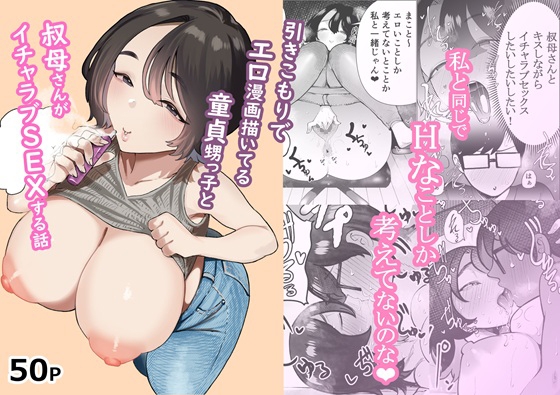
In manga, anime, and adult drawn media, kyonyuu characters appear as a stable visual archetype from the 1980s onward. Akira Toriyama’s Bulma in Dragon Ball, Masakazu Katsura’s Ai Amano in Video Girl Ai, and Masamune Shirow’s Motoko Kusanagi in Ghost in the Shell are among the works most often cited in the lineage. From the 1990s, the drawn tradition began to permit anatomical exaggeration well past physiological possibility, and an internal-to-subculture iconography emerged that is now read as a Japanese-style kyonyuu rather than as a representation of any real body type.
In doujinshi and eromanga
Doujinshi and eromanga treat kyonyuu as a structural attribute that organises whole subgenres. Compound tags reliably specify the resulting work — kyonyuu hitozuma, kyonyuu + paizuri, kyonyuu + bukkake, kyonyuu + kinbaku — and the conventional configurations of cowgirl-position scenes, paizuri sequences, and bukkake stagings have all been refined in dialogue with the kyonyuu archetype.
Aesthetic and cultural framing
Kyonyuu is regularly cited as part of three convergent cultural histories: the late-twentieth-century shift in Japanese body-aesthetics from a slim postwar ideal toward a glamour ideal; the 1980s photo-weekly editorial revolution; and the post-1989 AV industry’s reorganisation around marketable body attributes. Three converging stories, often briefly summarised under the heading of “the kyonyuu boom”.
Cultural reception
Critical writing on kyonyuu falls broadly into three registers. Body-image and gender-studies discussions trace the ways in which mass-media privileging of one body type interacts with real-body assessment, body-image research, and cosmetic-medicine demand (notably in breast augmentation). Media-history accounts (Yasuda, Takeuchi, others) treat the term as a case study in how an industry’s marketing vocabulary becomes a wider cultural category. Subculture studies handle the drawn-media exaggeration of kyonyuu as a distinct iconographic tradition that has separated from real-body representation and now operates by its own internal-to-subculture conventions.
See also
Updated
References
- 『巨乳の誕生―大きいおっぱいはどう発見されたか』 Ohta Publishing (2017) — Empirical history of the kyonyuu buzzword from industry source materials.
- 『日本エロ本全史』 Ohta Publishing (2019)
- 『戦後マンガ50年史』 Chikuma Shobō (1995)
- 『FOCUS / FLASH (issues from 1986–1990)』 Shinchōsha / Kōbunsha
Also known as
- kyonyu
- Big breasts (Japanese)
- Busty
- ja: 巨乳
- ja: きょにゅう