Gravure (Japanese idol photo genre)
✎ 本文編集 (admin) 🖼 画像編集 (admin)“Gravure (Japanese idol photo genre)” works on DLsite
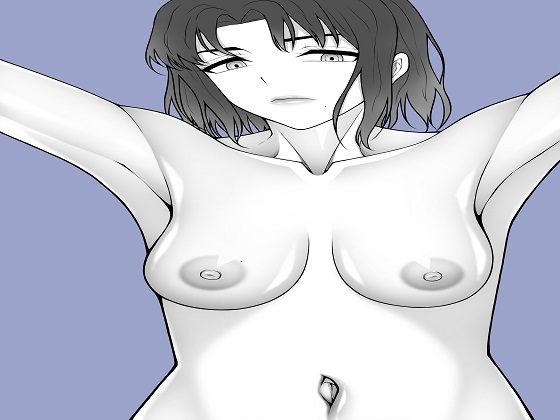
Open the magazine cover, and the first several pages run in heavy-stock colour, a model in swimsuit smiling. The street-bookshop browsing of those opening pages was, for several generations of Japanese boys, one of the entry points to adolescence.
Gravure (Japanese: グラビア, gurabia) is the Japanese name for the genre of large-format idol and model photography that runs in magazines and photo-books, and for the cultural complex surrounding its production, distribution, and reception. The article traces the printing-process etymology, the postwar history from Heibon Punch and GORO to Weekly Young Jump, and the social position of the gravure idol profession.
Overview
Gravure originally refers to the photogravure printing process: the late-19th-century photo-engraving technique in which the original is etched as an intaglio plate and ink is transferred from the recessed surface to paper. The process delivered superior tonal range and was widely used for high-quality photographic reproduction in the photo-collections and prestige magazines of the early twentieth century.
Within the early-twentieth-century Japanese magazine industry, the cover and the highest-quality interior photographic pages were typically printed photogravure while the body text ran letterpress. The high-quality photographic pages came to be called gravure pages, and the name subsequently shifted to denote first the photographic pages of any magazine, then specifically the pages featuring female nude and semi-nude photography. In contemporary Japanese usage, the term is independent of the underlying printing process and denotes the cover-and-interior photographic spread, the model who appears in it, and the entire cultural-industrial complex around it.
The term carries a particular cultural density in Japan that the simple English translations do not capture. It sits at the intersection of magazine publishing, female labour, idol culture, and the boundary between expressively-permissible and prohibited content; the form is one of the principal pressure points of postwar Japanese mass-media production.
Etymology
The English gravure derives from French gravure (“engraving, intaglio printing”), and the term photogravure names the late-nineteenth-century photo-intaglio technique. The technical use of gravure in Japanese stabilised through 1920s photography magazines (Asahi Camera, Camera) before the meaning expansion of the postwar period.
The cultural-vocabulary expansion runs through the 1964 founding of Heibon Punch: gravure-page (the cover-and-opening-pages-with-female-photographs configuration), and from the late 1970s, the model herself (gravure model, gravure idol) under the inherited label.
History
Prewar and immediate postwar
Prewar magazine gravure ran through cover and frontispiece photography of geisha, actresses, and modern-girls in the mass-readership weeklies King and Fujin Club. The censorship regime of the period kept nude photography to extremely limited art-photography contexts, distant from the modern gravure register. The immediate-postwar kasutori magazines deployed low-quality print of female nude and semi-nude photography in volume; the technical configuration was not gravure-process printing in the strict sense, but the magazine-front-photograph editorial format consolidated in this period.
Men’s weekly magazine era (1964–1973)
The 28 April 1964 launch of Heibon Punch (Magazine House) established the postwar men’s-magazine gravure template. Under the influence of the American Playboy (founded 1953), the configuration of fashion-and-lifestyle articles with cover-and-opening swimsuit-and-semi-nude photography drew sustained large-audience support among young male readers. The first issue ran approximately 600,000 copies; peak circulation passed one million.
Weekly Playboy (Shueisha, 1966), Monthly Playboy (Shueisha, 1975), and the Japanese edition of Penthouse (1979) followed, and the configuration of opening photographic pages with subsequent article material consolidated as the principal men’s-magazine editorial format. The cover model and the opening-page casting became the central commercial driver of circulation, and the editorial planning of these elements became the magazine’s principal organising decision.
GORO and the Gekisha photographs (1974–1986)
The June 1974 launch of GORO (Shogakukan) introduced an A4 large-format gravure magazine with cover and opening pages directed by photographer Kishin Shinoyama. The Gekisha section paired unknown amateur models, idol singers, and emerging actresses on an equivalent editorial footing.
The first issue featured Momoe Yamaguchi and Junko Sakurada among the idol singers, anchoring the subsequent “idol-and-gravure” pairing as the standard editorial configuration. Momoe Yamaguchi’s 1975 film-debut nude scene and the 1976 semi-nude features of Mieko Takamine and Masako Natsume marked the period as a turning point in the diffusion of the boundary between mainstream-entertainment and gravure visibility.
In the early 1980s, with the post-Yamaguchi-retirement second-wave female-idol expansion, the proportion of idol singers, campaign girls, and new-actress figures who appeared in swimsuit gravure rose substantially. The Clarion Girl and Toyota Corolla II Girl campaign-girl programmes established a recognised entry route to the wider entertainment industry, and the gravure-idol category consolidated as a distinct occupational classification.
Young-men’s manga weekly gravure (1979 onward)
The 1979 launch of Weekly Young Jump (Shueisha), nominally a young men’s manga weekly, configured its cover and opening pages around female idol and talent gravure from the late 1980s. From an initial Susumu Matsushita illustrated-cover configuration, the magazine shifted in the late 1980s to the “female gravure plus manga” format that has continued. Weekly Young Magazine (Kodansha, 1980), Young Sunday (Shogakukan, 1987-2008), and Weekly Young Jump together constituted the principal young-male-readership gravure consumption channel, with new-model, established-talent, and current-idol rotation supporting weekly editorial competition.
Photo-weeklies and specialist magazines (1981–2000)
The launches of FOCUS (Shinchosha, 1981), FRIDAY (Kodansha, 1984), and FLASH (Kobunsha, 1986) added the photo-weekly format, combining celebrity-scandal photography and new-model gravure in two-million-copy circulation outlets. The saddle-stitched format and the railway-kiosk and convenience-store distribution channels handled the mass-circulation gravure diffusion.
The 1990s saw the launch of Sabra (Shogakukan, 1995), the Japanese Playboy, and the gravure issues of digital-camera magazines, and the segmentation of the model subjects (teen, married-woman, mature-woman, large-bust specialisation) consolidated.
Digital transition (2010 onward)
Through the 2010s, with the contraction of magazine circulation, the principal gravure venue has shifted to digital media: electronic photo-books, social media, and subscription video. Instagram and X follower counts now function as a working market-value indicator for gravure talents, and magazine gravure has substantially become a recruitment device for social-media engagement.
The late-2010s departure of adult magazines from convenience-store distribution and the continuing contraction of photo-weekly circulation have substantially reduced the physical distribution of magazine gravure. The digital photo-book, paid video distribution platforms, and cosplay-layer culture support a continuing but reformatted production of gravure-adjacent material.
Editorial conventions
The typical magazine gravure spread runs 8-16 pages of photo-essay configuration combining location shoot (domestic resorts, overseas locations, studio), wardrobe (swimsuit, lingerie, costume), and pose configurations (standing, reclining, looking-back, in-shower). Photography by named photographers (Kishin Shinoyama, Norikatsu Kano, Yoshihiro Tatsuki) sits alongside younger and contract-specific photographers across the wider production.
The editorial-permissible boundary is determined by the Article 175 obscenity regulation and the individual magazine’s editorial policy and reader cohort. The working hierarchy runs from strictest at convenience-store-distributed magazines, through specialist magazines and photo-books, to higher-end art-photography publications, with the practical scope expanding along the gradient.
Recent years have seen the consolidation of body-attribute-specialised gravure (large-bust, shapely-bust, large-buttocks, beautiful-legs) as recognised editorial sub-segments.
Reception and social position
Gravure has occupied one of the central positions in postwar Japanese visual culture as the configuration through which adolescent and adult male sexual curiosity was directed. The physical-magazine properties (the cut-out preserved image, the shared reading, the classroom circulation) and the shared-recognition property (multiple readers attending simultaneously to the same model) gave the form a social rather than merely individual character.
The career trajectory on the model side runs through gravure into AV, mainstream entertainment, television personality work, acting, and entrepreneurship, with the form functioning as a recognised entry point to the wider entertainment industry. Model agency, contract terms, age regulation, and working environment have been the subjects of recurring industry debate, particularly through the 2022 AV Industry Protection Act legislative cycle.
Cultural reception
Gravure has been the subject of sustained scholarly and critical attention within Japanese subcultural and media studies. Akio Nakamori’s Idol Kougaku (Chikuma Shobo, 1989) is the classic treatment of the gravure-within-1980s-idol culture configuration. Shinoyama Kishin’s complete Gekisha record (Shogakukan, 2014) constitutes the principal first-person source on the half-century of gravure photography practice.
Gravure remains, through its current transition from magazine to social-media venue, one of the visual-cultural forms that have substantially shaped the postwar Japanese mass-publishing landscape, and a continuing subject of critical attention.
See also
Updated
References
- 『Shinoyama Kishin: Gekisha — The Complete Records』 Shogakukan (2014)
- 『Idol Kougaku』 Chikuma Shobo (1989)
- 『Nihon Ero-bon Zenshi』 Ohta Publishing (2019)
- 『Modern Girls, Shining Stars, the Skies of Tokyo』 Columbia University Press (1999)
Also known as
- gravure photography
- swimsuit gravure
- photogravure (idol culture)
- ja: グラビア