Eroge
✎ 本文編集 (admin) 🖼 画像編集 (admin)“Eroge” works on DLsite
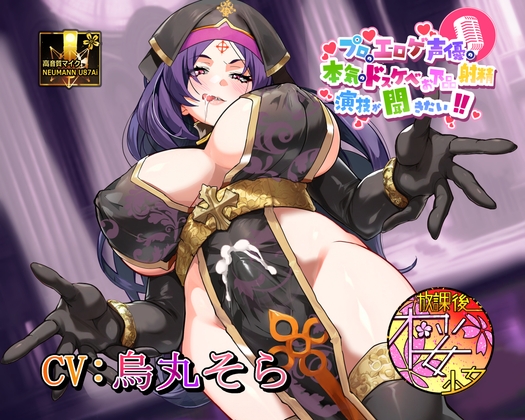

A genre native to the Japanese personal-computer market: a story-driven, character-centred game that runs largely on text and illustration and treats sexual content as part of the structure rather than as an accessory.
Overview
Eroge (Japanese: エロゲ, eroge; full form エロゲーム, eroguemu) is the Japanese-language category for adult-themed computer games. The form is distinguishable from a static eromanga panel or a recorded AV scene by the active dimension that game systems add: the player encounters the work through choices, branching paths, and (in some sub-genres) more elaborate game mechanics, and the sexual content is integrated into that structure rather than presented for passive viewing.
The genre is contiguous with several adjacent labels: bishōjo game (美少女ゲーム), gal-ge (ギャルゲー), and visual novel / novel game all overlap heavily with eroge, with the differences corresponding to whether the work is sexually explicit, whether it is centred on a romantic-relationship structure, and whether it is built primarily around text or around game systems. In international Anglophone fandom eroge and visual novel are used interchangeably, with visual novel preferred for the all-ages variant and eroge preferred for the explicit one. See the parallel article on visual novel for the form-side account.
Industrial and formal lineage
The PC dawn (1982–1989)
Eroge dates from roughly 1982, the early period of the Japanese consumer personal computer (NEC PC-8001, Sharp MZ-80). Among the earliest commercial titles are Koei’s Night Life (1982) and Danchi-zuma no Yūwaku (1983); Koei (later the historical-strategy publisher behind Nobunaga’s Ambition and Romance of the Three Kingdoms) treated adult titles as a core revenue stream during its founding years. Through the late 1980s, with the broadening of the PC-8801, PC-9801, X1, and X68000 user base, the market expanded considerably: Enix (later Square Enix), Elf, AliceSoft, Just, ShadeWare, and others built recurring product lines. AliceSoft’s Rance series (1989– ) and Elf’s Dragon Knight series (1989– ) are early examples of work that bound game systems and adult content tightly together.
The visual-novel boom (mid-to-late 1990s)
The decisive formal turn arrived with Leaf’s Shizuku (1996) and To Heart (1997), and Key’s Kanon (1998) and AIR (2000). These works treated text-driven storytelling and character investment as the engine of the experience and embedded sexual content as a narrative high point rather than as the work’s reason for being. The visual novel / novel game sub-genre that they consolidated gave eroge a literary register it had not had before; works like Key’s CLANNAD (2004) were ported to consoles with explicit content removed and reached audiences well outside the eroge core. By the early 2000s the visual-novel branch was the dominant prestige form within eroge.
The nukige bifurcation
In parallel with the rise of the visual novel, a counter-strand specialised in maximum-density sexual content. Nukige (抜きゲー) — literally “ejaculation games” — dropped much of the slow-build story architecture in favour of compact, kink-specific work. AliceSoft, Lilith, Black Lilith, and Bishop are among the studios most associated with the form, and the kink-specialisation pattern produced lines tuned to netorare, training themes, chijo themes, and other genre-specific niches. The two strands of eroge — visual novel and nukige — have coexisted from the late 1990s onward and continue to share a market.
The smartphone-and-streaming era (2010s onward)
From the 2010s the centre of distribution moved from packaged PC titles to digital downloads on platforms including DLsite and DMM Games. Steam emerged through the same period as a partial outlet for non-explicit visual novels, with adult patches distributed separately. The market has stratified by length and price point: long high-investment narrative titles, short low-priced nukige, browser-based and smartphone-targeted shorter forms, and free distribution paths through itch.io and the doujinshi-game economy.
Sub-genres and game systems
Novel / adventure
The dominant form. Text and illustration are foregrounded; the player advances through written passages punctuated by branching choice points. Studios in the lineage include Leaf, Key, Nitroplus, and TYPE-MOON; the form is contiguous with the broader visual novel category.
RPG-system games
Eroge that incorporates combat and exploration mechanics in a role-playing framework. AliceSoft’s Rance series is the canonical reference. Story progression and the placement of adult content are organised through the underlying RPG structure.
Simulation games
Romance simulation, life-management simulation, and strategy simulation are all represented. Elf’s Dōkyūsei (1992) and Kakyūsei (1996), and Illusion’s Honey Select line (2016 onward), are anchor titles in their respective decades.
Character archetypes
Eroge has produced and standardised a deep stock of character archetypes — maid, nurse, shrine maiden (miko), student-council president, childhood friend, ojou-sama, older stepsister, teacher, female doctor — that circulate in parallel with the cosplay costume-role system. The same archetypes appear, with much continuity, across eroge, eromanga, doujinshi, and AV, forming a shared sign-system in adult Japanese media.
Regulation
The Japanese eroge industry’s principal self-regulatory body is the Computer Software Rinri Kikō (Sofu-rin), founded 1992. Sofu-rin reviews member-publishers’ titles before release and applies the modesty standards (mosaic and editing requirements) that allow them to be sold without exposing the publisher to Article 175 prosecution. The Content Software Cooperative (CSA) and the Computer Entertainment Rating Organization (CERO) supply parallel rating frameworks for the adjacent all-ages and console market.
Eroge sits within Japan’s general regulatory frame for sexual content: Article 175 of the Penal Code, the 1999 Child Pornography Act and its 2014 revision, and prefectural youth-protection ordinances. The 2010 amendment to the Tokyo Metropolitan Ordinance on Healthy Youth Development was a major political event in the eroge industry’s recent history; the amendment’s application to drawn fictional content drew sustained opposition from publishers, creators, and reader organisations.
Eroge outside Japan
Anglophone reception falls into two broad strands. Fan-translation networks, active from the late 1990s onward, made significant portions of the eroge corpus available in English without licence — Tsukihime, Fate/stay night, the Key catalogue, and others followed standard scanlation-style routes. Licensed publishers, including JAST USA (founded 1996) and MangaGamer (founded 2008), built a parallel commercial market. Steam has been a partial home for the all-ages versions of many titles, with adult patches distributed independently through publisher websites or off-platform.
Independent Anglophone visual-novel production has grown considerably in the same period. Doki Doki Literature Club! (Team Salvato, 2017) and Christine Love’s Digital: A Love Story (2010) are among the more visible examples; the Japanese-developed form has been generative for an international independent-game tradition that no longer treats the genre as exclusively Japanese.
Critical reception
Tamaki Saitō’s Beautiful Fighting Girl (2000; English translation 2011) and Hiroki Azuma’s Otaku: Japan’s Database Animals (2001; English translation 2009) are the two most widely cited works in academic discussions of eroge as a cultural object. The Bishōjo Game no Rinkaiten essay collection (Sarashina et al., 2004) is the standard Japanese-language reference for the early-2000s state of the genre. Daichi Nakagawa’s Computer Game Mythology (2016) places eroge in the wider context of postwar Japanese computer-game history.
Eroge sits at a particular intersection of media — game systems applied to sexual content — that is distinctively Japanese in genealogy and that has, over four decades, produced a sustained body of work that the adjacent eromanga, doujinshi, and anime sectors continue to draw from.
See also
Updated
References
- 『Beautiful Fighting Girl』 University of Minnesota Press (2011) — English translation of 戦闘美少女の精神分析 (2000).
- 『美少女ゲームの臨界点』 Hajōgenron (2004)
- 『Otaku: Japan's Database Animals』 University of Minnesota Press (2009)
- 『コンピュータゲームの神話学』 PLANETS (2016)
Also known as
- ero-ge
- adult video game (Japanese)
- H-game
- Japanese erotic game
- ja: エロゲ
- ja: エロゲー
- ja: エロゲーム