Miko (Shrine Maiden)
✎ 本文編集 (admin) 🖼 画像編集 (admin)“Miko (Shrine Maiden)” works on DLsite
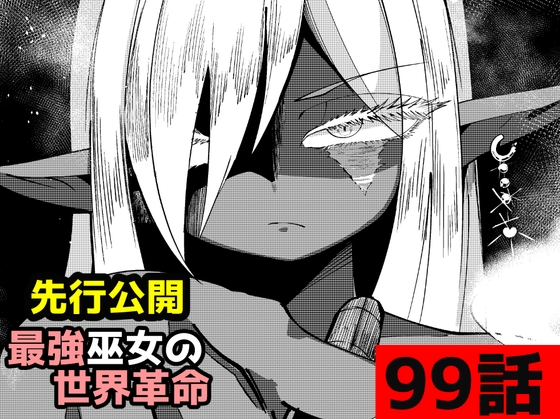
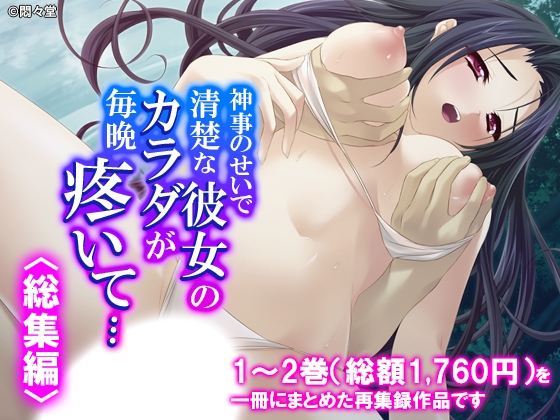
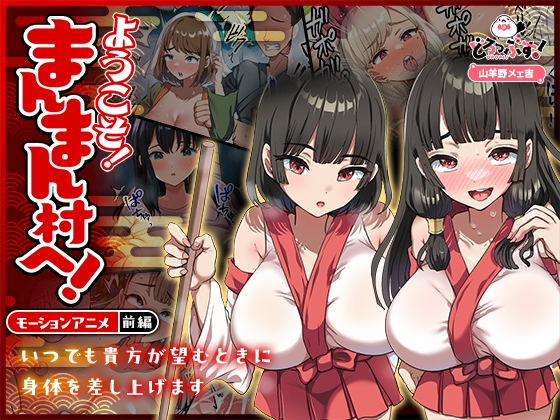
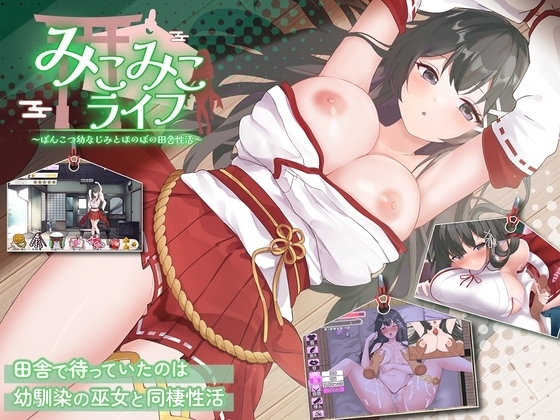
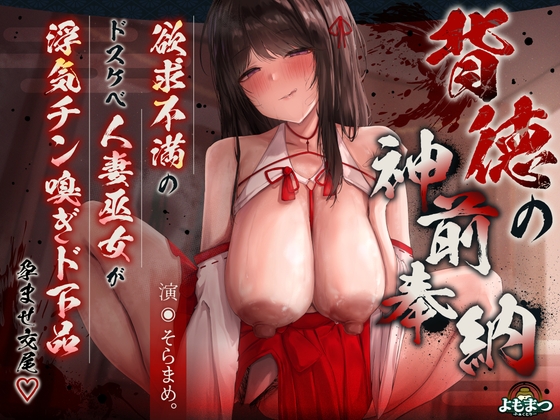
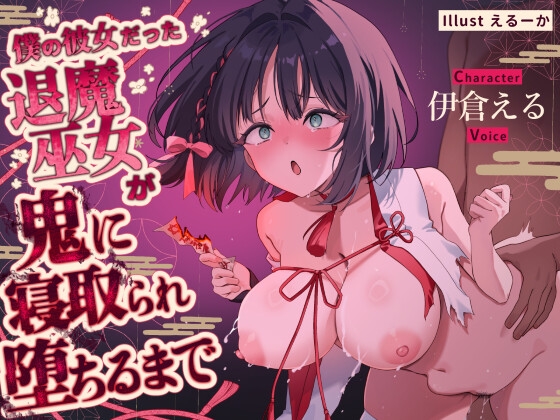
White robe, red hakama, long hair tied with a paper cord. Inside Japan the costume is the visible sign of an actively practiced religious role; in adult and fan media it is also an iconographic archetype as fixed as the maid or the sailor uniform.
Overview
Miko (Japanese: 巫女, miko; English: shrine maiden, Shintō priestess) are the female attendants at Shintō shrines in Japan. Their working duties cover the auxiliary tasks of shrine ritual, the performance of kagura (sacred dance), the distribution of amulets and charms, and the support of festival and seasonal observances. The standard uniform — a white hakui robe over a vermilion hi-no-hakama trouser-skirt, with the hair tied back using a paper cord — has been a fixed feature of Japanese ritual life for over a millennium and is one of the most easily recognised visual elements of Shintō.
In contemporary Japan the miko occupies a double existence. As a working religious role, the shrine maiden continues to do her job at active Shintō shrines, particularly through the major seasonal observances. As a fan-cultural archetype, she circulates in manga, anime, video games, cosplay, and adult media as one of the durable Japanese-traditional character types — alongside the maid, the shrine maiden, and the nurse on the role-coded list. The two registers run side by side in contemporary Japanese culture without much friction; tens of thousands of women work as part-time miko at New Year and other festival peaks, while the same costume serves as recurring source material for fan illustration and adult production.
Etymology and historical roles
The word miko
Miko is an old Japanese word for women in religious-mediation roles, attested in the Kojiki (712) and Nihon Shoki (720). In ancient Japan the word covered figures who served as channels between the spirit world and the human community: shamanic women who entered trance to deliver oracular messages, who performed ritual dance, and who supported community religious life. The legendary Queen Himiko of the third-century kingdom of Yamatai is conventionally placed in this lineage, as is the Empress Jingū of the Nihon Shoki’s legendary chronology.
Diversification through the medieval period
Over the medieval period, the miko function diversified. Shrine-attached miko (the yashiro miko) specialised in supporting the institutional ritual of established shrines, while wandering miko (aruki miko) travelled the country offering shamanic services — divination, prayer for healing, kuchiyose (mediumistic communication with the dead) — to lay clients. The wandering branch was closer to folk-religion practice than to formal Shintō, and government policy through the early modern period attempted intermittently to suppress it.
The Meiji-era institutionalisation
The Meiji government’s separation-of-Shintō-and-Buddhism reforms (the shinbutsu bunri policy of 1868) and the 1873 prohibition on possession-medium and itinerant-spiritual practices effectively ended the wandering tradition and consolidated the miko as a strictly shrine-attached role. The contemporary institutional figure of the miko — a young woman serving as ritual auxiliary at a Shintō shrine — is the product of this Meiji-era institutional consolidation, even though the underlying continuity of the role is much older.
The contemporary working role
The contemporary miko’s principal duties are auxiliary support of shrine ritual: assisting at matsuri, performing kagura, distributing omamori and o-fuda, attending to visitors and worshippers. The Jinja Honchō’s institutional norms do not require formal qualification for miko work, and individual shrines hire on their own discretion, with the working preference falling on unmarried young women hired for relatively short tenures.
The seasonal peaks — shogatsu (New Year), setsubun (early February), the summer purification rites, shichi-go-san (the November children’s-rite festival) — generate enough demand that shrines routinely hire short-term part-time miko alongside their regular full-time staff. The part-time miko is, in contemporary Japan, a familiar New Year working option for women in their late teens and early twenties, and the experience of spending a few days in white robe and red hakama is a normal piece of cultural memory for a substantial fraction of the female population.
The costume
Hakui — the white robe
The miko’s upper garment is the hakui (白衣), a white robe of essentially small-sleeved kosode lineage. White is the highest-purity colour in the Shintō chromatic system, and the white robe marks the wearer as a participant in ritual purity. Both the priest (kannushi) and the miko wear white as the foundation of their ritual costume.
Hi-no-hakama — the vermilion hakama
The lower garment is the hi-no-hakama (緋袴), a vermilion trouser-skirt of andon-bakama form (a tube-style hakama without the divided-leg structure of the uma-nori-bakama worn by male riders). The vermilion is the most visible feature of the costume and gives the miko her characteristic colour. The colour itself is conventionally associated with sunrise, with the dawn light, and with the life-blood that older Shintō ritual treated as charged with spiritual power, although the historical reading of these associations varies across sources.
Hair and hair ornaments
The traditional miko style ties long black hair in a low bundle at the back, secured with paper cords (emotoyui) and white paper ornaments. The contemporary practice often substitutes a simpler cocoon-shaped white binding (hisagi-musubi). The hair styling has its own long lineage in pre-modern Japanese women’s ritual costume and operates as one of the visual markers of the miko’s role.
In manga, anime, and games
The shrine maiden archetype consolidated through the late twentieth century into one of the durable Japanese-traditional character types in manga and anime. Recurring works in the lineage include CLAMP’s Tokyo Babylon (1990), Rumiko Takahashi’s InuYasha (1996–2008), and a number of period-and-fantasy productions that placed a young miko at the centre of their plots. The decisive consolidation, especially in the doujinshi-game and visual-novel space, came from Team Shanghai Alice’s Touhou Project (1996– ), whose protagonist Reimu Hakurei has functioned, for nearly three decades now, as something like the canonical reference miko of contemporary fan culture.
The fan-cultural archetype carries a fairly settled set of attributes: the young woman in shrine duty, the spiritual-power inheritance, the role as mediator between the modern and the mythic, the placement on the boundary between purity and danger. Tamaki Saitō’s Beautiful Fighting Girl (2000) places the figure inside the wider ecology of Japanese subcultural character types and reads the miko as one of the more durable iconographic anchors of the entire system.
Adult-media usage
The miko in adult media draws on the costume’s settled iconographic weight: ritual purity, the white-and-red contrast, the specifically Japanese-traditional register, the half-religious, half-civilian standing of the role. The costume is one of the principal Japanese-traditional cosplay categories alongside the maid, the nurse, and the schoolgirl in sailor uniform, and miko productions appear regularly across chakuero, AV, and eromanga.
The dramatic structure that the miko sets up is the contrast between the costume’s coding (purity, ritual, Shintō tradition, sacred space) and the explicit content the work delivers. The same structural opposition organises the Western adult-media use of the nun costume — the religious-role marker as the deliberate counterweight to the explicit content — and the parallel between the Japanese miko genre and the Western nun genre is a standard reference point in cross-cultural commentary on the religion / desire iconography in adult media.
The convention is that adult-media miko characters are clearly framed as adults of legal age, and the contemporary publishing and AV-industry standards require explicit positioning of any costume worn by a depicted character as an adult role. Historical depictions of younger miko in Edo-period or Meiji-era settings exist in earlier work but are now subject to the regulatory frame the contemporary industry operates under.
Variants
Traditional-form
Faithful reproduction of the working miko costume of an actual shrine: white hakui, vermilion hi-no-hakama, the standard hair binding, the standard accessories. The traditional-form variant in adult-media use stays close to the actual ritual costume and trades on the recognisability of the form.
Modified-form
Modern adult-media variants that retain the miko silhouette while introducing modifications: shortened hakama, more revealing robes, or hybrid designs that combine the costume’s elements with the conventions of the wider cosplay industry. The modified-form variant is the standard for dedicated cosplay-product runs and for adult-media costumes designed specifically for the camera.
Taima-師 / onmyōji / kannushi hybrids
The miko archetype has been extended in fan-cultural works through hybridisation with other religious-power roles: the taima-shi (exorcist), the onmyōji (yin-yang practitioner), the kannushi (Shintō priest). InuYasha and Touhou Project are among the works most associated with these hybrids, which combine the miko silhouette with combat or supernatural-action elements and have produced their own substantial fan-cultural following.
See also
Updated
References
- 『巫女の歴史: 日本の宗教と巫女』 Izumi Shoin (2017)
- 『Beautiful Fighting Girl』 University of Minnesota Press (2011)
- 『神社のいろは』 Jinja Honchō (2012)
- 『The Moé Manifesto』 Tuttle Publishing (2014)
Also known as
- shrine maiden
- Shintō priestess
- miko outfit
- ja: 巫女
- ja: みこ