Yukata
✎ 本文編集 (admin) 🖼 画像編集 (admin)“Yukata” works on DLsite
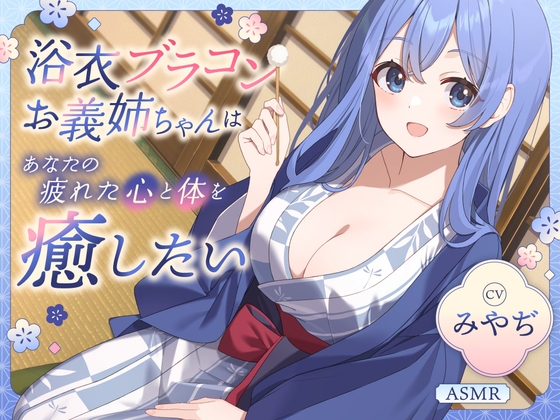
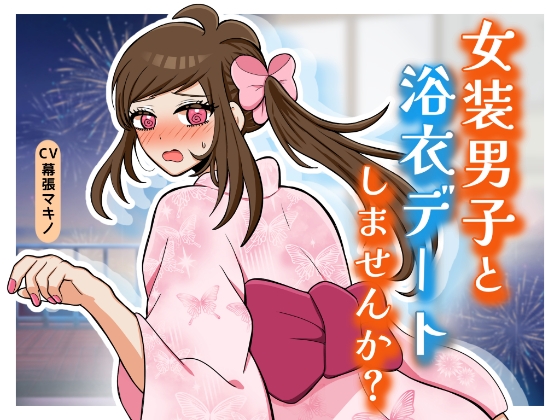
A summer evening, paper lanterns above the festival path, a single woman in a thin cotton wrap. The yukata’s place in Japanese summer iconography is by now stable enough that the same image — without further description — establishes the season, the setting, and the social register. The garment’s adult-content register is built directly on top of this older iconography.
Overview
Yukata (Japanese: 浴衣, yukata) is the Japanese single-layer cotton summer kimono. Descended from the Heian-period yukatabira (湯帷子, “bath shroud” — a hemp single-layer wrap worn in the steam-bath), the garment evolved through the Edo period into a casual post-bath house wear and a summer outdoor garment, and is now most strongly associated with summer festival attendance, fireworks displays (hanabi taikai), and bon-odori dancing.
The standard yukata is single-layer (hitoe), constructed without a lining, in cotton or cotton-blended fabric chosen for breathability and absorbency in summer heat. Traditional yukata are dyed in indigo on white or white on indigo with geometric or botanical patterns; modern yukata, particularly the youth-market summer-festival garments of the post-1990s revival, range across multi-colour floral and abstract designs.
In contemporary use, yukata are worn over light underclothing or a thin under-kimono (hada-juban), with a half-width obi (hanhaba-obi) tied at the back in simple knots — bunko-musubi (the box-shaped bow) being most common — and geta wooden sandals at the feet. The garment’s relative simplicity of dressing, compared to formal kimono, has made it the principal point of contact between contemporary Japanese youth and the wider Japanese-traditional-clothing tradition.
In adult-content media, the yukata is one of the established Japanese-traditional-clothing registers. The garment’s particular characteristics — single layer, lightweight cotton, simple under-clothing, easily disordered — make it the natural traditional-clothing register for narrative situations in summer settings: festival-date scenes, fireworks-display scenes, hot-spring inn scenes, and quiet at-home summer-evening scenes.
Etymology
Yukata is a contraction of the older yukatabira (湯帷子). The first element, yu (湯), means “hot water” or “bath”, and the second, katabira (帷子), names the single-layer hemp wrap that was the Heian-period bath-attendant garment. With the late-mediaeval shift from steam-baths to immersion baths, the yukatabira lost its in-bath function but survived as a post-bath garment, and the contracted yukata settled in early-modern Japanese as the ordinary name for the cotton successor of the older hemp wrap[citation needed].
History
Heian and mediaeval roots
Heian-period aristocrats took mushiburo (steam baths) wearing yukatabira — single-layer hemp wraps — for skin protection and modesty. Through the mediaeval period the practice spread to samurai and temple establishments, with hemp remaining the material standard.
Edo: the cotton transition and popularisation
The Edo period brought the decisive transitions. Cotton cultivation and weaving expanded across Japan, the sentō public-bath culture spread through the cities, and the post-bath yukata became a ubiquitous late-afternoon and evening summer garment. The standard pattern stabilised: cotton single-layer, indigo-on-white or white-on-indigo, with the pattern vocabulary of floral, geometric, and seasonal designs that the late-Edo dyeing industries (katazome stencil-dyed and aizome indigo-dyed) had consolidated.
By the late Edo period, summer festival attendance, fireworks-display attendance, and bon-odori participation had all become standard contexts for yukata wear. Shunga (erotic woodblock prints) and ukiyo-e of the period regularly depict yukata-clad figures in summer scenes — the post-bath cool-evening setting, the riverbank fireworks setting, the festival-stall setting. The garment was, in late-Edo iconography, securely the marker of Japanese summer leisure.
Modern (Meiji onward)
The Meiji-era westernisation of Japanese daily clothing displaced kimono in many ordinary contexts, but yukata preserved its specifically summer-occasion role and remained in continuous use through the twentieth century. The post-1945 generations grew up with yukata as the standard summer-festival garment for both children and adults.
The Heisei revival
From the 1990s onward, a substantial youth-market revival of yukata has reshaped the contemporary garment economy. Mass-market yukata at low price points, sold by major retailers in coordinated yukata-and-obi sets and aimed at young women’s summer-festival use, has made the yukata one of the most widely-worn Japanese-traditional garments of the early twenty-first century. The revival has restored yukata to a central position in contemporary Japanese summer-youth iconography, and the visual register of the yukata-clad young woman at a summer festival has become the canonical signifier of Japanese summer.
Reception in adult content
Several elements of the yukata’s design and cultural context converge to anchor it as a stable register in Japanese adult-content media.
The first is the festival-iconography pairing. Summer festivals — paper lanterns, food stalls, fireworks, bon-odori dance circles — are the natural setting for yukata wear, and the resulting scene-package (yukata + festival + summer evening) supplies a reliably evocative narrative environment. Few other costume-and-setting combinations in Japanese adult content have the same density of established cultural reference, and the festival-yukata staging is correspondingly one of the genre’s most reliably-used visual templates.
The second is the close-fit and disorder vulnerability. The yukata is single-layer, fitted close to the body, and under traditional practice worn with minimal underclothing. Heat, water, and motion can produce close clinging, slipping, and disorder of the garment in ways that the more structured kimono cannot. The visual register of partially disordered yukata is itself a recognised iconography in adult-content media.
The third is the simple obi. The half-width obi with its simple bow knot is structurally easier to undo than the more complex formal kimono nagoya-obi, and the staging convention of the loosened or untied obi is one of the recurring narrative beats in yukata-clad scenes. The simplicity of dressing that recommends yukata to general everyday wear also recommends it to narrative use in adult content.
Subgenre conventions
In the adult-content register, several recurring scene-packages organise the yukata’s appearance:
- Festival-date scenes: characters meet at a summer festival, summer fireworks display, or bon-odori circle. The yukata’s place in the staging is anchored by the festival’s place.
- Hot-spring-inn scenes: characters wear yukata as the standard ryokan room-and-bath wear. Continuous with the older bath-and-yukata cultural lineage.
- Traditional-event scenes: shrine festivals, regional festivals, bon observances. The yukata as ritual-context attire.
In each case, the yukata reads simultaneously as ordinary summer clothing and as Japanese-traditional clothing, and the dual reading underwrites the costume’s recurring use.
Forms and variants
- Indigo-with-white pattern: the Edo-period traditional design.
- White-with-indigo pattern: the inverse traditional design, also in continuous use.
- Multi-colour floral pattern: the post-1990s youth-market design language, with stronger colour and broader pattern vocabulary than the traditional indigo register.
- Men’s yukata: men’s variant in more conservative colours and patterns.
- Children’s yukata: smaller-scale variants in brighter patterns (out of scope for this article).
- Anime-collaboration yukata: licensed cross-overs between traditional yukata makers and anime franchises, a 2010s product category.
Cultural framing
The yukata sits in the Japanese-traditional-clothing register alongside the more formal kimono, the masculine fundoshi loincloth, and the ritual miko shrine-maiden dress. Where the kimono signals winter, formal occasion, or tradition; the yukata signals summer, casual occasion, or festival. The contrast is one of the enduring oppositions in Japanese clothing-and-iconography vocabulary, and the yukata’s role in the adult-content traditional-clothing register is anchored on its summer-and-festival side of that opposition.
In international circulation, the yukata is increasingly recognised through Japanese tourism and cultural-export materials. Western audiences first encountered the yukata principally through Japanese cinema and through tourism-industry imagery, and the costume has subsequently become available in international anime fandom and cosplay markets as one of the easier entry-points into Japanese-traditional-clothing wear (the lower complexity of dressing, compared to formal kimono, makes it accessible).
See also
Updated
References
- 『日本服飾史』 Tokyo-do Shuppan (2013)
- 『浴衣の文化史』 Senken Shimbunsha (2008)
- 『祭りの民俗学』 Mirai-sha (1998)
Also known as
- Cotton kimono
- Summer kimono
- ja: 浴衣
- ja: ゆかた