Bunny girl (Playboy bunny)
✎ 本文編集 (admin) 🖼 画像編集 (admin)“Bunny girl (Playboy bunny)” works on DLsite
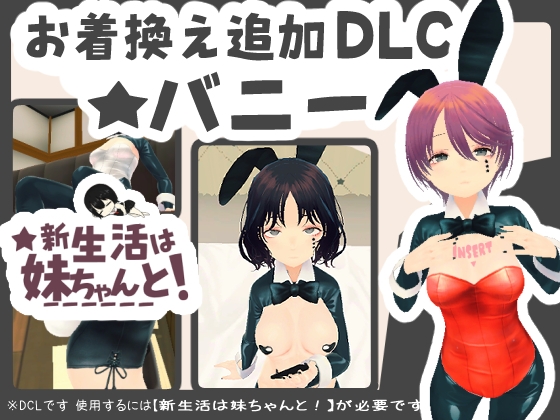
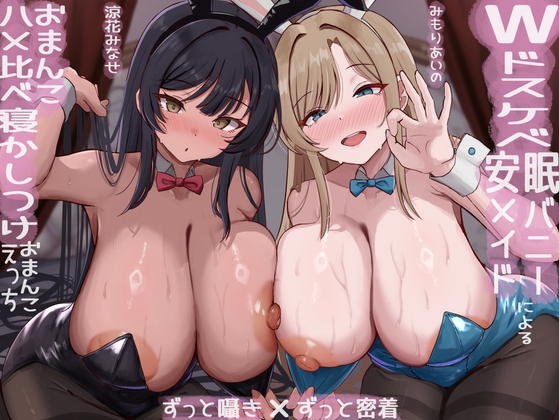
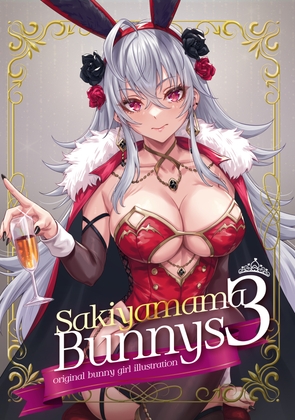
Rabbit-ear headband, satin high-leg leotard, white collar, bowtie, fishnet stockings, high heels, and an attached tail. The Japanese kink-vocabulary identifies sustained sexual interest in this assembled costume-configuration as banī-gāru, and the resulting category sits in the costume-kink vocabulary at a position with substantial American-fashion-history and contemporary-Japanese cosplay dimensions.
Overview
Bunny girl (Japanese: バニーガール, banī-gāru; English: bunny girl, Playboy bunny; from English bunny + girl) is the costume-kink category for sexual interest in the specific costume-configuration originating with the Playboy Club service uniform from 1960. The standard configuration has seven specified elements: (1) a satin high-leg leotard, (2) a corset-style waist-cinching, (3) a stiff white front-collar and bowtie, (4) white cuffs, (5) black fishnet stockings, (6) high heels, and (7) a rabbit-ear headband with attached cotton tail at the lower back.
The Playboy enterprise treated the costume as proprietary intellectual property and aggressively pursued unauthorised reproduction for several decades. The costume’s transition from proprietary service-uniform to general-cosplay-and-fetish costume proceeded through the 1980s onward, after the closure of most Playboy Clubs in the United States.
In Japanese contexts, the costume has been recontextualised substantially: rather than operating as an actual service-uniform, it operates as a cosplay costume and an adult-content production costume. The Japanese deployment foregrounds the costume’s visual-and-erotic dimensions over the original service-function context.
Distinction in cultural framing
The Western framing of the bunny girl operates with substantial Playboy-Club-history weight. The Gloria Steinem 1963 undercover-journalism article A Bunny’s Tale, the various memoirs of former Playboy Bunnies, and the broader 1960s-and-onward Playboy-empire history give the Western Bunny costume substantial labour-history and feminist-critique context. The Western bunny girl is, accordingly, a historically-located figure with substantial documented social-context.
The Japanese framing has, with comparatively limited historical-context-load, treated the costume primarily as a stylised-aesthetic costume element. The character-attribute reading — bunny-girl-as-character-type rather than as historically-located-service-worker — operates as the principal Japanese register. The 1990s-onward cosplay tradition placed the bunny costume alongside maid, school-uniform, and cheerleader costumes as a stable cosplay-vocabulary element without the labour-history weight that operates in Western framing.
Etymology and origin
The English bunny is a diminutive of rabbit / coney, with the affectionate register of small-and-cute-rabbit. Hugh Hefner’s Chicago Playboy Club, opened on 29 February 1960, introduced the costume as the service-staff uniform. The costume-origin story attributes the initial design proposal to Ilse Taurins (a then-girlfriend of co-founder Victor Lownes) and the first sewn prototype to Taurins’s mother, who worked as a seamstress.
The prototype was closer to a one-piece swimsuit. Hefner’s direction modified the leg-cut to the high-leg configuration that became the standard. The opening-period costume was tightly controlled: the Bunny Touch Rule prohibited customers from touching the bunnies, and a substantial code of conduct governed staff-and-customer interaction.
Gloria Steinem’s 1963 undercover article A Bunny’s Tale, published in Show magazine, provided detailed first-hand documentation of working conditions in the Playboy Club. The article became a foundational second-wave-feminist text and a continuing reference-point for analyses of service-industry labour-conditions for women.
Historical trajectory
Playboy Club period (1960-1986)
The Playboy Clubs proliferated across the United States and a small number of international locations through the 1960s-and-70s. The bunny costume operated as the consistent visual-and-service-identity across these locations, with substantial Playboy-enterprise control over costume-design, fitting, and use.
The 1980s saw most U.S. Playboy Clubs close, with the costume becoming proprietary intellectual property held by Playboy Enterprises rather than active service-uniform. Subsequent international Playboy Club operations (London, various Asian locations) have used the costume in various adapted forms.
Cultural symbol period (1980s onward)
After the U.S. Playboy Club closures, the costume survived as an independent cultural-symbol. Hallmarks of the post-club period include rock-music video appearances (1980s-90s), the substantial Halloween-costume market (perennial high-volume retail item in the United States), and reference appearances in comedy and parody.
In Japan, 1970s-onward television entertainment shows (Hachiji-dayo Zen’in Shūgō, All Night Fuji, and many others) used the costume for female assistant-and-announcer characters, embedding the costume in mainstream entertainment vocabulary. By the 1990s, Akihabara’s maid-and-cosplay-cafe ecosystem began using bunny costumes as service-uniform variants, recursively bringing the costume back into actual service-uniform-use after the gap from the original Playboy Club function.
Feminist critique and re-evaluation
The Western feminist critique of the bunny costume as exemplifying animalisation of women’s bodies and as a paradigm-case of objectification operated as a continuing line of cultural commentary through the 1970s-and-onward periods. Recent re-readings within drag culture, the burlesque revival, and LGBTQ+ pride contexts have produced more affirmative readings of the costume as a camp-aesthetic element.
In Japan, the costume has not had a comparable single-line feminist-critique tradition, partly because the Japanese deployment never substantively operated as a real-world service-uniform with the labour-conditions that the Playboy Club represented. The costume operates almost entirely within the character-attribute (rather than real-occupation) register in contemporary Japanese contexts.
Structure of the kink-aesthetic
Three structural layers organise the costume’s erotic register.
Leg-line extension. The combination of high-leg leotard and fishnet stockings produces an uninterrupted single-tone visual-line from the hip-bone down through the heel. The visual-extension makes the legs read as longer than the actual physical leg-length. The fishnet’s geometric pattern adds visual-interest along the line without interrupting its continuity.
Animal-attribute play. The wearer adds animal-features (ears, tail) to their body. The half-step-into-animal configuration produces a fantasy-space removed from straightforward human-realism. The play-register accommodates both light-aesthetic-play and more elaborate pet-play / role-play configurations.
Service-uniform symbolism. The white collar, bowtie, and cuffs are direct quotations from the formal service-uniform vocabulary (waiter, butler, formal-dining-service). The presence of these elements on the bunny costume immediately signals service-status: the wearer is, in costume-grammar, in a service-relation to the viewer or guest. The power-asymmetry built into the costume-vocabulary is part of the appeal-mechanism.
The viewer-reading combines the artificial-perfection of the body-line under the costume with the costume’s non-everyday character. Rather than a narrative of an everyday-woman undressing into sexual-availability, the bunny-girl narrative-frame typically positions the character as already-in-character costumed, with the act-content proceeding from the costumed state. The configuration sits adjacent to and overlapping with the clothed-play and chakuero aesthetic-registers.
Sub-forms
- Black bunny: standard configuration, black satin.
- White bunny: wedding-and-pure-aesthetic variant.
- Colour-variant bunny: red, pink, pastel variations.
- Maid-bunny composite: hybrid with maid costume-elements.
- Kemonomimi-bunny: rabbit-ear played as actual animal-attribute rather than headband-accessory.
- Suit-only / no-ear bunny: deconstruction of standard configuration.
- Anime-character bunny: existing anime characters depicted in bunny-costume variant.
Cultural reference
In Anglophone contexts, the bunny costume continues as a perennial Halloween-and-cosplay staple, with the perennial Halloween-costume retail market sustaining substantial annual-volume.
In Japan, bunny girl is essentially never an actual job-category but is used almost exclusively as a character-attribute. The 2018 anime series Seishun Buta Yarō wa Bunny Girl Senpai no Yume wo Minai (Rascal Does Not Dream of Bunny Girl Senpai) places the costume-name in the work-title, reflecting the character-attribute centrality of the costume in contemporary Japanese popular-culture vocabulary. The bunny-girl operates alongside maid, school-uniform, and nurse costumes as a primary cosplay and role-play costume-vocabulary element.
Related Terms
- Cosplay
- School uniform (seifuku)
- Maid
- Cheerleader
- Stocking
- High heels
- Chakui (clothed play)
- Chakuero
- Role-play
Updated
References
- 『Mr. Playboy: Hugh Hefner and the American Dream』 Wiley (2008)
- 『Bunny: The Real Story of Playboy』 Michael Joseph (1984)
- 『A Bunny's Tale』 Show magazine (1963) — Foundational second-wave-feminist undercover-journalism on Playboy Club working conditions.
- 『Playboy and the Making of the Good Life in Modern America』 Oxford University Press (2009)
Also known as
- bunny girl
- bunnygirl
- Playboy bunny
- bunny suit
- ja: バニーガール
- ja: バニースーツ