Fundoshi
✎ 本文編集 (admin) 🖼 画像編集 (admin)“Fundoshi” works on DLsite
![巨乳ふんどし百姓イッキ[急]](https://img.dlsite.jp/modpub/images2/work/doujin/RJ01712000/RJ01711760_img_main.jpg)
A single long strip of cloth wound around the hips and tied off. The garment is older than written Japanese history, and survives in the contemporary present as festival dress, sumo work clothing, occasional everyday underwear for the small revivalist subculture that wears it, and a wafuku-coded costume in adult media.
Overview
Fundoshi (Japanese: 褌 / ふんどし; English: Japanese loincloth) is the Japanese traditional loincloth: a long strip of fabric (white cotton is the standard) wound around the hips and through the crotch in a fixed knot pattern. The garment was the standard male undergarment in Japan from antiquity through the early twentieth century, and was almost completely displaced by Western-style underwear (briefs, boxers) in the postwar period. It survives today in four registers: as festival dress in regional and Shintō rituals; as the active dress of sumo wrestlers and traditional martial artists; as everyday underwear for a small revivalist subculture; and as a costume element in adult media of the wafuku (Japanese-traditional-clothing) fetish lineage.
Several distinct fundoshi forms coexist in current usage. The etchū fundoshi, a flap-and-strings design developed in the Edo period, is the easiest to wear and the form most frequently encountered today. The rokushaku fundoshi (literally “six-shaku”, roughly 1.8 metres of cloth) is a longer-cloth knot used at festivals, in sumo training, and in heavy labour. The mokko fundoshi is a simpler tie-on form. The mawashi worn by sumo wrestlers in competition is a form-specialised relative.
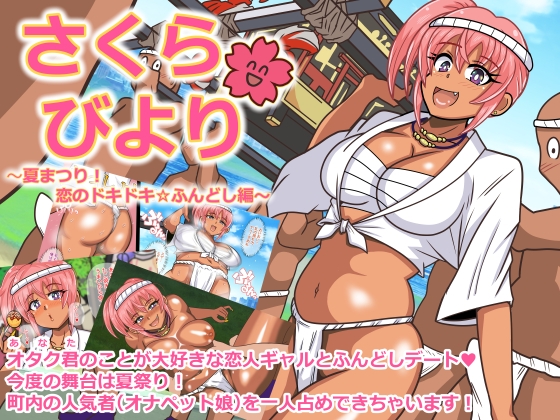
In adult media, fundoshi appears as a costume element in the wafuku fetish branch — the strand that organises around traditional Japanese clothing rather than Western costume. Male characters in period and festival settings wear it as direct historical reference; female characters wear an ornamental variant (“women’s fundoshi”, onna-fundoshi) that emerged in the late twentieth century as a stylised cosplay variant.
Etymology
The word fundoshi has no settled etymology. Three competing accounts circulate. The first traces it to fumi-tōshi (“step-through”), a phonetic shortening describing how the garment is donned. The second traces it to furi-tōshi (“swing-through”), with a similar physical sense. The third traces it to a hypothesised earlier form funnuki (“hip-pulled-through”). None of the three has been clearly established and the question remains open.
The single Sino-Japanese character 褌 (kun-yomi fundoshi, on-yomi kon) was borrowed from Chinese, where it indicated an older form of undergarment. The character has been current in Japanese writing for the loincloth since the classical period.
The etchū fundoshi form is conventionally said to be named for an Edo-period physician of Etchū Province (modern Toyama Prefecture) who promoted the design, although the historical record on this is thin. The rokushaku fundoshi takes its name from its standard length (six shaku, approximately 1.8 metres). Mawashi — the sumo specialised form — comes from the verb mawasu, “to wind around”.
History
Antiquity through the medieval period
Fundoshi-form garments are old enough in Japan that their precise origin is undatable. Haniwa figurines and other archaeological remains suggest a hip-wrapped male undergarment present in the proto-historical period. Heian-era literature documents the garment as a recognised undergarment across class lines, and from the medieval period onward fundoshi was the working male undergarment for warriors, peasants, and tradespeople alike. Hemp was the original standard fabric; cotton displaced it as cotton cultivation spread through Japan in the early modern period.
Edo period: standardisation of forms
The Edo period saw the consolidation of multiple fundoshi forms in parallel use. Etchū fundoshi spread widely from the mid-Edo period as a comfortable, easily worn variant. Rokushaku fundoshi held its place at festivals, in sumo, and in heavy labour, supported by its capacity to be tied tightly under heavy exertion. Edo-period shunga and ukiyo-e routinely depict men in fundoshi, both as everyday dress and as a recognisably erotic element of partial-undress scenes.
Meiji through the early Shōwa period
The Meiji Restoration’s Westernisation programmes did not displace fundoshi from everyday male underwear. Through the early twentieth century the garment remained standard, and during the Pacific War the Japanese army issued etchū fundoshi as soldier-grade underwear. The wartime use embedded the garment in the generational memory of the demobilised population that returned home in 1945.
Postwar decline
Western-style underwear (briefs, boxers, trunks) displaced fundoshi as everyday male underwear in the rapid Westernisation of consumer fashion through the 1960s. By the 1970s the garment had retreated to specialised registers: festival dress (mikoshi-carrying, cold-water purification rites, regional rituals), the sumo and martial-arts world (where the mawashi and the under-mawashi remain in active use), and a small surviving population of older men who continued to wear the form they had grown up with.
Contemporary survivals and revivals
Festival use has held its place across the contemporary period: most regional festivals that involve carrying portable shrines, ritual cold-water bathing, or processional roles maintain fundoshi as the standard dress for male participants. Sumo and traditional martial arts continue to use the garment as functional sportswear. From the 2010s a small revivalist movement, often framed in terms of comfort, traditional culture, and (sometimes) “men’s-health” concerns, has championed fundoshi as everyday underwear; the small commercial market includes online sellers offering modern fabric variants.
The fourth register, in adult-media and cosplay contexts, has emerged in parallel. The garment functions as a wafuku-aesthetic costume element across festival-set and historical-set scenes, and a women’s-cosplay variant has developed as an ornamental form that is largely independent of the historical use.
Subcultural conventions
Three settings recur in adult-media usage of fundoshi. Festival compositions place male and female characters in fundoshi and yukata on summer evenings, in the heat, sweat, and crowd of a regional festival. Period and historical compositions use fundoshi as direct historical reference for samurai, peasants, and sumo wrestlers in Edo or Meiji settings. The women’s fundoshi form (onna-fundoshi) is a recent development: an ornamentalised, sometimes deliberately abbreviated variant designed for cosplay and adult-illustration use rather than for descent from the historical garment. The women’s variant circulates in costume catalogues and in doujinshi and is best understood as a stylised adult-media reading of the source form rather than as a continuation of any actual historical women’s undergarment.
Variants
- Etchū fundoshi: front-flap design, the standard everyday form, easy to don.
- Rokushaku fundoshi: long-cloth knotted form, used at festivals and in heavy labour.
- Mokko fundoshi: a simplified tie-on form, sometimes preferred as a beginner’s introduction.
- Mawashi: the sumo-specialised form, both for training and (in heavier weight) for competition.
- Onna-fundoshi: the modern women’s-cosplay variant, ornamental rather than functional.
- Decorative fundoshi: festival or cosplay variants in coloured cloth, embroidered patterns, or unusual fabrics.
Adjacent representations
The narrative settings in which fundoshi most frequently appears in adult media are: the summer festival (often with yukata as the partner garment), the traditional inn or hot-spring resort (with the broader wafuku register of bathwear), the Shintō ritual (with miko and Shinto-priest costumes as adjacent elements), and the historical-period drama (with the garment as a marker of period authenticity).
In the broader wafuku-fetish costume sign-system, fundoshi sits as a counterpart to the formalwear-coded yukata and kimono and is the masculine pole of the wafuku-undress register. The whole sign-system stands in deliberate contrast to the schoolwear-coded Western fetish register (sailor uniform, school swimsuit, kneesocks, and so on), and the choice between the two registers in any given work is a stylistic statement.
See also
Updated
References
- 『Japanese Costume and the Making of the Modern Self』 Berg (2009)
- 『ふんどしの文化史』 Seikyusha (2003)
- 『日本服飾史』 Tokyodō Shuppan (2013)
- 『和装の民俗学』 Miraisha (1995)
Also known as
- Japanese loincloth
- fundoshi loincloth
- etchu fundoshi
- rokushaku fundoshi
- ja: ふんどし
- ja: 褌