Boyish (anime character type)
✎ 本文編集 (admin) 🖼 画像編集 (admin)“Boyish (anime character type)” works on DLsite

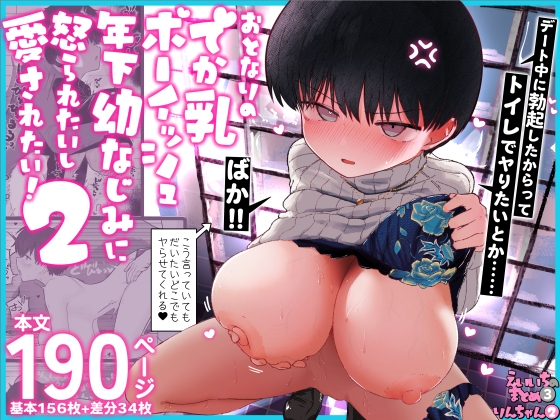
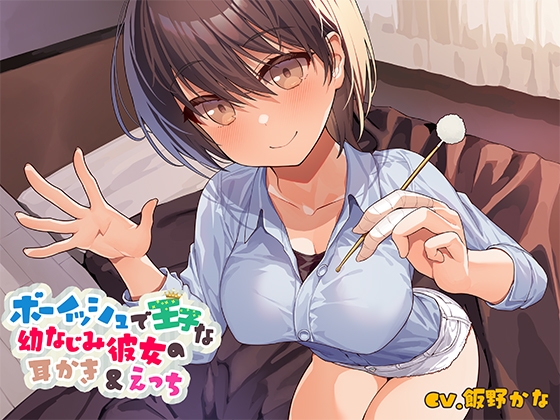

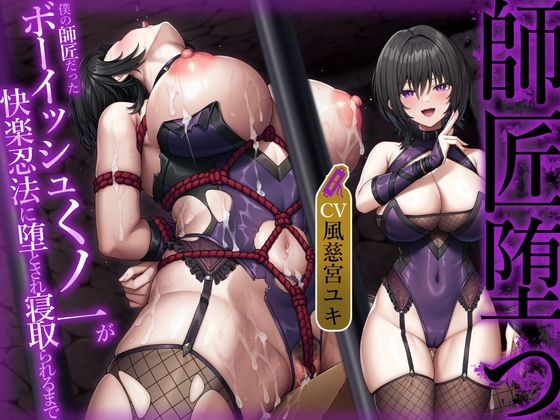
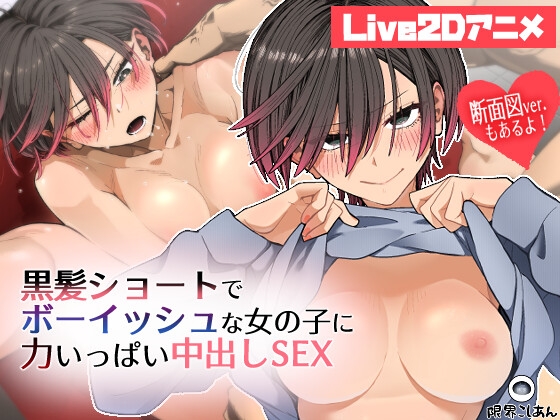
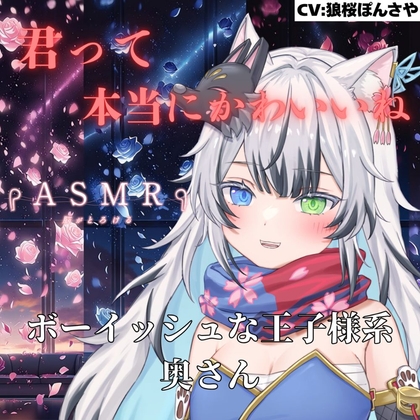
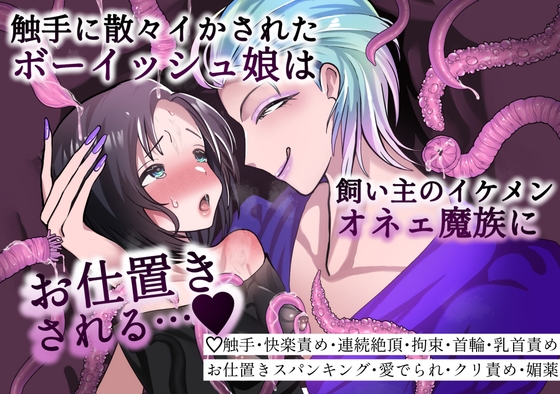
A short cut, a man’s button-down, a low and easy speaking voice. The female-coded character whose surface presentation crosses lightly into masculine register has been a recognised type in Japanese popular fiction since the early twentieth century, with a direct line running from Takarazuka through 1970s shōjo manga to the contemporary moe-attribute system. Boyish is the loanword the Japanese subculture chose for the cluster, and the underlying character logic is structurally distinct from the English tomboy it borrows from.
Overview
Boyish (Japanese: ボーイッシュ, bōisshu; English working translation: androgynous-girl character, anime tomboy) is the Japanese moe-attribute category for female characters who present in a deliberately masculine-coded register: short hair, men’s-cut or unisex clothing, low or casual speaking voice, athletic or direct demeanour, and a habit of treating male characters as equals rather than as objects of romantic deference. The category is anchored in the visual signal and gestures, and the underlying character body remains conventionally feminine.
Three structural features organise the archetype as it operates in contemporary anime, manga, and adult content. First, the visual register: short hair (pixie cut, very-short, handsome-short, or wolf cut), masculine or unisex clothing (button-downs, pants, sneakers), minimal makeup. Second, the behavioural register: direct speech, casual or rough register, athletic stance, equal-footed interaction with male characters, often with sports-club or athletic-school positioning. Third, the gap reveal: the convention by which the surface masculine presentation drops in private or intimate scenes, exposing a feminine reaction register the character keeps off the public-facing presentation. The third element is what distinguishes the boyish moe attribute from the older general type of androgynous female character, and it is the structural feature that the moe-attribute reading apparatus has built up around it.
The English-language tomboy and the Japanese boyish overlap but are not equivalent. Tomboy in English describes primarily the behaviour of a girl or young woman who participates in activities and dispositions coded masculine, with the term centred on action and personality. Boyish in Japanese, by contrast, centres the visual presentation and treats the personality cluster as a paired-attribute that follows the look. The distinction matters: an English-speaking observer reads “tomboy” first as personality and second as visual cue, while a Japanese reader of contemporary anime reads “boyish” first as visual cue and lets the personality cluster fill in.
Etymology
The Japanese bōisshu is a transliteration of the English boyish (boy-like). The Japanese loanword entered the language as a fashion-vocabulary term in the early twentieth century, when Western-style women’s fashion was making early inroads in urban Japan; it referred at that time to women adopting masculine-cut or simplified clothing as a fashion choice. It carried that primarily-fashion sense through the 1920s moga (modern-girl) culture, the postwar women’s-fashion-vocabulary expansion, and the 1970s unisex-fashion moment, before being repurposed in the 1990s and 2000s otaku subculture as a moe-attribute character-type label.
The reception-history-relevant point is that the Japanese loanword stabilised on boyish (visual) rather than tomboy (behavioural). When the English-language anime fandom began encountering the Japanese vocabulary, the loanword was generally translated back into English as tomboy, but with the visual emphasis the Japanese category carries — producing a character of anime tomboy who is recognisably a different reading-target from the English-language tomboy of, say, an American mid-twentieth-century coming-of-age novel.
History
Pre-modern and early-modern background
The cross-presented female figure has a substantial Japanese pre-modern presence. Onnagata-and-otokoyaku traditions in Japanese theatre — male actors playing female roles in kabuki, the older onna-budō tradition of women warriors in gunki monogatari (war chronicles), the female cross-dressing motifs in late-Heian and Kamakura tales — provided a continuous frame within which the female character in masculine register could be read.
The decisive modern institutional anchor is the Takarazuka Revue (founded 1914), the all-female musical-theatre troupe in which the male roles (otokoyaku) are performed by women. The Takarazuka otokoyaku — the female actor in male role, with all the work of stage gesture, costume, and voice-projection that the form requires — institutionalised the masculine-presenting female performer within Japanese popular performance. Through the twentieth century, Takarazuka has supplied a recognisable character-type vocabulary that subsequent shōjo-manga creators would draw on heavily.
1970s shōjo manga: the codifying moment
The decisive moment for the boyish archetype as a manga character type was Riyoko Ikeda’s The Rose of Versailles (Berusaiyu no Bara, 1972–73). Oscar François de Jarjayes — biological female, raised and presenting as male, serving as a guard officer in pre-Revolutionary Versailles — established the masculine-presenting female protagonist as a workable, popular shōjo-manga lead. The work’s enormous success carried the type into the 1970s and 1980s shōjo-manga vocabulary, where it appeared as a recurring character-type across sports stories, school stories, and historical-fantasy stories.
By the late 1970s and 1980s, the masculine-presenting female character was a recognised slot in shōjo manga’s character-design grammar. Authors used the figure for narrative purposes — exploring gender presentation, providing a self-confident female lead in a genre still working out its relation to female-coded heroines — and the character type acquired its own genre-spanning conventions of dress, speech, and posture.
1990s–2000s: the moe-attribute consolidation
In the 1990s and early 2000s the Japanese bishōjo-game (eroge) industry systematised the character-type vocabulary into the moe-attribute matrix that organised most production from that period onward. Boyish became one of the standard slots: a route-option in many bishōjo games, a recurring character-type in eroge and adult anime, and an independent searchable category in doujinshi distribution. The gap-reveal convention that distinguishes the modern boyish archetype from the older general type — the masculine surface dropping into a feminine reaction register in private scenes — consolidated through the 2000s as a default narrative-and-aesthetic device of the genre.
Through the 2000s the type’s combinatorics were elaborated. Boyish + small-build, boyish + athletic-club, boyish + tsundere, boyish + senpai, boyish + childhood-friend — each combination acquired its own narrative-and-aesthetic conventions, and the resulting matrix produced a substantial sub-section of contemporary moe production.
2010s–2020s: refinement and adjacent-type discrimination
In the 2010s and 2020s the moe vocabulary’s increasing precision led to closer discrimination among the boyish archetype and adjacent character types. The boyish archetype (biologically female / masculine surface presentation) is now consistently distinguished from the otokonoko (biologically male / feminine surface presentation), the crossdresser (biologically female / fully-male disguise), and the gender-unspecified-character (presentation-undefined). The four positions form a small grid within which contemporary anime character design distributes its androgynous-and-gender-crossing characters, and the boyish category occupies its own corner stably.
In commercial AV and adult-content distribution, boyish appears as a searchable category and a regular concept-title element. The combinatoric form pairs the boyish presentation with other recognisable archetypes — the maid setting, the school setting, the office-worker setting — and produces a steady volume of titles aimed at the boyish-attribute reader.
Sub-archetypes
Handsome-short type
The most explicitly male-coded register: hair short and styled in a deliberately handsome cut, posture and gestures borrowed from the male-role canon, often with the Takarazuka otokoyaku tradition as the visible inheritance. Characters in this register often hold leadership, competitive, or protective positions in the narrative, and the gender-crossing register is treated as part of their presented competence.
Athletic / sports-club type
The boyish character paired with an athletic-club setting (track, swimming, basketball, soccer, kendo). The masculine register is naturalised through the athletic body and the disciplined behaviour of the club, and the gap-reveal convention operates as the off-court personal register.
Younger-brother / boy-coded type
The boyish character with a smaller body type and pre-mature presentation. The category overlaps with the kogara (small-build) and slender body categories and with adjacent age-related discrimination questions; in adult content and visual conventions, age-coding is handled with particular care, and the category as it appears here addresses adult characters (legally and contextually) presented in a younger-coded visual register.
Adjacent-type distinctions
The boyish archetype differs from the otokonoko in the body-versus-presentation axis: boyish is female body / masculine presentation, otokonoko is male body / feminine presentation. The crossdresser (full male disguise of a female character) sits as the extreme end of the boyish register, while the lighter boyish characters retain feminine surface markers. The four positions form a small grid and contemporary character design distributes its androgynous characters across them with increasing precision.
The structure of the kink
The boyish kink-and-aesthetic register operates on a layered structure that distinguishes it from straightforward attraction to the masculine surface alone.
The first layer is the gap convention. The masculine-coded surface presentation is paired, by genre convention, with a feminine reaction register that emerges in private or intimate scenes. The structural pleasure of the convention is the contrast between the public surface and the private reveal, and the resulting gap-reveal dynamic is the principal reading-and-aesthetic logic the genre has built around the archetype.
The second layer is the gender-presentation play. The boyish character occupies a deliberate position on the gender-presentation spectrum where the masculine signals operate over a feminine body; the resulting visual register is one in which the boundaries of gender presentation are visible and available as an aesthetic-and-narrative resource. The Japanese subcultural register uses this fluidity as part of the aesthetic apparatus, and the contemporary moe-attribute system has built up a substantial vocabulary for handling it.
The third layer is the peer-relation register. The boyish character interacts with male characters as a peer or rival rather than as a romantic deferential — and this peer-positioning is a structural part of the character-type’s appeal. In narratives organised around the gap-reveal convention, the peer-positioning amplifies the eventual private-scene revelation: the equal who becomes vulnerable, the rival who becomes the object of intimacy.
Reception and the wider field
In Japanese-language commentary on contemporary moe culture (Hiroki Azuma’s database-character framework, Saitō Tamaki’s beautiful-fighting-girl analysis, the Moé Manifesto interviews), the boyish archetype recurs as one of the more analytically interesting cases — a character-type built explicitly on the working of gender-presentation conventions, in which the genre’s reading conventions are doing visible work. Gender-studies analysis of the type has noted both the productive aspect (a character type that places gender-presentation play at the centre of its aesthetic) and the more critical aspect (the gap-reveal convention’s tendency to recuperate the masculine-presenting character into a conventionally-feminine intimate register at narrative climax).
The international anime-fandom reception has been substantial. The boyish archetype carries through to international audiences as one of the more legible Japanese character types, and it overlaps in international reception with the broader anime tomboy category. The moe-attribute reading apparatus carries less directly than the visual conventions, but the cluster is recognisable enough that international fans deploy the term as a recognised character-type label.
Related Terms
- Kogara (small build)
- Slender
- Otokonoko
- Josouka (female-disguise)
- Seifuku (school uniform)
- Bishoujo (beautiful girl)
- Twin-tail (kink)
Updated
References
- 『The Moé Manifesto: An Insider's Look at the Worlds of Manga, Anime, and Gaming』 Tuttle Publishing (2014)
- 『Otaku: Japan's Database Animals』 University of Minnesota Press (2009)
- 『Beautiful Fighting Girl』 University of Minnesota Press (2011)
- 『Takarazuka: Sexual Politics and Popular Culture in Modern Japan』 University of California Press (1998) — On the Takarazuka male-role tradition that feeds the boyish archetype.
Also known as
- tomboy aesthetic
- androgynous girl character
- tomboy
- ja: ボーイッシュ
- ja: ボーイッシュ系
- ja: 中性的女子
Related
- Slender (Body Type)
- Otokonoko
- Seifuku (Uniform Costume)
- Bishoujo (Anime/Manga/Game Character Archetype)
- Gangimari (Drugged-Face Expression)
- Kemonomimi (beast-ear character)
- Meganekko (glasses-girl)
- Shimapan
- Jawline Fetish
- Demon Girl Moe (Akuma Chara)
- Bakajoshi (Airhead Girl Archetype)
- Blazer School Uniform