Bakajoshi (Airhead Girl Archetype)
✎ 本文編集 (admin) 🖼 画像編集 (admin)“Bakajoshi (Airhead Girl Archetype)” works on DLsite

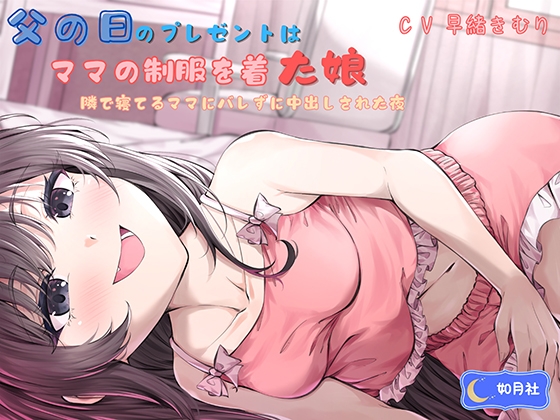

A character pattern so well-defined that fans can identify it from a single panel. The big eyes, the half-open mouth, the dialogue bubble with a question that the surrounding adults already know the answer to. The genre has internal craft conventions, an internal economy, and an internal ethical debate that has been going on for as long as the genre itself.
Overview
Bakajoshi (Japanese: バカ娘系) is the Japanese adult-manga, eroge, and doujinshi character archetype for a female character marked as intellectually naive, sexually inexperienced, and structurally easy to mislead. The archetype is one of the standardised personality slots in the moe-attribute system that organises much of contemporary Japanese-character design, and it has been recognisable as an independent category since the early 2000s.
The form has four canonical features. First, the heroine’s physical presentation is conventionally striking: visible breasts, evident attractiveness, all the bishoujo design markers. Second, her social presentation is unmistakably innocent: she takes statements at face value, she trusts new acquaintances, she does not read between the lines of double meanings. Third, her sexual knowledge is structurally limited: she does not understand the situations she is entering until she is well inside them. Fourth, her competence in everyday cognitive tasks (school, paperwork, ordinary adult routines) is reduced from genre baseline, supplying the genre with comic and dramatic material outside the sexual scenes themselves.
Etymology
The compound baka-joshi combines baka (馬鹿), the everyday Japanese word for a foolish or unintelligent person, with joshi (女子), a general word for female. The two morphemes together form a colloquial label for a particular kind of woman character that already had an older lineage in mainstream Japanese fiction and theatre before consolidating, in the 2000s, as a moe-archetype label specifically.
English-language equivalents (airhead, dingbat, bimbo, dumb blonde) carry stronger dismissive load than the Japanese compound. Bakajoshi, in fandom use, mixes a dismissive register with an affectionate one: the character is naive, but she is also presented as endearing for that reason, and the affection is in the foreground when the term is applied within adult fandom rather than as a real-life insult.
Conventions
The visual register of the archetype is well-developed. Eyes are drawn larger than the genre-average bishoujo; pupil dilation is foregrounded; the mouth is often slightly open in a default expression of curiosity-without-comprehension. The body is full and visibly female. Hair colour is conventionally lighter (blonde, light brown, soft pink) than for the more serious moe slots; uniforms and casual outfits sit one register more relaxed than they would on a sharper character.
The verbal register is equally settled. The character asks questions about everyday matters that the other characters already know the answer to; her internal monologue glides past the implications of what is happening around her; her speech rhythm is slightly slower than the genre baseline. Common scripted lines run along the pattern “…is that what it means?” “…mm, this feels strange, but is it normal?” The reader is positioned as someone who can read what the character cannot, and the lag between her cognition and the reader’s is the genre’s signature device.
Genre context
The archetype emerged from the convergence of several streams of late-1990s and early-2000s otaku culture. The moe-attribute system, which by the early 2000s had codified character types into a database-like inventory of personality and design slots, made room for bakajoshi alongside tsundere, kuudere, yandere, and the wider family of personality-coded archetypes documented in Hiroki Azuma’s Otaku: Japan’s Database Animals (2001) and Patrick Galbraith’s Moé Manifesto (2014).
The archetype’s narrative function inside adult work is to license certain plots that depend on the heroine’s structural unawareness of what is happening. The deception scenarios, the misled-into-the-scene plots, and the awakening narratives of late-2000s and 2010s adult manga and eroge recruit bakajoshi heroines as the most narratively economical way to set up their starting conditions. Sharon Kinsella’s older work on adult manga, and Galbraith’s Erotic Comics in Japan (2021), both register the archetype as a productive type whose function is partly structural rather than purely characterological.
The ethical conversation
The archetype has been controversial since its consolidation. The central critique is that the attractive-and-unaware pairing reproduces a stereotype that flattens women’s intellectual agency in service of a sexual narrative, and that the further pairing of attractiveness with diminished comprehension is socially harmful regardless of its fictional framing. The critique runs along familiar lines from second-wave feminist analysis of pornographic conventions and has been picked up in Japanese-language otaku-criticism discourse since the early 2000s.
The defending arguments inside adult-fandom criticism take three main forms. The first is that fan-cultural conventions are read as conventions by their audience and do not transfer to ordinary social attitudes; the second is that male characters of the same description exist in equivalent fictional registers, and the bakajoshi type is one instance of a wider archetype of unaware-by-design characters rather than a gendered insult; the third is that the function of the archetype inside adult fiction is structural rather than evaluative, and the type performs work the genre cannot easily do without.
The debate is unsettled. The genre continues to be supplied at substantial volume on commercial and amateur distribution platforms, and the critical conversation continues alongside it.
Reception
The supporting psychology of bakajoshi reception is most often described in three terms.
The first is competence asymmetry. The protagonist, whether a player-character or a reader-positioned narrator, is conventionally placed at a higher level of competence than the heroine. The asymmetry licenses the protagonist’s narrative initiative and presents the reader with a position of cognitive advantage.
The second is absence of malice. The heroine has no plotting interior, no calculation, no agenda beyond the moment. Reader-side guilt about consuming the scene is structurally reduced by the heroine’s lack of strategy, which positions her arrival in the scene as something other than a deliberate choice on her part.
The third is the pleasure of teaching. A substantial sub-stream of bakajoshi work foregrounds the protagonist’s role as the heroine’s first guide to the relevant material, and the resulting quasi-pedagogical asymmetry produces a register of pleasure that is recognisably adjacent to mentor-disciple and elder-sister configurations elsewhere in the moe vocabulary.
See also
Updated
References
- 『Erotic Comics in Japan: An Introduction to Eromanga』 Amsterdam University Press (2021)
- 『Otaku: Japan's Database Animals』 University of Minnesota Press (2009)
- 『Beautiful Fighting Girl』 University of Minnesota Press (2011)
- 『The Moé Manifesto』 Tuttle Publishing (2014)
Also known as
- bakajoshi
- airhead girl genre
- naive girl archetype
- ja: バカ娘系
- ja: バカ娘
Related
- Demon Girl Moe (Akuma Chara)
- Chijoka (Becoming a Lustful Woman)
- Dosukebe (Super-Lewd Character Type)
- Twins Moe (Futago Moe)
- Haraguro Moe (Two-Faced Character Appeal)
- Kemonomimi (beast-ear character)
- Yandere
- Sabasaba Moe (Cool-Girl Archetype)
- Yankee character moe
- Dark Elf (Fantasy Character Archetype)
- Sisters Threesome (Ane-Imouto Don)
- Debu Otoko (Fat Bastard / Ugly Bastard)