Kuudere
✎ 本文編集 (admin) 🖼 画像編集 (admin)“Kuudere” works on DLsite
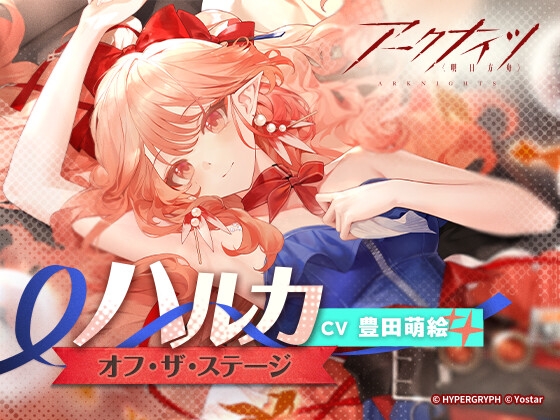
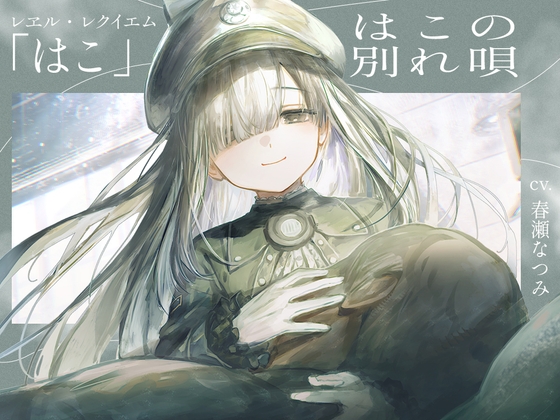
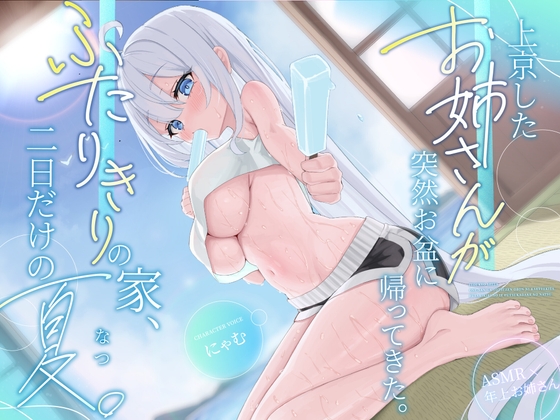
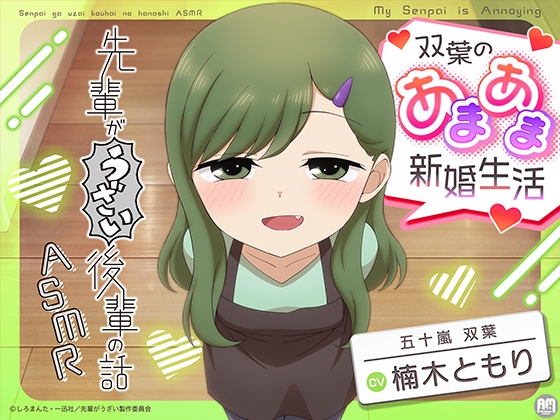
A partner who has been reading a book, dead-pan, looks up and says only “this was good” and holds the book out. A gesture and nothing more, yet your heart-rate clearly rises. The gaze a kuudere turns on you, unlike the tsundere who detonates emotion, pierces with a minimal signal. The deeper the usual silence, the more a slight leak of affection cuts like a sharpened blade.
Kuudere is a character archetype who keeps cool and expressionless (kuu, from “cool”) in daily life, with little emotional fluctuation, while showing affection (dere, from deredere) only rarely and only to a trusted person, and the taste for that archetype. A compound of “cool” and “deredere”, it was coined around 2005 on the Japanese board 2channel as a counterpart and derivative of tsundere, and settled into subculture from the late 2000s.
Overview
The core of the definition is the contrast between an extreme scarcity of emotional output in daily life and a faint emotional leak arising only toward a particular person. Where tsundere covers affection with aggression, kuudere covers it with a state of unfeeling, disinterested calm. Both share the suppression of “being unable to convey affection honestly”, while the mode of expression takes opposite directions.
A kuudere’s speech is short, with few words for the information conveyed. Expression-changes are limited and a smile is rare. This rarity, in turn, works as a device that maximises the emotional value of the dere moment. The reader is trained to detect, at high sensitivity, slight shifts of expression or wavers of vocal tone in an environment where the total volume of visible emotional signs is low.
Etymology and naming history
The naming history derives from a 2005 discussion on a 2channel character-attribute thread over the provisional name “sunao cool”. “Sunao cool” first denoted the type “conveys affection coolly but honestly”, positioned as the opposite of tsundere. In the course of the thread, “kuudere” was proposed as a better-sounding abbreviation and rapidly displaced it.
At naming, kuudere denoted “calm and composed, but expresses affection honestly”, somewhat different from the present definition. It then expanded to absorb the general type of quiet, low-affect characters, converging on the present definition: “takes unfeeling as the initial state, shows dere only rarely to a particular person”.
Where tsundere ties its etymology directly to a specific eroge character, kuudere has the strong character of a retrospective naming applied to existing character types that predate the name. Preceding characters such as Ayanami Rei (Neon Genesis Evangelion, 1995), Nagato Yuki (The Melancholy of Haruhi Suzumiya, 2003), and Nagi (Hayate the Combat Butler, 2004) came to be cited retrospectively as typical kuudere after the naming.
Structure and types
Tsundere and kuudere are clearly distinguished by the mode of the suppression mechanism. The tsun side actively, aggressively denies affection; the kuu side covers it passively, by non-reaction. The frequency, intensity, and form of dere output also differ: the tsundere’s dere often appears as a sudden emotional explosion, while the kuudere’s appears as a slight expression-change, a short affirmative, a faint physical approach. The two stand less in opposition than as two poles of emotional suppression, and many works place tsundere and kuudere among the same heroine cast to present the diversity of suppression as a package.
By internal emotional state, several subtypes are distinguished. The empathy-impaired type cannot well recognise emotion itself and so does not reach output, often drawn as an intellectual being like Nagato Yuki. The affect-suppression type has emotion but suppresses output for some reason, with past trauma or occupational training (soldier, ninja) as background. The taciturn type is not suppressing output but simply low in volume of speech, with introversion as background.
Development in sexual expression
When kuudere connects to sexual expression, its staging takes a structure contrasting with tsundere. Where the tsundere fall-work stresses a dynamic change from refusal to acceptance, the kuudere fall-work depicts in fine detail a quantitative change from non-reaction to faint reaction. During sexual contact, each minute change in the previously expressionless kuudere, a blush, a leaked voice, a self-initiated meeting of gazes, becomes an emotional reward for the reader.
In eroge, the kuudere heroine became standard in a design where she carries less information than other heroines on the common route, differentiated instead by the volume of inner disclosure once on her individual route. Makise Kurisu’s lineage and Gokou Ruri (Oreimo, 2008–2013) are cited as representative kuudere fall scenarios. In AV and eromanga, the kuudere acting direction is fixed as “a woman who handles things dead-pan and expressionless gradually breaks her composure under prolonged stimulus”. The taste formed is one that feels an observer’s sense of achievement in drawing faint pleasure-signs from a partner poor in surface reaction.
Reception
The psychological core of the kuudere taste is a fixation on reading meaning under an extremely low signal-to-noise ratio. The reader is trained to concentrate attention on minute emotional signs (the angle of a gaze, a slight change in a sentence-ending, the rhythm of breath). This high-sensitivity reading itself works as a pseudo-construction of intimacy with the object.
The psychiatrist Saitou Tamaki, from Beautiful Fighting Girl (2000) onward, discussed Ayanami-Rei-type unfeeling characters as “empty vessels that take on the reader’s interpretation to the maximum”. The scarcity of emotional information in the kuudere works as a device prompting the reader’s projection and supplementation.
The kuudere constructs an asymmetric intimacy between reader and character, sharing the reception structure of the tsundere while differing greatly in that its mode of attainment is static and observational. Where tsundere consumes flashy emotional fluctuation, kuudere demands a reader’s active work of weaving narrative into silence and slight wavers.
Derived forms
Dandere (from “dan”, silent) is an adjacent concept marked by extreme taciturnity, denoting a figure who, rather than lacking emotion, simply does not speak, often with introversion, timidity, or social anxiety as background. Himedere takes a haughty, cold attitude while showing dere only to a particular person, often a young-lady character of extremely low emotional output. The sadistic kuudere holds a sadistic orientation within a cold attitude, maintaining a dominating position even when dere occurs, sometimes adopted as the inner design of a chijo-style heroine in adult works.
Cultural influence
Kuudere settled in the Anglophone anime and manga fandom alongside “dandere” as a main branch of tsundere derivatives, entered in slang dictionaries, and used as a standard attribute tag in English fan creation. Works holding kuudere characters are especially popular abroad; Nagato Yuki, Ayanami Rei, and C.C. (Code Geass, 2006) are widely recognised abroad as representative kuudere. Domestic naming and concept-formation and overseas support for individual characters have mutually influenced each other in extending the attribute’s range.
See also
Updated
References
- 『Doubutsuka suru postmodern』 Kodansha Gendai Shinsho (2001) — Available in English as Otaku: Japan's Database Animals (2009).
- 『Sentou bishoujo no seishin bunseki』 Ota Shuppan (2000) — Available in English as Beautiful Fighting Girl (2011).
- 『Neon Genesis Evangelion』 TV Tokyo (1995-1996) — Ayanami Rei is cited retrospectively as a pre-naming kuudere prototype.
Also known as
- kuudere
- cool-dere
- stoic character type
- ja: クーデレ
Related
- Hikikomori Character Moe
- Tsundere
- Airhead-character moe (tennen)
- Dark Elf (Fantasy Character Archetype)
- Demon Girl Moe (Akuma Chara)
- Bakajoshi (Airhead Girl Archetype)
- Dosukebe (Super-Lewd Character Type)
- Twins Moe (Futago Moe)
- Haraguro Moe (Two-Faced Character Appeal)
- Princess Character (Hime-Kyara)
- Praise-Kink Moe (Home-Jozu)
- Inkya-kei (Introverted-Character Type)