Princess Character (Hime-Kyara)
✎ 本文編集 (admin) 🖼 画像編集 (admin)“Princess Character (Hime-Kyara)” works on DLsite
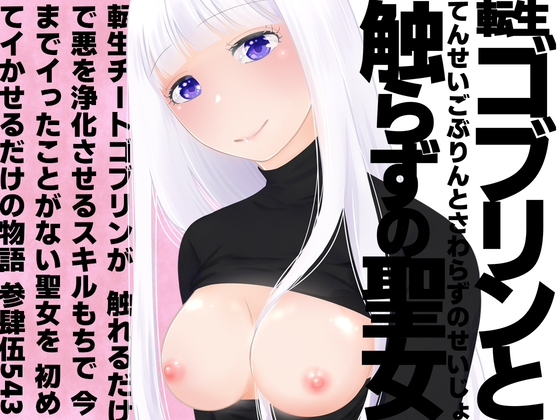
A long-haired woman wearing a small tiara stands across the room, the weight of a state on her shoulders since the day she was born. In front of the hero — a man with a sword — the princess holds her composure to the end. Only later, in a bedroom that has been emptied of attendants on her instruction, does the same person let her expression slip for a moment. The princess-character archetype is built on exactly that beat: a person whose public function is to carry a kingdom, taking the armour off for one specific other.
Overview
Hime-kyara (姫キャラ, “princess character”; hime “princess” + kyara “character”) is the Japanese moe-attribute category for fictional female characters cast as royal daughters in a fantasy world, an imagined kingdom, or a stylised historical setting. The category names both the archetype itself and the fan preference for it. Across the long postwar history of Japanese subcultural production — European fairy-tale translation, the Lord of the Rings-inflected fantasy boom, domestic fantasy RPGs, and eroge — it has held as one of the more durable character types in the moe-attribute system.
The defining components of the archetype are three: a status grounded in birth and lineage rather than wealth alone; a setting located inside a court or palace rather than in modern social space; and a structural tension between political role and personal feeling. The neighbouring archetype ojou-sama (modern-day upper-class daughter) shares the first component but locates the character in contemporary Japan or in the Western moneyed elite of the present, whereas the princess archetype is held at a distance from the present by its fantasy or historical setting.
The narrative role of the princess archetype has classically been the protected object — the figure whose rescue motivates the protagonist’s journey — but the past two decades have produced increasing variation in that role. Warrior princesses who wield swords or magic themselves, queen-candidates whose function is political, and princess-mage figures who carry the active power in the narrative have all become standard sub-types. The defining centre of the archetype remains the status component; the active-versus-passive position is a derivative variable.
Origin and historical premise
Western fairy-tale princesses
The proximate prehistory of the archetype is the cluster of princess figures in Western fairy tales. Charles Perrault’s Sleeping Beauty (1697), the Brothers Grimm corpus (Snow White, Rapunzel, Cinderella, 1812–1857), and Hans Christian Andersen’s The Little Mermaid (1837) reworked memories of pre-modern court culture as narrative material, and the resulting princess images are the prototype for everything later. Critical works such as Marina Warner’s From the Beast to the Blonde (1995) discuss how these images formalised a particular set of variations on the social position of women in medieval and early-modern Europe.
The twentieth-century Disney animations (Snow White 1937, Cinderella 1950, Sleeping Beauty 1959, and the rest) gave those fairy-tale princesses a visual and musical re-formalisation that became internationally shared. After the war, the Disney princess landed in Japan and became one of the reference points for the local subcultural reworking of the archetype.
The domestic fantasy-RPG contribution
The direct formation of the archetype as a Japanese moe slot took place inside the 1980s wave of fantasy RPGs and the light-novel series that grew alongside them. Mizuno Ryō’s Record of Lodoss War (1988–1993) gave the field Deedlit; Kanzaka Hajime’s Slayers! (1989–2000) gave it Amelia; and other works in the same period set down a Japanese version of the European-style fantasy princess as a working character type with house style.
The console-RPG line — the Final Fantasy series (1987–) with Sarah and her successors, the Dragon Quest series (1986–) and its rotation of heroines, the Seiken Densetsu (Mana) series (1991–) — used the rescue-the-princess structure as the spine of a long line of titles, fixing the protected-object aspect of the archetype firmly in the larger audience.
Visual signs
Costume
Princess-character costume is a stylisation of European medieval and early-modern court dress. A long-skirted gown, a corseted bodice, an off-the-shoulder neckline, a tiara or coronet, jewellery, and long hair are the recurring components. Japanese fantasy works tend to use white, light blue, purple, and gold as the colour palette to read the character as a princess at first glance, reinforcing the contrast with commoner characters.
Court and ball-room settings
The throne room, the stained-glass chapel, the garden, the ball-room, and the personal bedchamber are the standard scene-units of the archetype. The closed-fantasy space they jointly constitute is held apart from contemporary social space, which is part of how the encounter with a princess is registered by the audience as exceptional rather than ordinary.
Hair
Long hair, often with elaborate plaited or pinned-up arrangements under the tiara, and unrealistic colours (silver, gold, pale lilac) are the rule. Short-haired princesses are the minority and tend to be concentrated in the warrior-princess sub-archetype.
In adult work
National-collapse and conquest formats
One of the dominant ways the archetype connects to adult content is the national-collapse / invasion format. The historical reality of how royal women have been treated by occupying armies is moved into a fantasy world and worked over as fiction. Eroge titles in the catalogue of Lilith and similar brands have made a recognisable specialisation out of this — Kuroinu (2007), Princess Knight Angelica (2003) and other titles in the same family are the recurring references.
In these works the central engine is the gradual stripping of princess-grade dignity in a context of physical degradation. The status component of the archetype is consumed in inverted form, with the marks of rank — the gown, the tiara, the speech register — operating as elements whose removal carries the dramatic weight.
Political-marriage refusal
A second standard format inherits the fairy-tale shape directly. A princess facing an unwanted political marriage enters a relationship with a commoner protagonist, and the social-status gap functions as the obstacle whose crossing is the substance of the work. The format is widely deployed in eroge and light-novel narratives.
Protection-and-guardianship
The third format follows the classical hero-rescues-princess shape. The warrior protagonist gains the opportunity for physical contact with the princess through the protective relationship the rescue establishes. This is the most direct continuation of the fairy-tale frame inside an adult-content register.
Reception
The core of the princess preference is the experience, simulated through fiction, of contact with an object at the maximum possible distance from the reader’s own life. The ojou-sama archetype already does the work of social-class distance inside contemporary Japan; the princess archetype works on the same axis but adds the distance of a setting that is not the present world at all. The closing of that distance — the moment at which the structurally remote figure permits contact — is the affective centre.
The political-role component carries its own additional weight. The princess as state representative produces a dual structure inside the character: she is a private individual with feelings of her own, and she is the embodied office of a kingdom with corresponding obligations. The tension between the two is what makes princess-character work dramatically tractable, and is the standard source of the central narrative conflict in the genre.
In Azuma’s database terms, the princess archetype reads as a compound attribute — ojou-sama plus fantasy plus royalty — and among compound attributes it is one of the more combinatorially rich. The historical durability of the slot has a lot to do with that flexibility.
Sub-archetypes
Warrior princess
A princess who herself wields the sword or the magic. Final Fantasy heroines from several entries, certain Gundam-series characters, and the Western Xena: Warrior Princess (1995–2001) sit in this slot. The inversion from protected to active is a standard derived variant of the attribute.
Reincarnated-into-princess
The 2010s isekai (transported-to-another-world) genre produced a stable line of works in which a contemporary Japanese woman wakes up as a princess in the destination world and proceeds to move the kingdom from there.
Nun-princess and shrine-maiden princess
A princess who simultaneously holds a religious office — temple priestess, shrine maiden, sacred handmaid. The Japanese historical institution of the Saigū (the imperial princess who served at Ise) is one of the reference points for the sexual-prohibition register attached to this variant.
Related terms
- Ojou-sama character
- Nun / sister character
- Tsundere
- Bishoujo
- Eroge
- Bishoujo game
- Cosplay
Updated
References
- 『Beautiful Fighting Girl』 University of Minnesota Press (2011)
- 『Otaku: Japan's Database Animals』 University of Minnesota Press (2009)
- 『From the Beast to the Blonde: On Fairy Tales and Their Tellers』 Farrar, Straus and Giroux (1995)
- 『Record of Lodoss War』 Kadokawa Sneaker Bunko (1988-1993) — Formative work of the Japanese fantasy-RPG novel tradition that fixed the princess-character template.
Also known as
- princess character archetype
- fantasy princess type
- royal-maiden character
- ja: 姫キャラ
- ja: お姫様
Related
- Tsundere
- Bishoujo (Anime/Manga/Game Character Archetype)
- Eroge
- Cosplay
- Bishoujo Game (Japanese Dating Sim)
- Dark Elf (Fantasy Character Archetype)
- Demon Girl Moe (Akuma Chara)
- Hikikomori Character Moe
- Inkya-kei (Introverted-Character Type)
- Kemonomimi (beast-ear character)
- Ningyo-moe (Mermaid Attraction)
- Airhead-character moe (tennen)