Tsundere
✎ 本文編集 (admin) 🖼 画像編集 (admin)“Tsundere” works on DLsite
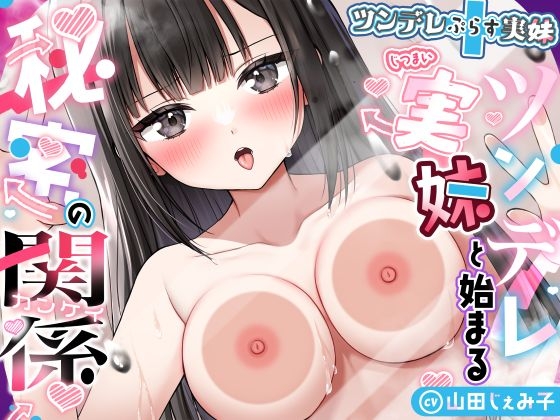
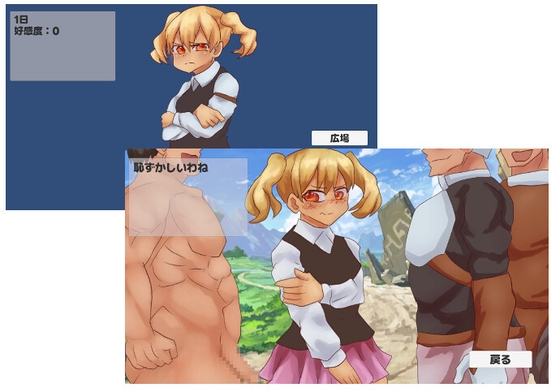
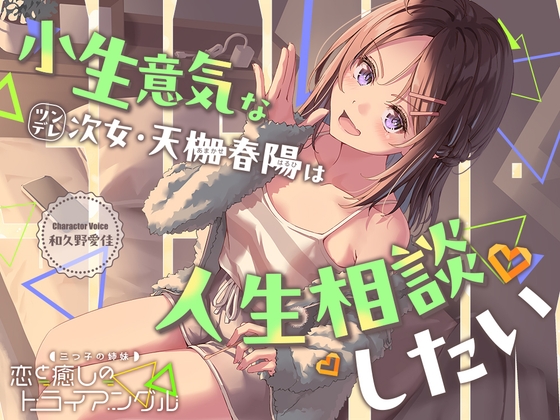
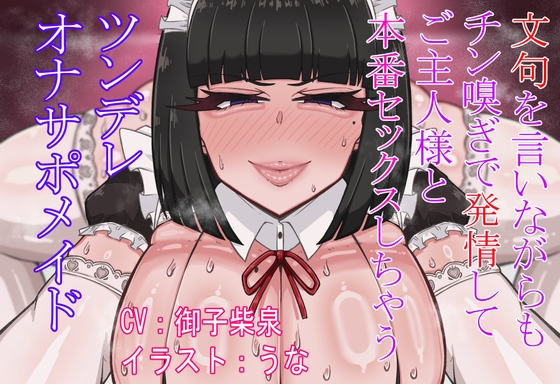
A character who is sharp-edged with everyone, in public, including the very person she likes; the same character, alone with that person, drops her guard for a moment and shows tenderness she cannot show in any other register. The audience is given access to the contrast that the character cannot voice. Tsundere is the name for this archetype, coined in 2002 in a Japanese eroge community board and now a settled term across the international anime and game fandom.
Tsundere (ツンデレ, tsundere) is a Japanese character archetype defined by the alternation of two contradictory affective modes toward a single object of affection: a sharp, hostile, or cold tsun mode (from tsuntsun つんつん, “prickly, standoffish”), and an affectionate, dependent, or soft dere mode (from deredere でれでれ, “openly affectionate”). The interest of the type lies in the contrast between the two modes and in the structural conditions under which one switches to the other. By the mid-2000s, tsundere had become one of the central moe attributes of Japanese popular culture and a primary export term in the international reception of anime and adjacent media.
The structural feature
The core of the tsundere type is the simultaneous presence of two opposed affective registers in one character, with a switching condition that controls which register is active. The standard switching condition is “alone with the object of affection”: in public, in front of others, or in the presence of the affection-object alongside others, the character holds the tsun mode; in a one-to-one context (or under conditions that approximate it), the character relaxes into the dere mode.
The reader or viewer occupies an external position from which both modes are visible. This information asymmetry, in which the audience can see what the character cannot say, is the central source of the type’s appeal. The reader knows the character’s actual feelings earlier than the character can voice them, and the reader’s pleasure attaches to the gap between the two.
A second feature is the structural inability of the character to express affection directly. The tsun mode is not a separate emotional state from the dere mode; it is a defensive cover over the affection. The character’s harsh words are typically read as displaced affection, and the canonical tsundere line “It’s not like I made this for you specifically!” (betsu ni anta no tame ni tsukutta wake janai n dakara ne) makes the displacement legible: a denial whose linguistic structure already concedes what it denies.
The linguist Togashi Jun’ichi, in Tsundere gengoron (2009), analysed the typical tsundere utterance as a split between hostile propositional content and affectionate interactional content (the stuttering opening, the choice of second-person pronoun, the sentence-final particles). The reader processes both layers simultaneously and reads the affectionate layer as the truth of the utterance.
Coining the term
The first attested use of tsundere dates to 29 August 2002, on the Japanese internet board Ayashii World @ Zantei. A poster, discussing the eroge character Oosoradera Ayu from the 2001 game Kimi ga Nozomu Eien (Age), used the phrase tsuntsun deredere ga ii (“the prickly-then-affectionate is the appealing part”). The poster was naming an observed pattern in the character’s portrayal, not introducing a theoretical concept. From October–November 2002, the phrase shortened to tsundere kyara and then to tsundere, and the term spread through the eroge-discussion threads of 2-channel.
The site of origin is significant. Tsundere was coined in an eroge community as a fan observation about character design, not by an industry source or a critic. The term then propagated outward through the doujin scene, eroge media, and finally into commercial light novels and television anime in the mid-2000s. By 2006, Gendai Yougo no Kiso Chishiki, the standard Japanese annual reference for current vocabulary, included tsundere as an entry, marking its general-language status.
Prehistory
Characters with what would later be called tsundere features existed long before the term. The earlier examples are recognised in retrospective re-readings rather than in their original reception.
In manga, Takahashi Rumiko’s Ranma 1/2 (1987–1996) features Tendo Akane, whose pattern of public hostility and private softness toward Ranma fits the later type exactly. The same author’s Urusei Yatsura (1978–1987) Lum, while not a strict tsundere, contributes the same affective vocabulary to the later genre. In eroge, To Heart (Leaf, 1997) and Kanon (Key, 1999) include heroines who follow a sharper-to-softer trajectory across their routes, and these characters were re-read in retrospect after 2002 as proto-tsundere.
The retrospective re-reading expanded the scope of the type. Once the term was available, it became a tool for re-organising the existing corpus of character designs, and many earlier heroines were re-categorised under the new label.
Substructures
Tsun-to-dere ratio
Within tsundere as a general type, the ratio of tsun-mode time to dere-mode time across the work varies systematically. The fan-critical discussion that grew up around the type developed a vocabulary of ratios.
The high-tsun form (roughly tsun 9 / dere 1) maintains hostility through almost the entire story and opens the dere mode only at the climax. The classical middle ratio (tsun 5 / dere 5) switches between modes throughout, with the switching condition handled visibly. The high-dere form (tsun 1 / dere 9) presents the hostility only in early scenes and then settles into the affectionate mode for most of the work. In adult contexts, the tsun-to-dere fall is often the central staging element of the work and corresponds to the broader “reluctance turning to consent” narrative pattern.
Switching triggers
The condition under which a character switches from tsun to dere defines specific tsundere sub-types. The standard alone-together trigger, in which the absence of others releases the dere mode, is the most common. Crisis triggers (the tsun character is in danger and is rescued by the object of affection) and accident triggers (sudden physical proximity through a fall, collision, or stumble) are common variants. In adult contexts, intoxication or aphrodisiac triggers may be used to motivate the dere mode.
In adult media
Tsundere connects to adult media through the structural pattern in which initial resistance gives way to acceptance and then to active desire. Across eroge, eromanga, and AV, the staged sequence of an initially-hostile woman who is progressively drawn into and finally takes initiative in a sexual situation is a settled convention, and tsundere is the character-design vocabulary that supports it.
In eroge, the Ayu route of Kimi ga Nozomu Eien is the canonical example of the tsundere fall-pattern, with later works including Tsuyokiss (2005), Little Busters! (2007), and Steins;Gate (2009) producing further variants. Light novels including Toradora! (2006–2009) consolidated the type as the lead-heroine archetype of the mid-to-late 2000s, and the television anime adaptation of Toradora! (2008–2009) carried the type to a wider audience.
In AV, the production direction “she initially resists but is gradually drawn in” predates the tsundere term but absorbed it as a marketing category after 2002. Works marketed explicitly as tsundere-kei or tsun-ochi-kei (“falling tsundere”) position themselves on this staging convention. The appeal sits on the gradual visible erosion of defensive distance and on the shift of initiative across the scene.
Reception
The structural psychology of the tsundere appeal has been analysed in multiple registers. Saitou Tamaki’s Sentou bishoujo no seishin bunseki (2000), pre-dating the term, set out a framework for the affective doubleness of contemporary character types in which tsundere fits readily. Azuma Hiroki’s Doubutsuka suru postmodern (2001) placed character attributes including the tsundere-precursor types in his “database” model of otaku reception, in which characters are read as combinations of recurrent attributes that consumers process as discrete elements.
The cultural fit between tsundere and Japanese reception is often discussed in terms of the broader pattern of indirection in Japanese social-affective communication: the gap between tatemae (public face) and honne (private feeling), the indirect expression of affection, the rhetorical convention of expressing care through complaint. Tsundere stages this everyday split as a structural feature of fictional character and exaggerates it for affective payoff.
International export
By the late 2000s, tsundere had been exported to the international anime and manga fandom and was a settled term in English-language fan discussion. Urban Dictionary recorded the word from 2006. The standard translations developed regional variants: in Chinese fandom, àojiāo (傲嬌, “proud and coy”); in Korean fandom, tseundere (츤데레, a direct phonetic adoption); in English, the word is used untranslated. Tsundere is now a standard term in the international vocabulary of character-design discussion.
Adjacent types
The tsundere category is part of a broader system of dere compounds that has developed across the 2000s and 2010s. Kuudere (cool-and-dere) substitutes a baseline of emotional reserve for the hostile baseline; yandere substitutes a baseline of mentally unstable possessiveness for the public-hostile baseline; dandere substitutes a baseline of shyness. The system has continued to generate further compounds.
Tsundere also crosses with male-character archetypes. Male tsundere figures became standard in otome games and BL from the late 2000s onward, with the Uta no Prince-sama (2010 and onward) series among the high-profile commercial successes of the male-tsundere line.
See also
Updated
References
- 『Doubutsuka suru postmodern』 Kodansha Gendai Shinsho (2001) — Available in English as Otaku: Japan's Database Animals (2009).
- 『Sentou bishoujo no seishin bunseki』 Ota Shuppan (2000) — Available in English as Beautiful Fighting Girl (2011).
- 『Tsundere gengoron』 Daito Bunka University (2009) http://www.ic.daito.ac.jp/~jtogashi/articles/togashi2009a.pdf
- 『Kimi ga nozomu eien』 Age (2001) — Source eroge for the character (Oosoradera Ayu) on whose discussion the term was coined.
Also known as
- tsundere
- hot-and-cold character
- ja: ツンデレ
- ja: つんでれ
Related
- Kuudere
- Dark Elf (Fantasy Character Archetype)
- Demon Girl Moe (Akuma Chara)
- Bakajoshi (Airhead Girl Archetype)
- Dosukebe (Super-Lewd Character Type)
- Twins Moe (Futago Moe)
- Haraguro Moe (Two-Faced Character Appeal)
- Hikikomori Character Moe
- Princess Character (Hime-Kyara)
- Inkya-kei (Introverted-Character Type)
- Kemonomimi (beast-ear character)
- Yandere