Yandere
✎ 本文編集 (admin) 🖼 画像編集 (admin)“Yandere” works on DLsite
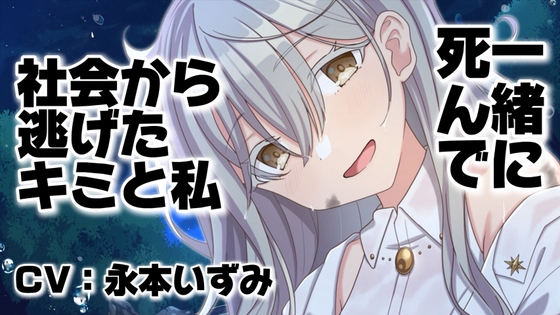


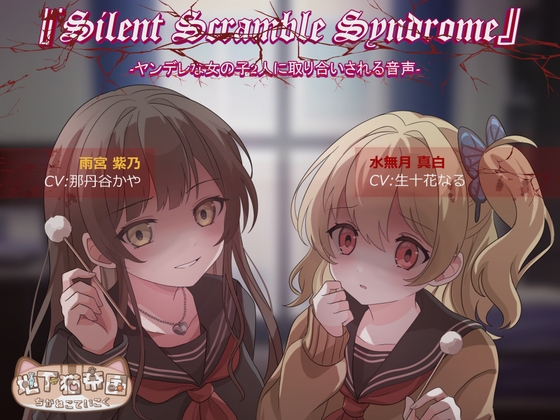
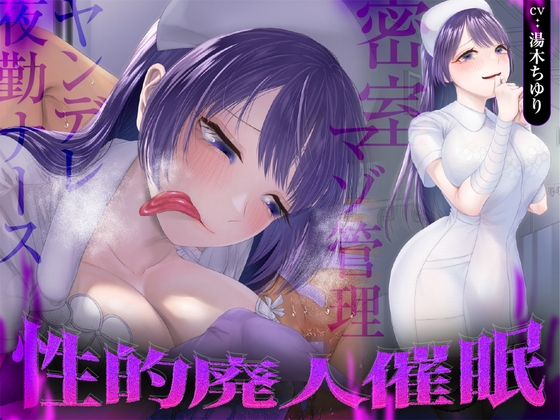


A girl smiles, holding a knife. “You were talking to another girl, weren’t you. I was watching.” Her tone is calm and her face is gentle. The voice and the face have not slipped — only the contents of the words and the props in the background say that the relationship has moved off the rails. Yandere names exactly that scene: not the absence of love, but love that has overshot its own controls and emerged as behaviour.
Overview
Yandere (Japanese: ヤンデレ) is a Japanese-otaku character archetype: a love interest whose affection toward the protagonist is so extreme that it produces possessive, exclusionary, and often violent behaviour. The word is a clipped compound of yami (病み, “being mentally unwell, broken”) and dere (デレ, the moe-vocabulary suffix for “openly affectionate”). It crystallised in the mid-2000s within the bishōjo-game (visual-novel) and light-novel sphere as one of the moe-attribute family alongside tsundere and kuudere, and is now an internationally recognised loanword in anime and manga fandom.
The defining structure of yandere has four moving parts: an extreme attachment to a single object of affection, an exclusionary orientation that refuses any third party near that object, an aggressive response to anything that threatens the bond (a rival, a sign of the relationship cooling, the possibility of separation), and a willingness to exit ordinary social norms in pursuit of those reactions. The archetype’s distinctive narrative trick is the gap between surface and content: the smile and the gentle voice stay in place, while the words and the props slide elsewhere. That gap is what gives yandere scenes their horror-tinted texture.
The archetype was originally pinned to female characters and the bishōjo-game audience, but during the 2010s it broadened. Otome games and BL works produced “yandere boyfriend” and “yandere seme” variants, and women’s-fandom doujinshi added a corresponding stock of “yandere boys”. By the mid-2010s the archetype had become substantially gender-neutral.
Etymology
The word yandere is built from yami + dere. Dere, drawn from the verb dereru (“to relax into open affection”), is the suffix-like element of moe vocabulary that denotes “openly affectionate at a particular moment”, and which spawns related compounds: tsun-dere, kuu-dere, dere-dere, and so on. Yami is the everyday Japanese noun for “being unwell” in the mental or emotional sense; in the yandere compound, it specifically marks the affection itself as pathological — affection that is qualitatively unhealthy, not merely quantitatively excessive.
The earliest traceable circulation is in mid-2000s Japanese otaku message boards (2channel, Futaba), where the word emerged as informal shorthand for character types appearing in titles such as School Days and Higurashi: When They Cry. By 2008–2010 it had hardened into general otaku vocabulary, and by 2010 it had crossed into English, Chinese, and Korean fandoms as a direct loanword. Chinese-language fandom uses the calque 病嬌 (bìngjiāo, “pathological affection”), but Japanese 病娇 / 病嬌 borrows almost exactly the same shape, and English-speaking fandom kept the word as yandere.
History
Pre-yandere lineage
Possessive, jealous love that breaks into violence is older than the word; it is one of the recurring shapes of literary romance. Lolita (Nabokov, 1955), Lolly-Madonna XXX (1962), Fatal Attraction (1987) and similar films and novels are part of the wider canon. Inside Japanese literature, the obsessive-attachment heroine has its own tradition: Tanizaki’s Shunkinshō and Manji, Kawabata’s House of the Sleeping Beauties, and a long line of treatments in twentieth-century shōsetsu.
Bishōjo-game roots, early 2000s
The proximate predecessor of yandere as a recognised archetype is the early-2000s bishōjo-game industry’s “serious / trauma-route” subgenre. Kimi ga Nozomu Eien (2002), School Days (2003), Saishū Shiken Kujira (2004), and others gave the form its visual-novel template: a heroine whose attachment passes the ordinary threshold and becomes destructive in extended interactive scenes. By the time the word yandere was being passed around online in 2005, the audience had already absorbed the archetype.
Anime adaptations and mainstreaming, 2007–2010
The 2007 television adaptations of School Days and Higurashi no Naku Koro ni Kai widened the audience for yandere imagery considerably, and the period from 2008 to 2010 was when the word moved out of message-board circulation and into general otaku vocabulary. The same period saw the term land in English-language fandom, where it began to appear in image-board tagging and in fan wikis.
Generalisation across genders, 2015 onward
From the mid-2010s the archetype was extended outside its original female-character context. Otome games, BL works, and women’s-fandom doujinshi produced a robust stock of yandere male characters — boyfriends, seme — and the gender-neutralisation made yandere one of the more genuinely cross-audience character types in contemporary otaku vocabulary.
Structure
The narrative engine of yandere is the gap between surface affect and underlying content. The smile, the soft tone, the gentle posture stay in place; what slides is the script and the staging — what the character is saying, what they are holding, what they are willing to do. This gap is what makes yandere scenes legible as a horror or suspense register rather than a straight romantic register, and it is also what makes them comparatively easy to play for comedy when desired.
A second structural feature is the trigger. Yandere characters typically read as ordinary romantic interests until a particular condition activates the pathological behaviour: the protagonist talks to another woman, the protagonist hints at a future apart, a rival appears. Until the trigger fires, the character is structurally indistinguishable from a standard love interest. That structure produces the genre’s recurring shock-cut moment, in which the audience realises retrospectively which side of the threshold a particular line of dialogue was already on.
A third feature is escalation in stages. Yandere behaviour is generally written as a graded series: jealousy displayed → surveillance → exclusionary action against rivals → physical restriction or confinement → outright violence. Different works stop at different rungs. Comedic yandere typically halts at the lower rungs (the heroine has been quietly reading the protagonist’s email all along); serious yandere takes the ladder to the top.
A fourth feature, easier to see in contrast, is the direction of attack. Yandere directs its violence outward — toward a rival, toward the love interest themselves. Menhera (a related but separate term, drawn from “mental health” + slang -ra) directs its destructiveness inward — self-harm, dependency, collapse. Yandere and menhera share a common root of overwhelming attachment, but they point that energy in opposite directions, and a careful writer keeps the two distinct.
Adjacent archetypes
Tsundere shares with yandere the structure of a duality between surface and content, but the duality is different in kind: tsundere is hostility on the outside concealing affection within. Yandere is a particular kind of affection on the inside coming out as something more dangerous than ordinary affection. The two often look alike in a single line of dialogue but diverge sharply across a scene.
Kuudere (cool-on-the-outside, warm-on-the-inside) shares the calm surface with yandere, but in kuudere the character is suppressing feeling, while in yandere the character’s feeling is running over. Surface stillness can mean either, and works frequently exploit the ambiguity in early scenes before disclosing which side of the line a character is on.
Menhera, as already noted, sits next to yandere with the violence pointed inward rather than outward.
In the adult sphere — adult manga, eroge, doujinshi, doujin audio — yandere is regularly combined with confinement, training, and mind-control conventions. The fusion of obsessive attachment and sexual control has grown into one of the more durable recurring formats in adult yandere work, and a stable population of specialist circles supplies it.
Reception
By the late 2000s yandere had become one of the central pillars of the moe-attribute system that organised much of bishōjo-game and light-novel character design. Tag-driven recommendation logic — what kind of character do you want to spend the next visual novel with — gave yandere a permanent slot alongside tsundere, kuudere, loli, ojou-sama, and “glasses”. The strength of the slot, in turn, fed back into design: writers and illustrators producing inside the moe system designed for these slots quite explicitly, and yandere was one of the more reliable ones.
The archetype’s affinity for suspense and horror has kept it visible outside core otaku audiences. School Days and Higurashi no Naku Koro ni are still the standard reference works, both of them deploying yandere as the structural source of their narrative tension. International otaku platforms — Tumblr, X (formerly Twitter), Reddit, Pixiv — all have dedicated yandere tagging, and the loanword now circulates in English, Chinese, Korean, French, German, Spanish, and other fandom languages without much translation friction.
A standing critical question concerns the relationship between the fictional archetype and real mental-health categories. Yandere is otaku slang, not a clinical diagnosis. There are partial overlaps with borderline-personality features and with dependent-personality features, but those are formal medical categories with diagnostic criteria, while yandere is a fictional shape with no diagnostic content. Critical writing in Japan and outside it has periodically returned to the question of whether the moe-attribute treatment of pathological behaviour as entertainment is itself a problem, and the conversation is unresolved.
See also
- Tsundere
- Kuudere
- Bishōjo game
- Eroge
- Choukyou
- Kichiku seme
Updated
References
- 『現代アニメーション論講義』 Gakuyō Shobō (2018)
- 『美少女ゲームの臨界点』 Hajōgenron (2004) — Systematic treatment of moe attributes inside the bishōjo-game tradition.
- 『オタク用語の基礎知識』 Takarajima (2014)
Also known as
- yandere character
- yandere type
- ja: ヤンデレ
- ja: 病みデレ
Related
- Tsundere
- Bishoujo Game (Japanese Dating Sim)
- Eroge
- Chōkyō (training)
- Kichiku-zeme (intense fictional kink)
- Demon Girl Moe (Akuma Chara)
- Bakajoshi (Airhead Girl Archetype)
- Dosukebe (Super-Lewd Character Type)
- Twins Moe (Futago Moe)
- Haraguro Moe (Two-Faced Character Appeal)
- Kemonomimi (beast-ear character)
- Sabasaba Moe (Cool-Girl Archetype)