Hikikomori Character Moe
✎ 本文編集 (admin) 🖼 画像編集 (admin)“Hikikomori Character Moe” works on DLsite
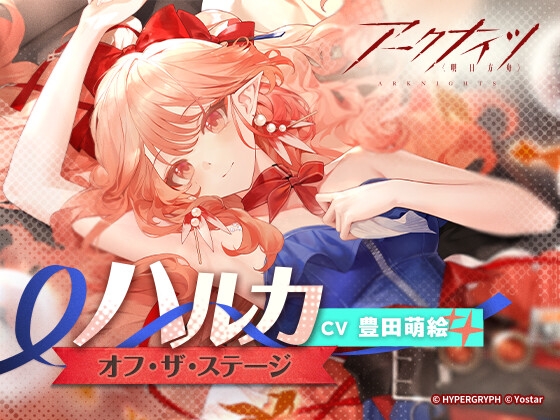
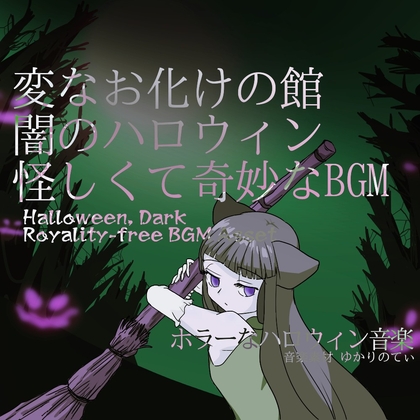
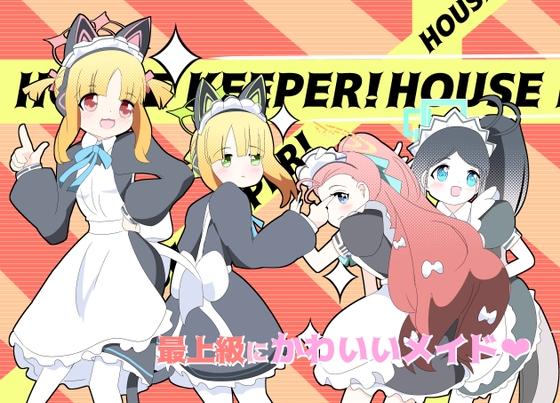
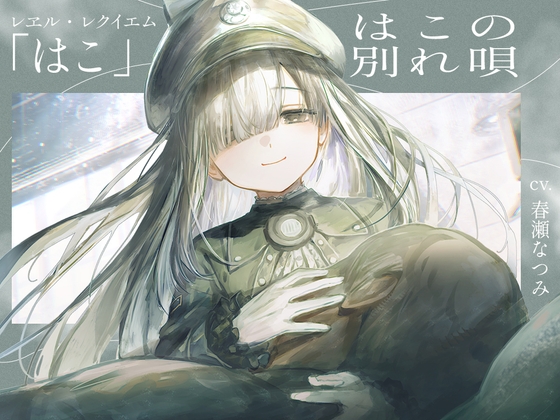
A small voice from behind a door says “thanks for the food”, and the footsteps in the hallway pause until the listener has confirmed that they are leaving. The girl’s contact with the world runs through the threshold of one door, the gap between the door and the frame, and a tray of food left on the floor. Inside the room, the dim light from a screen, a slight gap in the curtains, and a bed that has not been straightened. The geography of her world is much smaller than the protagonist had thought.
Overview
Hikikomori character moe (ひきこもりキャラ萌え, hikikomori-kyara moe; literally “moe for the reclusive-character archetype”) is the Japanese fan-culture preference for fictional characters who actively avoid social contact and remain inside their own room or home for long periods. The archetype draws on the medical-sociological category of hikikomori (long-term social withdrawal), but operates inside Japanese subcultural production as a stylised character type rather than as a depiction of the real clinical condition. The core of the kink is the closed-room visual register, the protagonist’s position as the only available window onto the world, and the exclusive intimacy that follows from that asymmetry.
The clinical-sociological category of hikikomori was introduced into wide Japanese public discourse by psychiatrist Tamaki Saitō’s Shakaiteki Hikikomori (1998). The treatment of the same word as a moe attribute is a separate, later subcultural phenomenon belonging to the 2000s and afterwards. The fictional archetype keeps the visual and relational signs of the underlying social condition while detaching them from the real medical and welfare problems involved. Readers should hold the two registers — the real condition and the fictional attribute — quite firmly apart.
The visual signs that organise the archetype are well established: a single closed room, white sheets, dim lighting, drawn curtains, a screen as the principal light source, and the small range of indoor hobbies (manga, eroge, drawing tablet, plush toys, PC). The relational signs are equally fixed: the protagonist as the only person allowed past the door, food trays slid across the threshold, and a third party — usually a sibling or a teacher — who functions as the secondary contact and the source of pressure to bring the character outside.
Lineage
The earliest titles often cited as anchoring this attribute as moe rather than as social commentary include Takamoto Tatsuhiko’s light novel Welcome to the NHK! (NHK ni Yōkoso!, 2002; anime 2006), whose female lead Misaki Nakahara stands in a structurally clear position toward the male hikikomori protagonist. From the same period, a number of visual-novel works produced heroines whose social-contact difficulties became their defining attribute: titles in the WHITE ALBUM2, Utawarerumono, and Steins;Gate family produced recognisable variants of the slot.
In the manga register, Kumeta Kōji’s Sayonara, Zetsubō-Sensei (2005–) and Tanigawa Niko’s Watamote (2011–) supplied broadly distributed examples of socially withdrawn and communication-difficulty heroines, and by the late 2010s the attribute had crystallised in the moe-attribute database alongside related slots such as komyushou (poor at communication) and jinmishiri (shy of strangers).
Reception structure
The relational engine of the kink is the structure of the single window. Because the character has lost or refused all the other social channels through which an ordinary person makes contact with the world, the protagonist’s presence inside the room or at the door becomes the channel — the entire channel. Classmates, family, the wider society are blocked, and only one person is admitted. The exclusivity of this access — the impossibility, structurally, of a rival — is what gives the relationship its closed-circuit intimacy.
A second register attached to the same archetype is the protective response. Hikikomori characters are typically marked with the visual signs of fragility (small, pale, soft-voiced, unable to walk far) and the position of the protagonist is set as protector or guardian. The exclusivity of access and the protective register reinforce each other: the only one who comes is also the only one who is allowed to protect, and the only one allowed to protect is also the only one who comes.
Critic and psychiatrist Tamaki Saitō, in Beautiful Fighting Girl (2000) and his subsequent essays, has repeatedly pointed out that the recurring shape of Japanese-subcultural female representation combines compromised social capacity with a closed-off living space. Hikikomori-character moe is one of the more pronounced forms of that recurring shape.
In adult work
In adult work the typical structure is the relationship described as can’t go outside, but can touch one specific person. A character whose general social contact is impaired allows physical contact only with the protagonist she trusts. The setting is consistently a closed space — her bedroom, a closet, a single room of some otherwise sealed location — and the wider social world is held outside the frame for the duration of the scene.
In eroge, eromanga, and adult doujinshi, the hikikomori-younger-sister, the childhood-friend shut-in, the cohabitant from circumstances, and the mystery girl living in the protagonist’s closet are all well-stabilised sub-formats. The reception centre of the format is the closed-space guarantee of exclusivity and the asymmetric arrangement in which sexual service compensates for, or substitutes for, the everyday-life capacity the character lacks.
It is worth restating that the fictional staging is markedly distant from the situation of actual people with the medical-sociological condition. Real social withdrawal is a welfare and medical issue, not a domain for the romanticisation of dependency, and the conventions of the genre should not be read across to it.
Sub-archetypes
The MMO-burnout heroine
A character whose social withdrawal is mediated by long-term online gaming. The protagonist’s first contact comes through the network rather than through a door, and the in-person meeting becomes a separate later beat.
The closet-dweller
A character who, for plot reasons, has taken up residence in someone else’s house, closet, or storeroom. The enclosed-space register is intensified, and the protagonist’s role as protector becomes the only point of social contact for the character.
The school-refusing heroine
The school-setting variant. The protagonist visits the seat that has been vacated in the classroom, and the format combines easily with the childhood-friend archetype.
The communication-difficulty heroine
The adjacent slot in which the character is technically capable of contact but is extremely uncomfortable with it. The database treats this as a separate attribute next to hikikomori proper.
Related terms
Updated
References
- 『社会的ひきこもり』 PHP Shinsho (1998) — The book that brought the social phenomenon of hikikomori into general Japanese public discourse.
- 『Beautiful Fighting Girl』 University of Minnesota Press (2011)
- 『Otaku: Japan's Database Animals』 University of Minnesota Press (2009)
- 『Shutting Out the Sun: How Japan Created Its Own Lost Generation』 Nan A. Talese (2006)
Also known as
- hikikomori character moe
- indoor-type character preference
- shut-in fetish (Japanese)
- ja: ひきこもりキャラ萌え
- ja: ひきこもり
Related
- Bishoujo (Anime/Manga/Game Character Archetype)
- Airhead-character moe (tennen)
- Princess Character (Hime-Kyara)
- Praise-Kink Moe (Home-Jozu)
- Inkya-kei (Introverted-Character Type)
- Kemonomimi (beast-ear character)
- Genius-character moe (tensai)
- Kuudere
- Dark Elf (Fantasy Character Archetype)
- Jawline Fetish
- Demon Girl Moe (Akuma Chara)
- Bakajoshi (Airhead Girl Archetype)