Slender (Body Type)
✎ 本文編集 (admin) 🖼 画像編集 (admin)“Slender (Body Type)” works on DLsite

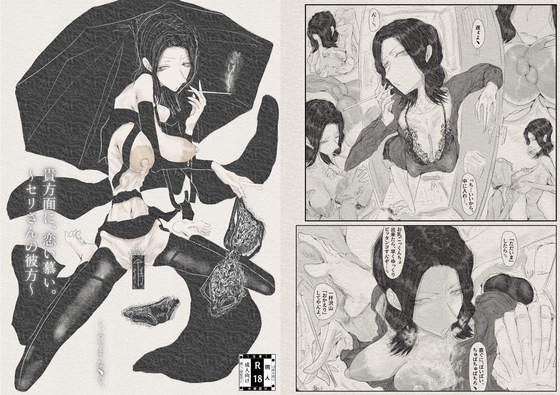






The third foundational body-type category, parallel to glamour and pocchari: a slender silhouette as a primary marketing axis in adult media, gravure, and fashion.
Overview
Slender (Japanese loan: スレンダー, from English slender) is the Japanese category term for a slim, slender body type. It contrasts with the glamour category (which emphasises volume in bust and hips) and with pocchari (full-figured, soft-bodied). In Japanese AV, gravure, modelling, and dōjinshi, slender operates as a primary marketing axis: studios, performers, and content can be sorted on this axis as one of the basic differentiators of product type.
The typical features associated with the term include slim limbs, a defined waist, an overall sense of balance, and a light body impression. Slender is routinely combined with secondary attributes — slender + big bust, slender + small frame, slender + housewife — to produce compound tags used in catalogue and search systems.
Etymology and parallel terms
Slender in English (Middle English slendre) means thin or slim; the word arrived in Japanese twentieth-century fashion vocabulary as a loanword carrying the positive connotation of the English term. Japanese has multiple older terms in the same semantic space: hosomi (細身, slim build), soushin (痩身, slim physique), kyasha (華奢, delicate). The loanword slender sits closer to a contemporary fashion-industry register, while kyasha in particular carries an older, more classical aesthetic register.
English usage distinguishes three related terms with slightly different valence: slim (neutral-positive), skinny (often pejorative, implying too thin), and slender (positive, implying refined elegance). The Japanese loan inherits the slender register specifically, not the pejorative skinny register.
Historical context
The dominant body-aesthetic in any given period is one of the most-studied examples of a culturally constructed standard. The Greek and Roman balanced ideal, the modest medieval European ideal, the Renaissance preference for fuller figures, the corset-driven hourglass of the late nineteenth century, the 1920s flapper slim ideal, the 1950s Hollywood glamour ideal: the range of historical variation across Western cultures alone is wide.
The British model Twiggy (born Lesley Hornby) debuted in 1966 and established an extreme slim ideal as a high-fashion standard. The subsequent decades of Western haute couture and modelling were organised primarily around variants of the slim ideal she helped define, and the slender = ideal axis became one of the most-criticised aspects of the fashion industry, with measurable connections to eating disorders and to a narrowing of body-image standards.
Japan followed a partially parallel trajectory. The 1980s saw the popularisation of kyonyuu and full-figured body ideals alongside the persisting slender register; the contemporary Japanese situation features multiple coexisting body-aesthetic categories rather than a single dominant ideal.
Contemporary multi-axial standards
The Japanese adult media, gravure, and modelling markets in the twenty-first century operate with several body-type categories in parallel: kyonyuu (large-bust), bakunyuu (very large-bust), slender, pocchari, small frame, and muscle/athletic. Body-positive discourse in social media has accelerated the visibility of categories other than the slim-ideal, and the structural situation now is one in which multiple ideals operate as commercial categories simultaneously, rather than one ideal dominating.
This pluralisation is not without internal tension. The continuing weight of slim aesthetics in haute couture and Western runway modelling, the role of social media in normalising further sub-categorisation, and the persistent connection between slim-ideal pressure and eating disorders all remain active topics in body-image research (Cash and Pruzinsky 2002 is one of the standard handbook references) and in feminist body-studies.
In Japanese adult media
Slender as an AV category
Slender-genre works (スレンダー系作品) form a stable category in the AV market. The associated performer profile is the slim, model-ish gravure-derived or fashion-modelling-derived actress, distinguished from the bakunyuu/full-figure category. The category overlaps significantly with the shirouto (amateur) category in casting and visual register.
Compound tagging
The genre’s tag system makes routine use of compound modifiers. Slender + big bust singles out the unusual combination of a slim frame with prominent breasts; slender + housewife combines body type with marital-status category; slender + OL combines body type with the office-worker setting. The compound tag is the basic unit of the catalogue search, and slender is one of the most productive base tags within it.
Adjacent categories
- Hinnyu (small bust): focused on bust size rather than overall frame; correlates with slender but operates as an independent axis.
- Kogara (small frame, short stature): focused on height; partially overlaps with slender.
- Pocchari: the explicit contrast category; full-figured, soft-bodied.
- Muscle/athletic: slim but with developed muscle; sometimes treated as a slender sub-category.
Wider cultural framing
Body-image research and gender studies continue to study the social effect of slender-ideal aesthetics. The medical and psychological literature on the relationship between media-image saturation, eating disorders, and body dissatisfaction has been substantial and consistent. The question is complex, and the contemporary discussion in fashion and adult media is increasingly framed around offering plural categories rather than a single ideal — but the slim-ideal pressure has not disappeared.
In high-fashion modelling the slender-ideal remains the dominant runway standard, with steady but slow pressure from the body-positive movement toward broader casting practices. In Japanese gravure and AV the situation is more genuinely multi-axial: multiple body-type categories are commercially supported in parallel, and slender is one of them rather than the only one.
See also
Updated
References
- 『Body Image: A Handbook of Theory, Research, and Clinical Practice』 Guilford Press (2002)
- 『Survival of the Prettiest: The Science of Beauty』 Anchor Books (1999)
- 『Bijinron』 Libroport (1991)
- 『The Birth of the Modern Body: A Fashion History』 Knopf (1994)
Also known as
- slender
- slim
- skinny
- ja: スレンダー
- ja: 細身