Kubire (waist curve)
✎ 本文編集 (admin) 🖼 画像編集 (admin)“Kubire (waist curve)” works on DLsite
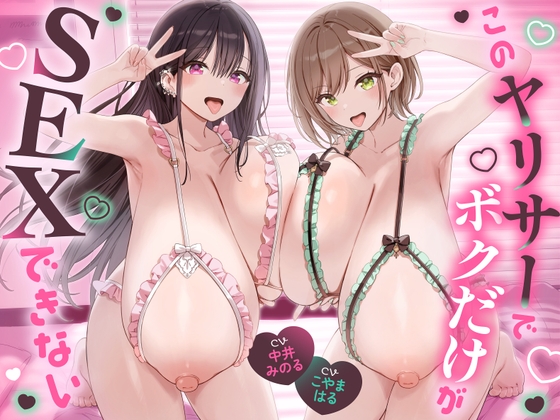



The indentation drawn into the side of the body between the bust and the hip. The Japanese word kubire (Japanese: 括れ, kubire) names that indentation directly. The English equivalent hourglass figure names the broader whole-body proportion-configuration in which the waist-narrowing is embedded, while cinched waist and waist curve sit closer to the Japanese sense. The body-sign has been recurringly thematised across evolutionary-psychology, art-history, fashion, and contemporary adult-aesthetic discussions.
Overview
Kubire is the noun-form of the verb kubireru (to narrow at the centre, to be constricted), and the term names the indentation of the lateral body-line in the region between the lower rib-cage and the upper iliac crest. In anatomical terminology, the area is referred to as the waist, and the ratio of waist-to-hip circumference (WHR) is the principal quantitative-index used in body-proportion evaluation in both contemporary popular discourse and the research literature.
The Japanese register’s distinctive feature is that the term names the waist-indentation itself, rather than the whole-body-shape that the indentation enables. The English vocabulary contains parallel terms (hourglass figure, cinched waist) but the dominant English term hourglass figure references the full-figure configuration (bust-wide, waist-narrow, hip-wide) rather than the narrowing-element alone. The vocabulary-distinction is a small but operationally meaningful difference between the two language-registers.
Anatomical baseline
The anatomical condition for visible kubire is the structural gap between the lower rib-cage and the upper iliac crest, where the body’s lateral wall is supported by abdominal-wall musculature rather than by bone. In this gap, the visceral mass and the subcutaneous-fat distribution determine the actual lateral-line that the body presents. Individuals whose lower rib-cage and upper iliac crest are well-separated have anatomical room for a deep waist-indentation; individuals whose two skeletal-landmarks are close together (the zundō, tube-shape body-type) have less anatomical room for indentation regardless of body-mass.
The sex-difference is structural. Female anatomy generally has a wider pelvic-bone configuration and a larger drop between the lower rib-cage and the iliac crest than male anatomy. Female-specific fat-distribution patterns (selective accumulation in the hip, gluteal, and thigh regions) further amplify the configuration into the characteristic narrow-waist-and-wide-hip female silhouette. Male anatomy generally presents a shoulder-wider-than-hip Y-shape or V-shape rather than the hourglass configuration.
Waist-to-hip ratio (WHR)
The principal quantitative index for kubire is the ratio of waist circumference (the narrowest point of the waist) to hip circumference (the widest point of the hip), the WHR. Devendra Singh’s 1993 paper Adaptive Significance of Female Physical Attractiveness proposed that a WHR around 0.7 is attractive across cultures, presenting the configuration as a fertility-and-health signal from an evolutionary-psychology perspective.
The argument has been actively debated. Counter-research has shown that the ideal WHR varies substantially across cultures and historical periods. Sub-Saharan African, South Pacific, and pre-historic European art traditions show higher-WHR ideals as the represented standard[citation needed]. The contemporary mainstream culture across Europe, North America, and East Asian urban areas concentrates on the WHR 0.65-0.75 range as the dominant ideal, and adult-content production, gravure photography, and advertising visual-representation concentrate on this WHR range.
Cultural history
Cultural devices to emphasise the waist-narrowing configuration have developed across multiple cultures.
In ancient Indian sculpture and painting, female figures consistently present deep waist-indentations with full hip-and-bust development. Hindu temple sculpture, the Khajuraho carvings, Mughal painting traditions, and the broader Indian visual-culture all centre the waist-indentation as the principal aesthetic-element.
In Europe, the 16th-century-onward corset tradition developed as the artificial-construction device for waist-narrowing. The whalebone-and-steel-frame corset compressed the viscera while drawing the waist to 40-50 cm circumferences, reaching extreme configurations in the 19th-century Victorian period. The health consequences were substantial, and the early-20th-century women’s-rights movement criticised the corset directly. The corset largely declined but persisted in contemporary fashion as the structural ancestor of contemporary shapewear.
In Japan, the traditional kimono-aesthetic developed in a direction away from waist-emphasis. The kimono obi-sash visually thickens the waist, and the ideal was a zundō (tube-shape) configuration where the body-line was deliberately smoothed-and-thickened at the waist. The post-Meiji Western-clothing introduction, the postwar glamour-culture introduction, and the 1980s bodikon (body-conscious) boom progressively brought kubire into the Japanese contemporary aesthetic-axis from the previously-absent position.
Position as a sexual visual-sign
Kubire operates as a particularly-strong sexual visual-sign for several converging reasons.
First, the side-view enhancement. The waist-indentation is most clearly perceptible from the side and the oblique angle. Adult-content cinematography stages kubire through hip-twist poses, side-lying-with-bent-knee configurations, and the back-position over-the-shoulder shot, all engineered to maximise the visible waist-narrowing.
Second, the garment-combination enhancement. Tight dresses, high-waist pants, corsets, and bodikon configurations all function as visual-amplification devices for the waist-narrowing. In contrast to bust-emphasis and hip-emphasis clothing, waist-cinching clothing can produce a stronger gender-sign effect through the configuration alone.
Third, the grasp-invitation configuration. The narrow waist invites the visual-and-tactile action of two-handed grip around the waist. The back-position configuration in which the inserting partner grips the receiving partner’s waist with the thumbs touching at the front is visually-and-tactilely the configurational ideal for kubire-emphasised body-types.
Related concepts
- Waist: the measurable-circumference target of kubire evaluation.
- Hourglass-figure body-type: the whole-body configuration in which kubire is the central element.
- Merihari-taikei: the colloquial Japanese term for the kubire-inclusive uneven-and-curvaceous body-type. Translates roughly to “high-low-contrast body-type” and includes the dekoboko register.
- Zundō-taikei: the tube-shape body-type, the antonym of the kubire-emphasised configuration.
Related Terms
- Side-waist (waki-buchi)
- Hip (koshi)
- Body unevenness (dekoboko)
- Body type (karada-zentai)
- Big breasts (kyonyuu)
- Body-conscious fashion (bodikon)
Updated
References
- 『Adaptive Significance of Female Physical Attractiveness: Role of Waist-to-Hip Ratio』 Journal of Personality and Social Psychology (1993)
- 『On Beauty』 Secker & Warburg (2004)
- 『The Corset: A Cultural History』 Yale University Press (2001)
- 『Survival of the Prettiest』 Doubleday (1999)
Also known as
- waist curve
- hourglass (waist)
- cinched waist
- ja: くびれ
- ja: 括れ
- ja: ウエスト