Short Stature (Petite)
✎ 本文編集 (admin) 🖼 画像編集 (admin)“Short Stature (Petite)” works on DLsite
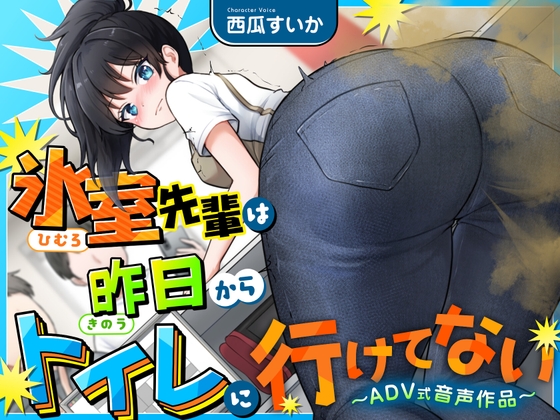
Walk side by side and the partner’s head is at your shoulder or chest. Hold hands and the partner raises an arm while you bend a little. Lie down and the difference in build leaves spare space in the bedding; sit and the feet float just above the floor. A relationship in which the height gap itself seeps into every daily movement has a texture that an equal body scale cannot produce. The core of the short-stature taste lies in how this difference of build rewrites the quality of daily contact.
Short stature (Japanese teishinchō; English short stature, petite) denotes a height markedly below average, or the taste oriented toward it. With the average height of Japanese adult women at about 158 cm (MHLW National Health and Nutrition Survey, 2023), the usage that calls roughly 150 cm or below “short stature” is general. In subculture, the short-stature character attribute stylises height alone as a single appeal element and, combined with adjacent attributes such as petite build and the baby face, forms a distinct attribute type.
Overview
The visual range of the short-stature attribute corresponds to roughly 130–155 cm in real body dimensions. Figures below 150 cm are conspicuously lower than the Japanese female average, and for those concerned they bring everyday inconveniences (reaching high places, adjusting clothing sizes, adjusting the driving posture); in subcultural expression, however, such inconvenience tends to be staged as a device evoking the feeling of “wanting to protect.”citation needed
The short-stature character sometimes functions on height alone but is more often combined with other body attributes. Stock combinations include short stature plus baby face plus small breasts (a wholly youthful figure), short stature plus a mature face plus large breasts (a gap between height and face/chest), and short stature plus a mature personality (a gap between height and behaviour). The first connects deeply to the loli lineage; the latter two thematise the gap between height and other attributes.
The staging of the height gap is completed not by the short-stature character alone but by contrast with the partner character. When the partner is of average height or tall, the height gap becomes a principal visual element of the composition, and movements such as scooping up, stroking the head, and looking down come to function as staging.
Cultural position
The establishment of short stature as an independent attribute in Japanese subculture proceeded alongside the development of bishōjo culture from the 1990s on. Earlier, height expression in shōjo and shōnen manga remained secondary visual information indicating character relations; through the refinement of character design in 1990s bishōjo games and light novels, height itself became an independent attribute.
That the height setting became stylised as a standard item of character introduction is a symbol of this change. The convention of listing age, height, weight, and three sizes on official setting materials and character pages of anime, games, and light novels became general from the 2000s, and height became an item consumed as part of an individual character’s identity.citation needed
Relation to the loli and baby-face lineages
Short stature is adjacent to but distinguished from the loli and baby-face lineages. The loli term originally denotes an “age-young” character, with age setting as the core element. Where a short-stature character overlaps the loli lineage, height and age are linked (a wholly youthful figure), and in relation to child-pornography regulation this is a domain demanding careful setting in creation.
By contrast, the short-stature-only case places the age setting at adult or high-school age and above, with only the height below average. The “adult but short” character is widely adopted in adult video, eroge, and eromanga as a design that secures the visual appeal of short stature while avoiding the regulatory risk of the loli lineage. The baby face denotes youthfulness of facial design and is established independently of height; the combination of short stature plus baby face approaches the loli lineage, but the pattern of height plus baby face with an adult age setting forms an important convention of subcultural expression.citation needed
Variant forms
The petite-build variant emphasises, in addition to low height, the smallness and slenderness of the whole skeleton, overlapping the petite-build category, with thin wrists, narrow shoulders, and a slim waist drawn as a visual set. The gap variant thematises a gap between height and other attributes, short but large-breasted, large-bottomed, sexually assertive, or mature in personality; the short-stature plus large breasts combination is especially frequent in eroge and eromanga. The protect-me variant emphasises the bodily vulnerability of the short-stature character and thematises a relation in which the partner (typically a male protagonist) takes the “protecting” role, connecting to younger, junior, and little-sister character designs. The older-but-small variant has a character of low height who plays an older (sisterly, senior) role; thematising the gap of “an older-sister attribute yet small,” it is a distinct lineage on the rise in recent eromanga and eroge.citation needed
Reception
Three axes are often discussed as the core of the short-stature taste: the protective impulse, the staging of body difference, and rarity. The protective impulse is the evocation of a desire to protect and enfold a physically small being; the physical height gap functions as a direct device visualising the “protecting / protected” relation, observed broadly regardless of sex or sexual orientation. The staging of body difference relates to concrete movement and visual effect in erotic scenes: scooping up, the ekiben position, covering over, looking down face-to-face, all amplified by the difference of build, with the height gap itself often used as the core device of sensual staging. Rarity derives from the statistical minority of heights below 150 cm against a current female average of about 158 cm; sexualising a body type rarely encountered in daily life is theorised as a taste for rarity itself.
Cultural references
The establishment of the short-stature character has a degree of continuity with the lineage of traditional Japanese feminine beauty. The body dimensions of beauties in Edo ukiyo-e are a pre-modern standard different from the modern concept of “average height,” and many figures, by modern senses, approach short stature.citation needed Alongside the change of body image since Meiji, the concept of an “average” was established, and short stature and tall stature became recognisable as individual attributes deviating from it.
The grouping and characterisation by height in recent idol and underground-idol culture is a modern development that consumes short stature as a positive attribute. The mode of pushing members around 150 cm as a “tiny” attribute is continuous with the short-stature taste of subcultural space. Internationally, similar attribute types are observed across East Asia, the “petite” category of the English-speaking world, the “small girl” taste of Korean and Taiwanese subculture; specific numerical ranges differ with regional height distributions, but the structure of consuming below-average height as an independent attribute is shared.
See also
Updated
References
- 『National Health and Nutrition Survey』 Ministry of Health, Labour and Welfare (2023) https://www.mhlw.go.jp/stf/seisakunitsuite/bunya/kenkou_iryou/kenkou/kenkou_eiyou_chousa.html
- 『Dōbutsuka suru Postmodern (Otaku and the Moe Database)』 Kodansha (2001)
- 『Adaruto Bideo Kakumeishi (A Revolutionary History of Adult Video)』 Gentosha (2009)
Also known as
- short stature
- petite
- short height attraction
- petite character fetish