Bote-bara (Pregnant Belly)
✎ 本文編集 (admin) 🖼 画像編集 (admin)“Bote-bara (Pregnant Belly)” works on DLsite
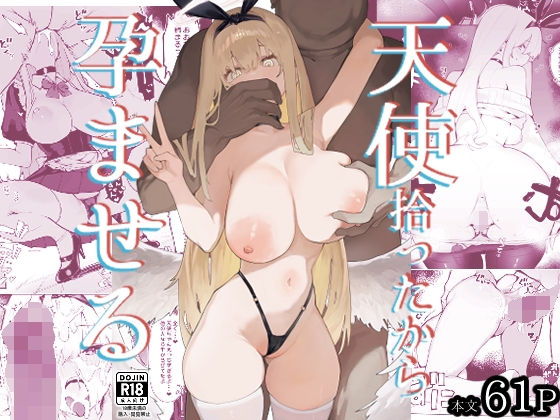

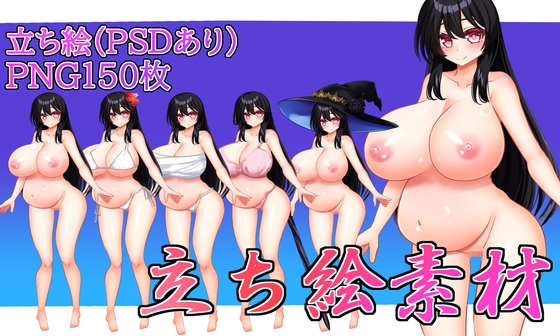
A swollen belly is itself the evidence that something has happened. The circuit that depicts a body carrying life as an object of desire runs unbroken from the bondage-paintings of Ito Seiu to present-day doujinshi.
Bote-bara (Japanese: ボテ腹) is a subcultural slang term for the swelling of the abdomen in pregnancy, and a collective term for the fetish expression that takes it as a theme. As a core visual image of pregnancy fetishism, it developed in doujinshi and adult-game circles alongside impregnation genres.
Overview
Bote-bara refers to the abdominal swelling that becomes visually distinct from the second trimester. Medically it is the surface expansion of the pregnant uterus, but in subculture it has acquired an independent visual value as a symbolic sign of the pregnant state.
In subcultural expression, bote-bara branches into two lines: the representation of a real pregnant body, and exaggeration as a sexual sign. The former pursues the realism of the pregnant woman, depicting a gentle swelling, a twist of the hips, difficulty walking. The latter pursues sign-like exaggeration, presenting an extremely swollen abdomen, departing from any real pregnant figure, as an icon attached to a particular character.
In adult manga, doujinshi, and adult games, the exaggerated form has taken hold. The “instant bote-bara” or “pregnancy ending” right after a creampie, a style of immediate abdominal swelling beyond anatomical coherence, has become established as a narrative device. In online usage, bote-bara also stretches to non-pregnancy swelling (fullness, egg-laying states, fluid accumulation), an extended use beyond its original pregnancy sense.
Etymology
Bote is a contracted mimetic word for a heavy, swollen state. Compounded with hara (belly), bote-bara arose as slang for the pregnant figure. The exact date is hard to fix, but its use in manga and adult expression spread from the 1990s, becoming established trade slang as pregnancy fetishism went mainstream in the 2000s. In English, pregnancy belly and baby bump are used, with the loan bote-bara reserved for the exaggerated subcultural form.
History
Sexual interest in the pregnant body recurs across human history, in fertility worship, mother-goddess figures, and birth-deity belief that tie the pregnant body to the sacred. In modern Japan, the bondage painter Ito Seiu (1882-1961) produced early works on the theme, positioned as a distant ancestor of present bote-bara expression.
In the 1980s-90s, works on pregnancy appeared sporadically in adult manga and games, but pregnancy fetishism was not yet an independent genre and functioned as an adjunct to married-woman and impregnation themes. In the 2000s, bote-bara works increased steadily and acquired the outline of an independent genre, taking the central visual position within the continuum of impregnation (the act), bote-bara (the pregnant body), and breast milk (the postpartum body). From the 2010s, bote-bara extended as online slang to non-pregnancy swelling, while keeping its original sense.
Derivative forms
The pregnancy-realism line foregrounds bodily depiction grounded in real pregnancy traits (stretch marks, strain, breathing) and tends to treat the course of pregnancy and birth as a connected narrative. The instant-bote-bara line shows immediate swelling right after a creampie or impregnation, a sign-like form that abandons anatomical coherence to display the fact of impregnation visually. The monster and egg-laying line treats swelling from non-human causes (monster impregnation, egg-laying, parasitism) as a purely visual bote-bara independent of biological framing.
Psychology of reception
A core of the bote-bara taste is often discussed as “evidence of possession.” The swollen belly is visible proof that the result of a sexual relationship has been inscribed on the body, functioning as a symbol of possession over the character. Bote-bara right after a creampie is an extreme, compressed sign of this “visualization of evidence.”
From the standpoint of body-representation theory, because pregnancy is bound to the core of female embodiment, bote-bara is also discussed as a “confirmation of femininity,” a point where the cultural and biological values of maternity, reproduction, and the continuation of life join with a sexual sign. Gender criticism raises critical reflection on expression that signifies the female body as a reproductive apparatus, and the relationship between expressive style and the real body remains a continuing question.
See also
Updated
References
- 『Eromanga Studies: An Introduction to Manga as a Pleasure Apparatus』 East Press (2006)
- 『Permitted and Prohibited Desires: Mothers, Comics, and Censorship in Japan』 University of California Press (2000)
- 『Otaku Yogo Jiten Dai-Genkai (Otaku Term Dictionary)』 Sanseido (2023)
Also known as
- pregnancy belly fetish
- pregnant-belly aesthetic
- impregnation belly
- ja: ボテ腹
- ja: 腹ボテ