Nijisousaku (Derivative Fanwork)
✎ 本文編集 (admin) 🖼 画像編集 (admin)“Nijisousaku (Derivative Fanwork)” works on DLsite

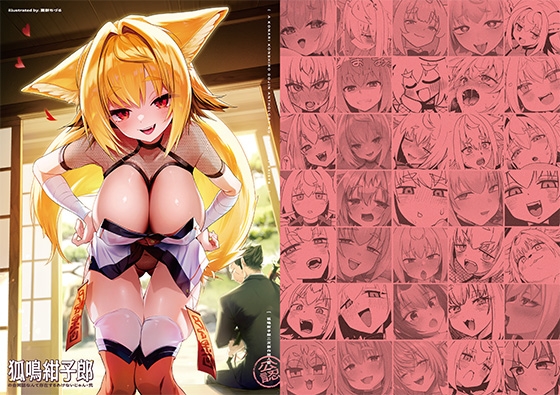
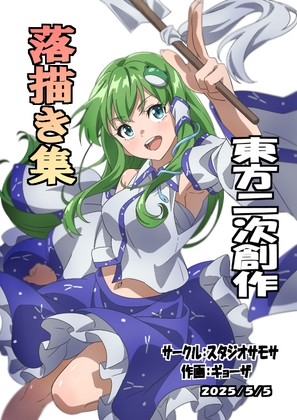
In the new-release column of an e-book store, drawings of familiar characters line up. Drawn by a different artist, telling a different story. Someone who is neither the original author nor the publisher draws “the continuation of her and him” without permission, someone else reads it, and yet another person reacts to that. The Japanese subcultural economy has stood on this chain of derivative creation.
Nijisousaku (二次創作, English: derivative work, fan fiction) is the umbrella term for derivative creative activity that borrows the settings, characters, and world of an existing original, and for the works that result. This article covers its union with doujinshi culture, its position in copyright law (the tolerance structure of a victim-complaint offence), the cultural place of sexual fanwork, and comparison abroad.
Overview
Nijisousaku covers the whole cultural practice of producing novels, manga, illustration, video, music, and games that borrow existing characters; their commercial and non-commercial circulation; and interaction with the official original, the original author, and other fans. In Japan it is carried out on a large and constant scale at doujinshi fairs (Comiket and others), illustration-posting sites such as Pixiv, and video platforms. Commercial manga, anime, eroge, and light novels serve as originals, and a circular structure forms in which fanwork contributes to the original’s recognition and community formation. Sexual fanwork, depicting original characters in sexual scenes, occupies the major part of the activity, and over half of the doujinshi gathered at Comiket are adult-oriented fanwork. This article describes the whole picture, including sexual fanwork.
Etymology
Nijisousaku is a Japanese subcultural term established in the doujinshi-fair sphere from the late 1980s into the 1990s. It distinguishes the original as ichiji-sousaku (“primary creation”) from creation derived from it as niji-sousaku (“secondary creation”). The Anglophone correspondents are fan fiction (novel-leaning), fan art (illustration-leaning), and derivative work (legal); each occupies a part of the connotation of nijisousaku. The Japanese term is broader than any single English concept in that it points across media at derivative creation in general.
History
Japanese literature and painting have an old tradition of derivative creation working from a source: the honkadori (allusive variation) of waka, the mitate of haikai, and the borrowing of famous kabuki scenes in shunga. Edo-period publishing circulated parodies, sequels, and other-author adaptations of popular fiction in quantity. Postwar Japanese fanwork was established through 1950s SF fandom, 1970s shōjo-manga fandom, and the 1975 founding of Comic Market. The early-1980s Captain Tsubasa (Yōichi Takahashi, serialised from 1981) explosively expanded the “yaoi” fanwork depicting relationships between male characters by female fans, fixing nijisousaku as the principal expressive form of female fandom. In the same period, adult eromanga doujinshi depicting characters from popular anime, manga, and eroge became a major genre, and the structure in which over half of Comiket circles are fanwork was established in the late 1980s.
The 1990s saw Sailor Moon (1992), Neon Genesis Evangelion (1995), Tokimeki Memorial (1994), and To Heart (1997) become principal originals in succession, with fair space being reconfigured by each work’s popularity. From the 2000s the main battleground extended gradually from fairs to internet posting sites: Pixiv (opened 2007) grew rapidly as a platform for illustration fanwork, and Niconico Douga (2006) became a place for MAD videos and other video-format fanwork. From the 2010s, X (formerly Twitter), TikTok, and YouTube became the principal stages for younger-generation circulation. From the late 2010s the boundary between fanwork and commercial publication has become fluid: patterns of officials licensing the secondary commercialisation of fanwork, of fanwork-origin creators making commercial debuts, and of publishers co-hosting fanwork fairs have reconfigured the three-way relationship of original, derivative, and official.
Position in copyright law
In Japanese copyright law, nijisousaku in principle may constitute infringement of the adaptation right (Article 27) and reproduction right (Article 21). Fanwork made without the original author’s permission can be infringement from the author’s standpoint. However, because Japanese copyright law adopts the victim-complaint principle (infringement cannot be prosecuted without the victim’s complaint), fanwork is in practice not subject to punishment unless the rights-holder files a complaint. Many officials and publishers take a stance of tolerating fanwork, and a large fanwork market results. The 2018 TPP-related law revision made some copyright infringement non-complaint-based, but an operation was indicated that excluded doujinshi fanwork from its scope, and the practical tolerance regime was maintained; meanwhile, cases of officials publishing “fanwork guidelines” specifying the permitted range have increased.
Sexual fanwork
Adult fanwork occupies a substantial part of the whole by volume: it depicts characters from shōnen manga, shōjo manga, anime, and eroge in sexual scenes not shown in the original. In male-oriented doujinshi, the form in which the protagonist “conquers” a popular work’s heroine, and in female-oriented doujinshi the “yaoi/BL” form depicting relationships between male characters, each form a major genre. From the standpoint of authors and publishers, sexual fanwork can be a problem of image management. Some officials indicate guidelines calling for restraint in adult fanwork, but their force is limited. In law, some works can fall within the scope of obscene-image distribution regulation, and the self-regulation of fairs, printers, and distributors operates.
Comparison abroad
The “tolerance” regime is a Japan-specific practice differing in character from the copyright law and operation of the United States and Britain. In the US, fanwork-specialised platforms such as FanFiction.net and Archive of Our Own (AO3) have developed, but are in principle limited to non-commercial use; the paid circulation of commercial doujinshi tends to be treated as strong infringement in the US context. Comiket-style fairs are held in Korea, China, and Taiwan, but carry tensions with local copyright law and operation; in China, fanwork often contracts in relation to officials and state regulation, and no large-scale tolerance regime like Japan’s has formed.
Sharon Kinsella’s Adult Manga (2000) introduced Japanese doujinshi culture and fanwork to Western academia, and Tamaki Saitō’s Beautiful Fighting Girl (2011) discusses the psychoanalytic structure of fanwork and character attachment. Nijisousaku functions as a dynamic cultural-production system that continually reconfigures the three-way relationship of original, official, and derivative, forming the foundation of the contemporary Japanese subcultural economy.
Related terms
Updated
References
- 『Adult Manga: Culture and Power in Contemporary Japanese Society』 Curzon Press (2000)
- 『Beautiful Fighting Girl』 University of Minnesota Press (2011)
- 『Comiket 30's File』 Seirin Kōgeisha (2005)
Also known as
- derivative fan creation
- fan fiction
- derivative work
- ja: 二次創作
- ja: ファンアート