SM (Japanese SM Culture)
✎ 本文編集 (admin) 🖼 画像編集 (admin)“SM (Japanese SM Culture)” works on DLsite

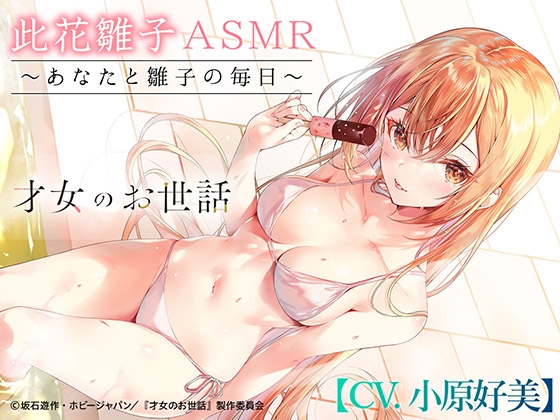



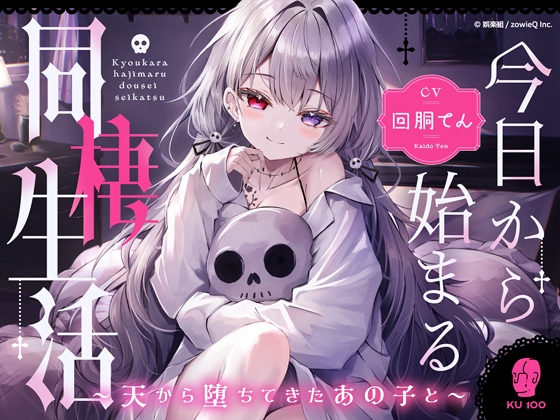
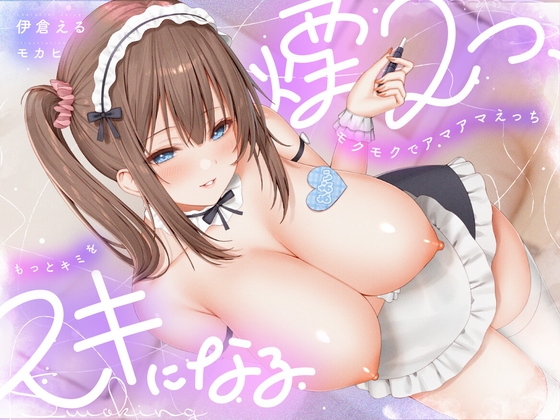
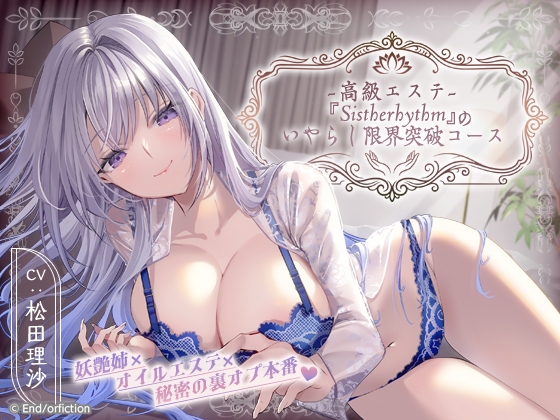
Rope, leather, command, trust. The surface looks like a performance of pain and dominance; the substance is a relationship of mutual consent between adults. SM (Japanese: エスエム, esu-emu) is the established postwar Japanese term for the wider field.
Overview
SM is the Japanese-language umbrella term for sadomasochism: practices involving pain, dominance, submission, and restraint pursued as a consensual form of erotic and emotional intimacy. The term derives from the initials of sadism and masochism, the two medical labels coined in 1886 by Richard von Krafft-Ebing in Psychopathia Sexualis and named for the French novelist Marquis de Sade and the Austrian novelist Leopold von Sacher-Masoch. The medical category was originally pathologising; through the twentieth century the relevant community took the labels back as self-descriptions, and the contemporary medical position (DSM-5, 2013; ICD-11, 2018) distinguishes a paraphilic interest (not a disorder) from a paraphilic disorder (clinical-level distress or non-consenting partners), with consensual adult SM placed firmly in the former category.
Internationally, the umbrella term BDSM (Bondage, Discipline, Dominance, Submission, Sadism, Masochism) is now standard. Japanese-language SM and Anglophone BDSM have substantial overlap and ongoing exchange, but each developed largely on its own footing through most of the twentieth century, and the two have distinct canonical figures, publications, and signature practices.
Consent framework
Three widely cited ethical formulations organise responsible practice across SM communities, including in Japan. SSC (Safe, Sane, Consensual), formulated in 1980s American BDSM communities, names three simultaneous requirements: physical and psychological safety; sober judgement; explicit and ongoing agreement. RACK (Risk-Aware Consensual Kink), introduced in a 1999 essay by Gary Switch, reformulates the safe requirement as informed awareness of risk — closer to the consent ethics of medical procedures or extreme sports. PRICK (Personal Responsibility Informed Consensual Kink) is a further variant emphasising personal responsibility.
Within practice, the structural protections include safewords (pre-agreed signals that end a scene immediately, typically chosen from outside the scene’s vocabulary), the role of the receiving partner in setting limits and pacing, and aftercare (the post-scene period of recovery, mutual reassurance, and any required first-aid). The underlying principle is that the surface of the scene may show asymmetric power, but the operating dynamic is mutual consent: the receiving partner holds an effective veto over continuation.
A clear legal and ethical line separates this from coercive sexual contact. Real-world non-consensual coercion is sexual assault and a serious crime; the SM community framework is constructed precisely to keep the practice on the right side of that line, and the consensual play of long-term partners is a different category, legally and ethically, from violence against a non-consenting party.
Etymology
Sadism and masochism are the medical coinages of Krafft-Ebing in 1886, taking their names from de Sade and Sacher-Masoch. Both novelists wrote fiction in which the dynamics of giving and receiving pain were thematised at length: de Sade’s 120 Days of Sodom (1785, posthumous) and Sacher-Masoch’s Venus in Furs (1870) are the most-cited works. The two writers’ lives also bequeathed their names to the medical labels.
The acronym SM itself, in Japanese-language usage, became settled through the postwar era and is now the standard category label in Japanese media and adult industry. Kitan Club (奇譚クラブ), the magazine founded by Akebono Shobō in 1947, was the principal site at which this lexical settlement happened.
Cultural history
Literary sources
The longer cultural background draws on Western erotic literature (de Sade, Sacher-Masoch, Algernon Swinburne, Pierre Louÿs, Georges Bataille) and the underground literary tradition of premodern Japan. Through the nineteenth and twentieth centuries this work explored the field of overlapping pain and pleasure that the modern medical category would later name.
Postwar Japan: Kitan Club and Itoh Seiu
The development of a distinct Japanese SM subculture is tied to the postwar publishing scene. Kitan Club (founded 1947, with its A5-format relaunch in 1952 and runs through the 1960s and into the early 1970s) functioned as the Japanese-language SM scene’s central forum, publishing photography, fiction, instructional rope-pattern diagrams, and writing on the practice’s etiquette. The novelist Dan Oniroku began Hana to Hebi (Flower and Snake) serialisation in Kitan Club in 1962; the work and its 1974 film adaptation (with Naomi Tani in the lead) extended the visual signature of postwar Japanese SM into a wider public.
The painter Itoh Seiu (1882–1961) produced a substantial body of seme-e (paintings of bound and tortured subjects) through the early twentieth century. His work took the geometric vocabulary of Edo-period restraint techniques and reworked it into an aesthetic-erotic register. The line of influence from Itoh Seiu through subsequent artists, photographers, and SM-magazine illustrators is the visual through-line of the modern Japanese tradition. Kinbaku — Japanese erotic rope-tying — emerged from this lineage and is now the practice most clearly identified with the Japanese tradition internationally.
Nikkatsu Roman Porno and beyond
The 1974 Nikkatsu Roman Porno film of Hana to Hebi moved SM material into the mainstream cinema market for the first time. Through the 1980s, video-format work, eromanga, and dōjinshi developed their own SM grammars, and the field broadened from the magazine-and-cinema base of the 1950s–1970s into a much more diverse contemporary distribution structure.
Anglophone BDSM and the international relationship
Anglophone BDSM consolidated as an organised community through the 1970s gay leather scene and the second-wave feminist debates around sex, with the founding of the Eulenspiegel Society (New York, 1971) and the Society of Janus (San Francisco, 1974) as early educational and advocacy organisations. The community formalised SSC and later RACK through the 1980s and 1990s, and the resulting infrastructure now serves as the international reference frame.
The relationship with Japanese SM has been bilateral. The English term BDSM has been current in Japan since the 2000s; kinbaku (or shibari) has travelled in the opposite direction and is now a recognised Japanese contribution to international BDSM practice. The 2010s mainstreaming of BDSM imagery through Fifty Shades of Grey (2011) reached Japan as it reached other markets, and prompted similar internal community discussions about the difference between the novel’s representation and the consent ethics of actual practice.
Roles and adjacent fields
The Japanese vocabulary of roles uses M-otoko / S-otoko (masochist male / sadist male) and M-jo / S-jo (masochist female / sadist female) as a four-cell grid, with the M-otoko × S-jo pairing forming the structural basis of a separate Japanese commercial sex-industry subgenre, M-seikan (M-massage parlour). Internationally, the more general vocabulary of Top/Bottom, Dom/Sub, Switch, and Master/Slave is also in use.
Adjacent fields include restraint, training (choukyou), confinement (kankin), and fetish material more generally (leather, latex, stockings). These are distinct interests and practices, but they are routinely combined under an SM frame in actual sessions.
Legal and ethical boundaries
The presence or absence of consent is the structural line between SM practice and criminal violence. Japanese law, like other jurisdictions, has worked out positions on the limits of consent, the threshold at which serious bodily harm overrides consent, and the relationship of practice to the wider public order. Responsible community frameworks place participants’ physical safety and psychological dignity above the scene itself, and explicitly differentiate themselves from any non-consenting application of the same techniques.
See also
Updated
References
- 『Psychopathia Sexualis』 Ferdinand Enke (1886) — Coined the medical terms sadism and masochism.
- 『Different Loving』 Villard Books (1993) — Foundational ethnographic survey of the Anglophone BDSM community.
- 『Playing on the Edge: Sadomasochism, Risk, and Intimacy』 Indiana University Press (2011)
- 『Mediated Sex』 Bloomsbury (1996)
- 『Kitan Club』 Akebono Shobo (1947-1975) — Postwar Japanese SM magazine of record.
- 『Diagnostic and Statistical Manual of Mental Disorders, Fifth Edition (DSM-5)』 American Psychiatric Association (2013) — Distinguishes paraphilic interest from paraphilic disorder; consensual SM is not classified as a disorder.
Also known as
- SM
- Japanese sadomasochism
- Kitan Club tradition
- ja: SM
- ja: エスエム