M-onna (submissive female, Japanese context)
✎ 本文編集 (admin) 🖼 画像編集 (admin)“M-onna (submissive female, Japanese context)” works on DLsite
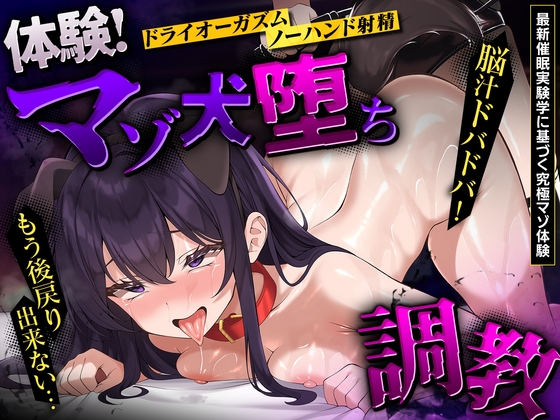
The framing first, before any description of contents. M-onna names a role in an SM relationship; the role’s contemporary practice operates within the consensual-adult BDSM frameworks (SSC, RACK, negotiated scenes, agreed safewords, aftercare) that the article on M-otoko describes in detail and that apply identically to the role discussed here. The literary and cultural-historical material that gives M-onna its distinctive shape in the postwar Japanese SM-cultural tradition operates with this consensual-adult framework as the unspoken background to its more dramatic literary articulations.
Overview
M-onna (Japanese: M女, M-onna; also M-jō in certain stylistic registers; literally “M-woman”, with M from masochism; English equivalents: submissive female in Japanese context, Japan’s M-female archetype) is the Japanese-vocabulary term for a female who occupies the submissive role in an SM relationship, or for a woman whose erotic preferences orient her toward submissive-pleasure dynamics. The term consolidated in the postwar Japanese SM culture and has remained the canonical role-vocabulary, with literary, cinematic, and adult-content production traditions all drawing on the term as a recognised category-marker.
The term is gender-marked at the noun level, in parallel with M-otoko (M-male). The Japanese SM-vocabulary’s four-quadrant role-naming system (S-otoko / S-onna / M-otoko / M-onna) is one of its distinctive features relative to the English-language BDSM vocabulary, where the gender-neutral submissive operates as the principal role-name with gender added as a qualifier when needed.
The postwar Japanese SM-literary tradition, anchored in Dan Oniroku’s Flower and Snake (花と蛇, serialised from 1962) and the broader publishing tradition of the era, gave M-onna a literary depth and a set of recurring character-archetypes that the M-otoko role does not have to the same degree. The literary tradition continues to inform contemporary adult-content production in the same vocabulary, with the canonical Flower and Snake heroine Shizuko continuing to function as a reference-character for the broader archetype.
Framework: consent, agency, and the literary register
The contemporary practice of M-onna roles operates within the same consensual-adult BDSM frameworks (SSC, RACK, negotiated scenes, safewords, aftercare) that govern other BDSM practices. The contemporary BDSM-community understanding of the submissive role gives the bottom the structural authority through the safeword convention — the bottom’s invocation of the safeword interrupts the scene immediately, and this convention is treated as foundational to ethical practice. The contemporary practice’s framing of submission is, in this respect, not a surrender of agency but a deployment of agency within an explicitly-negotiated frame.
The postwar Japanese SM-literary tradition has a more complex relationship to the agency question. The classical Flower and Snake literary type depicts the heroine’s submission with a fictional intensity that, read straightforwardly, would not conform to contemporary consent-frameworks. The literary tradition operates in a fictional register where the relationship between the depicted scene and any actual contemporary practice is mediated by the fictional frame — the work is a literary construction, not an instruction manual. Responsible contemporary discussion of the tradition recognises this fictional-frame mediation explicitly, distinguishing between the literary tradition’s depictions and the contemporary practice’s consensual framework.
The article that follows describes both the contemporary practice (within consent frameworks) and the literary-cultural tradition (with the fictional-frame mediation acknowledged), with the two treated as related but distinct.
Etymology
M-onna combines M (from masochism) with the Japanese onna (女, “woman”). The term consolidated in the postwar Japanese SM-vocabulary in parallel with M-otoko, with both terms entering general circulation through the postwar SM-publication industry, particularly through Kitan Club (奇譚クラブ, Akebono Shobō, 1947–1975 as the SM-specialist magazine). The four-quadrant role-naming system became standard in the magazine’s reader-correspondence and fiction publications through the 1950s and 1960s.
Wider diffusion into general adult-content vocabulary followed the 1980s expansion of Japanese adult-content production, with the M-onna term established as standard production-vocabulary and consumer-vocabulary by the 1990s. The term operates today as the unmarked default Japanese-language vocabulary for the submissive-female role across publishing, video production, and live-event contexts.
History
Literary precedents in world tradition
The submissive-female narrative-form has a substantial precedent in world literary tradition. Sacher-Masoch’s Venus in Furs (1870) provided the European-literary anchor that gave the term masochism its name. Pauline Réage’s Story of O (1954) is the postwar canonical European literary articulation of the submissive-female experience, with the title character O serving as the canonical reference-figure for the broader literary type. Pierre Louÿs, Georges Bataille, and the broader twentieth-century European literary tradition include additional treatments.
Réage’s Story of O in particular operated as a major reference-text for the postwar Japanese SM-literary tradition. The text’s first-person-feminine perspective on the submissive experience and its literary engagement with the psychology of submission gave it a foundational reference-status for the literary type that the Japanese tradition would develop further.
Postwar Japanese SM-cultural consolidation
The Japanese SM-cultural consolidation of M-onna as a recognised vocabulary and a recognised literary-and-aesthetic tradition proceeded through the postwar Kitan Club publication, which from the early 1950s consolidated as the SM-specialist magazine of the period. The magazine published submissive-female reader correspondence, fiction featuring submissive-female protagonists, photographic submissions, and the broader range of SM-genre material. The publication’s central role in defining the postwar Japanese SM-literary tradition is hard to overstate.
In 1962, Dan Oniroku (originally publishing under the pen name Hanamaki Kyōtarō) began serialising Flower and Snake (花と蛇, Hana to Hebi) in Kitan Club. The novel’s protagonist, the dignified middle-class woman Shizuko, became the postwar Japanese SM-literary tradition’s canonical reference-figure for the submissive-female narrative-form. The work’s depiction of Shizuko bound with rope, marked by rope-imprints on white skin, set against an aesthetic that drew on Itō Seiu’s prewar seme-e (責め絵, “torment-pictures”) tradition while developing its own postwar register, established the literary and aesthetic vocabulary of the modern Japanese SM-genre.
In 1974, Flower and Snake was adapted into a Nikkatsu Roman Porno film, with Tani Naomi in the role of Shizuko. The film became the inaugural entry in a long-running adaptation series across multiple decades, with the Flower and Snake property remaining a reference-text in Japanese SM-cinema. The literary work and its film adaptations together established M-onna as a recognised category of adult-cultural production with substantial cultural-historical weight.
Diffusion into broader adult-content production
Through the 1980s and 1990s, adult-content production across video, manga, doujinshi, and other media incorporated the M-onna role as a stable subgenre. Each medium developed its own production-grammar conventions, with the shared narrative-form vocabulary of “binding, conditioning, transformation” providing the recognisable subgenre skeleton across the variations.
Doujinshi and adult-manga search-tag systems include M-onna protagonist works as a recurring high-frequency category, with the adjacent tags kinbaku, kousoku, chōkyō, and SM operating as the standard cross-filtering vocabulary for narrower category-searches.
Role variations
The M-onna role admits the same intensity-range that the parallel M-otoko article describes:
Light recreational: short-duration scene-based role-play in a consensual adult relationship, with the role one element among many in the relationship’s overall structure.
Intermediate: longer-duration relationship-form with the dominant-submissive dynamic operating across multiple scenes and over extended timeframes.
High-integration: relationship-form with the dynamic integrated into daily life outside the scene context, with the role’s significance extending into the partnership’s broader operating principles. This integration-level requires the highest level of negotiation, trust, and shared framework between partners.
Vocabulary-elements specific to the M-onna register include Do-M (extreme submissive orientation), shinsei-M (“true-nature M”, indicating an authentic orientation rather than role-play preference), and adjacent characterisations that the genre-vocabulary uses for sub-types within the broader category. These are not strict definitions but recognised colloquial markers within the genre-vocabulary.
Comparative note on Japanese versus English BDSM vocabulary
The English-language BDSM vocabulary’s principal role-names — submissive, sub, bottom, slave — are gender-neutral at the noun level, with gender added as needed (female sub, male bottom). The Japanese vocabulary maintains gender-marking at the noun level: M-otoko and M-onna are distinct vocabulary items, with the gender marking integral to the term’s structure rather than added as a qualifier.
The structural difference reflects a deeper divergence in how the two traditions organise the role-and-gender axes. The English-language tradition tends to treat the submissive-dominant axis as primary and the gender-axis as secondary; the Japanese tradition tends to treat the two axes as co-primary, with distinct vocabulary for each gender-and-role combination. Neither approach is more correct than the other; they reflect different vocabulary-organising preferences in different cultural contexts.
Contemporary literary and production continuation
The postwar Japanese SM-literary tradition that Flower and Snake anchored has continued through Uno Kōichirō, Kurosawa Miki, Tate Junichi, and other writers, with the genre-form persisting across multiple decades. The tradition’s diffusion since the 1990s into light-novel format, web-fiction format, doujinshi format, and other user-creator media has placed the M-onna narrative-form at the centre of a substantial user-creation ecology in addition to its commercial-publishing presence.
The genre’s continuation requires, in the contemporary moment, the same explicit attention to the fictional-frame mediation between depiction and practice that the Story of O and Flower and Snake literary works themselves operated with. Responsible contemporary production attends to the framing-conventions that distinguish the fictional intensity of the literary register from the consent-framed practice of contemporary BDSM, and the genre’s continued cultural standing depends on maintaining this distinction in production practice.
Related Terms
Updated
References
- 『Story of O』 Jean-Jacques Pauvert (1954)
- 『Venus in Furs』 (1870)
- 『Different Loving: The World of Sexual Dominance and Submission』 Villard Books (1993)
- 『Psychopathia Sexualis』 Ferdinand Enke (1886)
- 『The Ethical Slut』 Greenery Press (2009)
Also known as
- M-onna
- M-girl
- submissive female (Japanese context)
- Japanese submissive female archetype
- ja: M女
Related
- M-otoko (submissive male, Japanese context)
- SM (Japanese SM Culture)
- Kinbaku
- Kousoku (restraint / bondage)
- Chōkyō (training)
- BDSM
- Batou (verbal humiliation play)
- Mekakushi (blindfold play)
- Nemurihime-play (Sleeping Beauty roleplay)
- Ningyou-play (doll roleplay)
- Pet play
- Younger-girl preference (toshishita)