Younger-girl preference (toshishita)
✎ 本文編集 (admin) 🖼 画像編集 (admin)“Younger-girl preference (toshishita)” works on DLsite


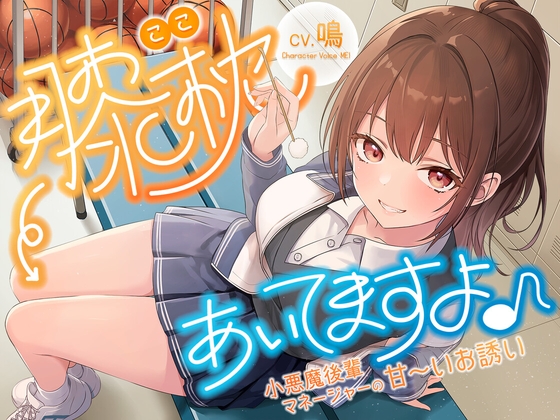
In a corridor after class, the junior reaches out a small hand and tugs the sleeve of his uniform. “Senpai, just a little of your time,” she says, looking up, and at that moment a responsibility worth two years of age difference settles on his shoulders. Facing a younger partner carries an internal pressure distinct from the weight of an equal relationship, the pressure to be gentle. Whether one feels that as sweet or as a burden divides the presence or absence of the younger-girl preference. Toshishita-kei (年下系) is the preference for female characters set younger than oneself or the reader-proxy protagonist. It is an age-based character-attribute category covering little-sister, junior, younger-childhood-friend, and age-gap types, centring protectedness, innocence, and coming-of-age. In Japanese subculture it functions as one of the most basic attribute axes, paired with the older-sister attribute and the older-woman preference. All characters are presumed adult.
Overview
The core builds the asymmetry of an age gap into character design. The younger side is placed below the protagonist in social experience, knowledge, and physique, bringing a “teach/be taught,” “protect/be protected” directionality into the story. Identifying with the protagonist, the reader vicariously experiences the position of protector. The appeal is often presented in two stages: first, the staging of “youth” and “innocence” that visualises the gap; second, the moment the younger side is respected as a full person, exchanging equal feeling despite the gap. The shift from protective relation to personal equality forms the core emotional arc.
Origins
The little-sister and childhood-friend lineage
The first systematic ordering of the younger-girl attribute in Japanese subculture came through the settling of little-sister and childhood-friend characters in eroge and gal-games from the 1990s on. A run of works placing younger characters at the narrative core established the structure of the attribute. One sister-themed series in particular maximised the internal diversity of the attribute by setting many younger little-sister characters side by side, each assigned a different form of address, systematising the linguistic variation of the younger attribute.
Development of the junior attribute
In school-set works, the junior character developed as an important subtype. The senior-junior relation is rooted in Japanese school culture as a hierarchical order, and layering romance and sexuality onto it puts the asymmetry to narrative use. Across eroge, light novels, and shounen manga, the junior heroine recurs as a templated type.
Subtypes
The little-sister type centres a sibling or pseudo-sibling. Where a real sister is involved, legal and ethical constraints push toward incest-adjacent framing requiring special narrative devices, so settings that blur blood relation (step-sister, brought-in sister, cousin, raised-as-family pseudo-sister) are common. The junior type is the underclassman at school or work, with the senior protagonist guiding the junior into a romantic relationship. The younger-childhood-friend type holds both accumulated relationship and age gap, with intimacy already established so the story can focus on deepening. The age-gap type (working adult and student) carries a large gap and requires care at ethical and legal boundaries, so the partner is usually set at or above high-school graduation age.
In sexual expression
The typical staging narrativises a gap in sexual experience: the experienced protagonist introducing an innocent younger character, the staging of a first experience, the detailed depiction of fresh reactions. In eroge and eromanga, the awkwardness of the younger character and the process of gradually growing accustomed are developed on a time axis. In AV, the “younger-type actress” casting direction functions independently, emphasising a youthful look, with the industry standard that younger staging stays within an apparent age that does not depart from legal adulthood.
Reception and ethical boundary
The psychological core is the vicarious experience of being a protector, close to a socially sanctioned form of affection, functioning as a low-guilt object of emotional investment. Following Tamaki Saito’s argument, the younger attribute works as a device providing the protagonist position of “protecting subject,” opposite the maternal sign of the older-sister type. Some of the appeal also mixes a wish to avoid the burden of building an equal relationship and to hold one-sided initiative, contrasting with the older-woman wish to surrender initiative.
The younger attribute always requires care at the ethical and legal boundary regarding apparent-age expression. In Japan, child-prostitution and child-pornography law protects real children, and fictional works fall outside its scope, but through industry self-regulation and international consideration, clearly low-aged apparent-age expression is subject to commercial-distribution limits. When subculture handles “younger,” design conscious of this boundary is required.
Related Terms
Updated
References
- 『Beautiful Fighting Girl』 University of Minnesota Press (2011)
- 『Otaku: Japan's Database Animals』 University of Minnesota Press (2009)
Also known as
- younger-girl preference
- younger character fetish
- age-gap preference (protagonist older)
- ja: 年下系
- ja: 年下女子
Related
- Older-woman preference (toshiue)
- Twins Moe (Futago Moe)
- Step-Parent Theme (Giri no Oya-kei)
- Hikikomori Character Moe
- Princess Character (Hime-Kyara)
- Inkya-kei (Introverted-Character Type)
- Batou (verbal humiliation play)
- Kemonomimi (beast-ear character)
- M-otoko (submissive male, Japanese context)
- M-onna (submissive female, Japanese context)
- Kemono
- Twintails