“Twintails” works on DLsite

A hairstyle that, in Western culture, signifies childhood and rural simplicity. In Japanese anime and manga, the same hairstyle has, since the late 1990s, accumulated a dense set of character-archetype associations strong enough to function as a single readable character-design choice. The reception gap between pigtails and twintails is one of the more legible cases of character-design vocabulary diverging across cultures.
Overview
Twintails (Japanese: ツインテール, tsuintēru) is the hairstyle in which hair is divided down the centre of the back of the head and bound into two separate tails on either side. As a physical hairstyle — hair on each side bound into a tail — the form has parallels in nearly every culture that has worked with long hair: ancient European girls’ hairstyles, North American Native American women’s traditional hairstyles, agricultural women’s working hairstyles, and the o-sage of Meiji-Taishō Japanese girls’ schoolwear. As a character-archetype-signifying hairstyle — the moe attribute marker — the form is specifically a Japanese anime-and-manga subcultural development of the 1990s onward.
The Japanese-coined tsuintēru became the standard term in the late 1990s. The English-language counterpart twintails (with the variant twin tails) is now in current use within international anime fandom, distinguished from the more general English pigtails — which signifies childhood and simple-rural connotations — by the more specific Japanese subcultural reading. The clipped form tsuinte (ツインテ) is current in colloquial Japanese.
The standard subdivisions are by attachment height (high twintails attached near the crown; low twintails attached near the nape), by attachment position (back, side, or side-tails with attachment displaced to one side), and by length (long, medium, short). Each variant carries slightly different character-archetype connotations within the anime-and-manga reading conventions.
Etymology
Tsuintēru is wasei-eigo — Japanese-coined English — combining the English twin (双子の) and tail (尾, here a hairstyle “tail”). The English twintails parallels the Japanese coinage. In English, the unmarked term for the same hairstyle is pigtails (singular pigtail) or, in British usage, bunches. Twintails is in current use specifically in anime-and-cosplay contexts, where it carries the Japanese subcultural reading; pigtails is the general-vocabulary form, with the rural-simplicity-and-childhood connotations.
History
Pre-modern background
Bilateral hair-binding has practical origins: it keeps hair out of the face while permitting full motion, and it requires only simple tying skills. Variants of the hairstyle appear across the cultures of the world without specific cultural meaning attached. In Japan, the o-sage (お下げ) of Meiji and Taishō girls’ schoolwear — bilateral hair binding at the lower back, often with braiding — was the standard schoolgirl hairstyle of the period and is widely depicted in Meiji-Taishō photography, painting, and literature. O-sage is closer to a low braided-pigtail than to the contemporary anime tsuintēru, but the two forms share the bilateral-binding logic.
Codification (late 1990s onward)
The character-archetype-signifying tsuintēru of contemporary Japanese anime and manga is a 1990s-and-after development. Several specific characters in influential late-1990s and early-2000s anime productions are routinely cited in the codification: Asuka Langley Soryu in Neon Genesis Evangelion (1995, side-tail rather than twintails proper), Sakura Kinomoto in Cardcaptor Sakura (1996–1998, short side-tails), Haruhi Suzumiya in The Melancholy of Haruhi Suzumiya (the original 2003–2007 light novel and the 2006 anime adaptation), and Hatsune Miku in the Vocaloid virtual-singer software (2007). The cumulative effect of these characters and dozens more like them was to fix twintails as a recognisable design-and-character-personality cluster in anime audiences’ reading conventions.
By the 2010s, twintails had become a sufficiently codified attribute that the Japan Twintail Association (Nihon Tsuintēru Kyōkai, founded 2012) was able to designate 2 February (ni-tsui, “two-twin”, reading 2/2 as tsuintēru) as Twintail Day. The hairstyle has become one of the few contemporary character-design choices that supports its own institutional infrastructure.
The character archetype
What makes twintails specifically Japanese-subcultural is the character-archetype cluster that the hairstyle now carries. In contemporary anime-and-manga reading conventions, a character introduced with twintails generally signals a recognisable cluster of personality traits:
- Spirited and energetic.
- Strong-willed, sometimes assertive to the point of stubbornness.
- Age range from late elementary school to high school.
- Voice quality typically higher and more dynamic.
- Often paired with bright hair colours — red, pink, blonde — rather than darker tones.
- Frequently combined with personality archetypes such as tsundere, the ojou-sama (well-bred young lady), or the spirited little-sister type.
These associations are not the result of any single work; they are the cumulative output of the 1990s, 2000s, and 2010s anime-and-manga industry’s iterative re-use of the design-and-character pairing. By the 2020s, an experienced anime viewer reads the personality cluster from the hairstyle within seconds of a character’s introduction, and writers and designers have built that reading-shorthand into their working vocabulary.
Aesthetic-fetish structure
Twintails as a fetish-fashion register works on several distinct visual levels.
The first is bilateral symmetry. Where the ponytail has a single dynamic axis of motion, twintails have two, and the resulting visual register is more doll-like and visually composed than the more dynamic single-tail. The pair of tails reads as ordered and arranged.
The second is youth-coding. Twintails are recognised, in Japanese cultural reading, as a hairstyle of school-age girls. An adult woman wearing twintails reads as adopting a childlike or youthful register — by way of dōgan (baby-faced) cosplay, loli-style fashion, or scenarios in which an adult performer plays a high-school-coded role. The age-coding is part of what the costume contributes; importantly, this article concerns adult-fashion and adult-content registers, in which the costume’s age-signifier is part of the costume rather than a representation of any actual minor.
The third is neck and nape exposure. Binding the hair on either side at high attachment positions exposes the back of the head, the neck, and the nape (unaji). The resulting nape-exposure overlap with the unaji-fetish tradition is structurally significant and contributes to the form’s appeal as a fashion register.
The fourth is motion dynamics. In walking, turning, and head-tilting motion, the two tails move independently and in opposed phases, and tail tips brush across shoulders and chest. The dynamic-motion content of twintails, sustained through extended motion sequences, is one of the principal contributions of the hairstyle as a visual register in animation specifically — animation’s frame-by-frame attention to motion can render the bilateral motion more visibly than static-image media can.
Forms and variants
- High twintails: attached high on the side of the head, the most spirited-and-energetic register.
- Low twintails: attached near the nape, closer to o-sage in feel.
- Side-tails: a single-tail variant attached to one side, related but distinct.
- Long twintails: hair extending well past the shoulders.
- Short twintails: short hair drawn into compact tails.
- Ribbon-tied twintails: with decorative ribbons at the binding points.
- Braided twintails: with three-strand braids in each tail.
- Drill twintails (tate-rōru tsuintēru): with strong corkscrew curls, the ojou-sama archetype’s signature.
- Ahoge twintails: with a single antenna-like hair strand standing up from the binding point.
Cultural reception
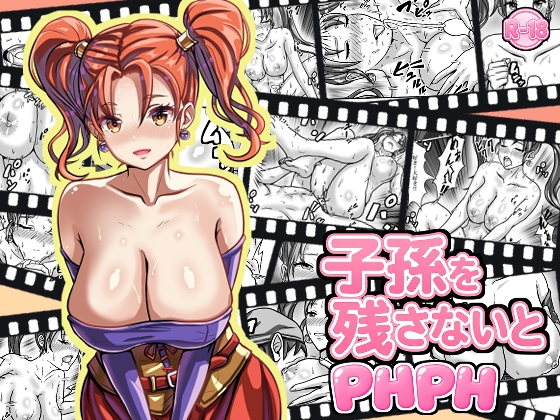
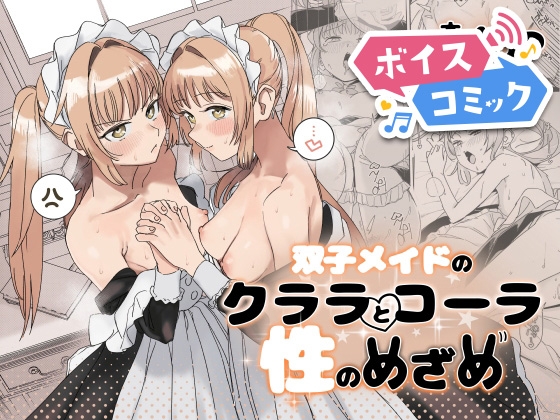
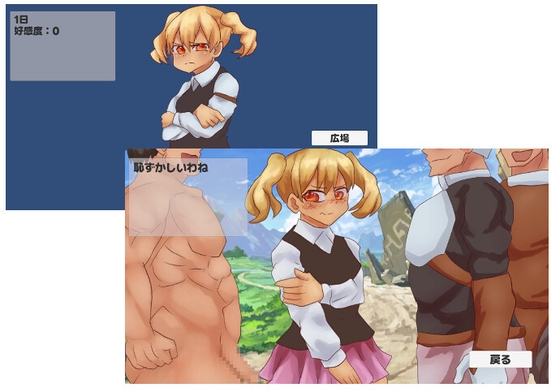
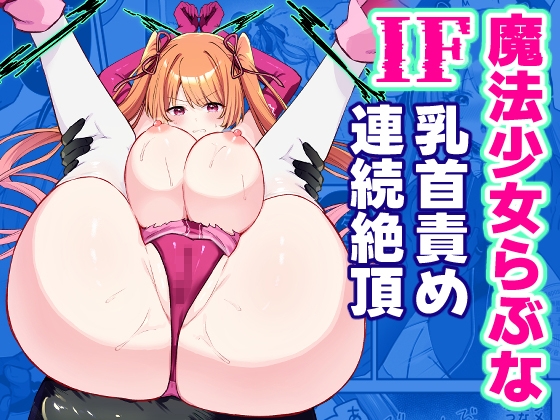
In adult content, twintails-clad characters are routinely featured in concept titles, packaging copy, and sample imagery as the standard visual signifier of youthful and energetic. The combinations uniform + twintails, cosplay + twintails, and maid + twintails are particularly frequent, and the hairstyle’s connection to cosplay culture is correspondingly strong.
In 2D media — doujinshi, eromanga, eroge, hentai animation — twintails is one of the two or three most frequently used hairstyle attributes, alongside long-black-hair and short-bob. The act of putting hair into twintails (or taking it down) within a story functions as a recognisable narrative device for marking shifts in a character’s persona — a character who normally wears her hair down putting it into twintails can read as a deliberate adoption of the spirited register, and the reverse signals a maturity-or-formality shift.
The international circulation has been substantial. Twintails / twin tails is now established in English-language anime-and-cosplay vocabulary as a recognised character-archetype hairstyle, and is treated as a category distinct from Western pigtails. The international cosplay-market vocabulary keeps the two terms separated by the registers they pick out: pigtails signals childhood-and-simplicity, twintails signals the anime-codified moe archetype.
See also
Updated
References
- 『髪と日本人』 Heibonsha (1988)
- 『オタク学入門』 Ohta Publishing (1996)
- 『コスプレ文化研究』 Shinyōsha (2013)
- 『アニメスタイル』 Style (2010)
Also known as
- twin tails
- Pigtails (anime context)
- ja: ツインテール
- ja: ツインテ
Related
- Hair kink (kami fetish / trichophilia)
- Ponytail (kink)
- Long-hair kink
- Cosplay
- Dōgan fetish (baby-faced adult)
- Tsundere
- Ojousama Character (Wealthy Heiress Archetype)
- Seijun-kei (Pure / Innocent Archetype)
- Hikikomori Character Moe
- Princess Character (Hime-Kyara)
- Inkya-kei (Introverted-Character Type)
- Bob-hair fetish