Ojousama Character (Wealthy Heiress Archetype)
✎ 本文編集 (admin) 🖼 画像編集 (admin)“Ojousama Character (Wealthy Heiress Archetype)” works on DLsite
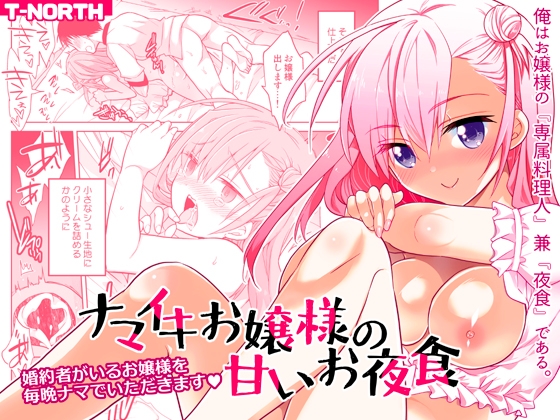

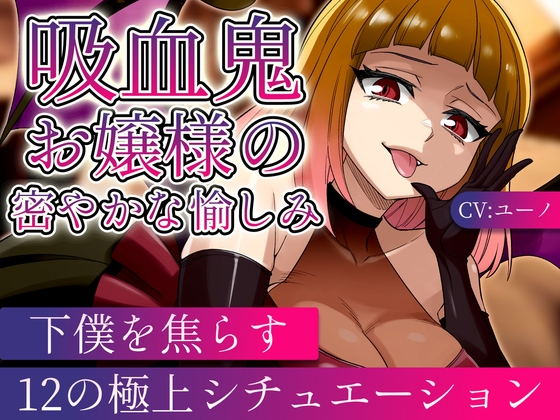
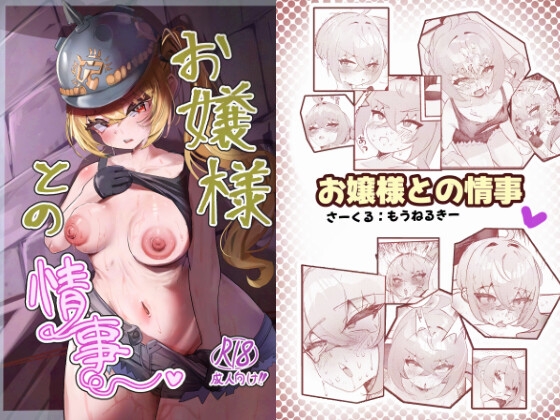
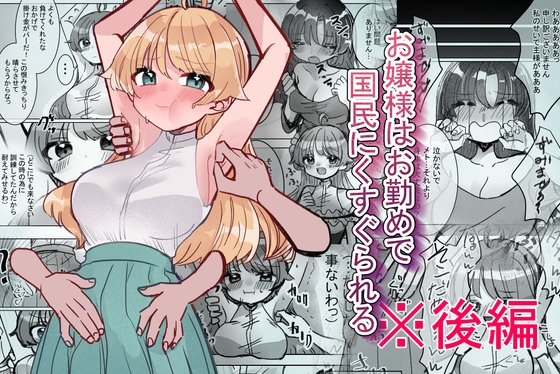

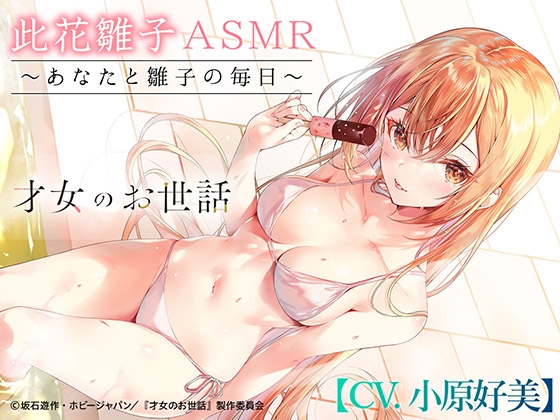
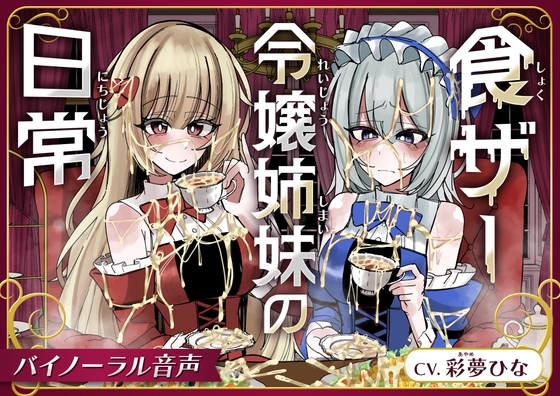
Vertical ringlets sway as she smiles and says “Gokigen’yō.” Your income and standard of living are simply not in her field of vision. It is less that her upbringing differs than that the blueprint of how she was raised is built differently. Faced with the innocence of someone who looks at a convenience-store lunchbox and genuinely asks “what dish is this?”, your servile calculations are voided in an instant.
Ojousama character (お嬢様キャラ, ojousama kyara) is the archetype of a person set as raised among the wealthy, a great house, or a financial dynasty, with polite speech, refined manners, and a gap from commoner sense as moe signs. In Japanese subculture it is one of the most durable character types, running across the legacy of Meiji-era peerage culture, postwar girls’ fiction, 1990s eroge and light novels, and 2020s VTuber culture.
Overview
The defining core is the visualisation, as a premise of character design, of the asymmetry of class, education, and economic capital from the average reader. Concrete signs include polite speech (desuwa, mashite yo, gokigen’yō), vertical ringlets or straight long hair, white-toned prim attire, ignorance of housework and commoner cooking, and a daily life attended by a chauffeur, butler, and maid.
The appeal is typically presented in two stages. The first stage stages class distance: the reader views her as a resident of an unreachable world. The second stage is the unexpected dissolution of that distance: a moment is prepared in which the ojousama opens her heart only to the reader’s surrogate, the protagonist. The drop from distance to nearness is itself the central affective device.
Etymology and historical premise
The word ojousama was used before the modern period as an honorific for another household’s daughter, but the direct historical premise of the subcultural archetype is the modern Japanese aristocracy under the Peerage Ordinance (Kazoku-rei, 1884). The Meiji government enrolled court nobles, feudal lords, and meritorious figures as peers, and their daughters formed their own education and social circles as “young ladies.” Girls’ schools such as Gakushūin, Seishin, and Shirayuri carried the lineage from peerage daughters to the postwar upper-class heiress.
Even after the abolition of the peerage (1947), the heiress type survived as a literary and cinematic character type. Heiress figures in Yukio Mishima and Yasunari Kawabata supplied the basic postwar form. In girls’ fiction, through the lineage of Kawabata and Nobuko Yoshiya, Oyuki Konno’s Maria-sama ga Miteru series (1998) contributed decisively to forming the modern norm. Its vocabulary, gokigen’yō and onee-sama, became standard in later ojousama design.
The “desuwa” language
The greatest linguistic sign is the sentence-final desuwa, masuwa, and mashite yo. These derive from the Yamanote speech of the Meiji-Taishō period, a stylisation of the actual speech of prewar peerage and upper-class women. As far as recordings of actual prewar peerage women confirm, desuwa was not repeated as relentlessly as in modern subcultural ojousama speech; it is closer to an exaggerated artificial language formed through subcultural stylisation.
From the later 2010s, a game in which ordinary social-media users converted net slang into ojousama style (rendering “lol” as “what a laughingstock, desuwa”) took hold, and desuwa was reused as a broad slang filter. The VTuber Himemori Salome (debut 2022) reached one million subscribers in a short span by combining desuwa with deep otaku subcultural knowledge, symbolising the archetype’s contemporary vitality. citation needed
Visual signs
Vertical ringlets (Victorian curls) are the most identifiable visual sign. Real ringlets take long to set and are impractical for daily use, so they function as a sign implying the economic and personnel margin to maintain perfect ringlets every day. Other typical forms include straight long black hair and soft pink or gold curls. Short-haired ojousama have increased recently but were a minority in the archetype’s formative period.
Sailor-suit or blazer-type uniforms, joined with mission-school or traditional girls’-school settings, form the basic dress. In private-clothes scenes, white-toned frilled one-pieces, ribbons, and prim skirt lengths are preferred. Revealing attire is incompatible in principle with the archetype, but in sexual works it is used as a device to emphasise the gap of disarrayed dress.
Development in sexual expression
When the ojousama connects to sexual expression, two main directions appear. The first is the sexual overturning of the ojousama’s class arrogance: a well-behaved heiress stripped of dignity through sexual contact, the “fall” narrative. The second is a direction in which an ojousama who harbours but suppresses secret sexual curiosity removes the lady’s mask and exposes desire only toward a particular partner.
In eroge, the ojousama heroine is a standard archetype from the 1990s; Serika Kurusugawa of To Heart (1997) and Katsura Takayashiki of Kazoku Keikaku (2001) held important positions early on. Works set in “ojousama schools” and works in which a dynasty heiress lodges in the protagonist’s home recur as the archetype’s typical settings.
In AV and eromanga, the gap between prim attire and sexual contact is itself commodified, with settings such as the heiress-school uniform, the interior of a chauffeured limousine, and the mansion drawing room. As reception psychology, vicarious fulfilment, supplying a pseudo-experience of sexual contact with a socially and economically unreachable object, forms the central demand motive.
Derivative and adjacent archetypes
The fallen heiress sets a once-great house in economic ruin, the heiress placed in humiliating circumstances; the class signs remain while loss of protection becomes the narrative starting point, with debt-repayment plots standardised in sexual works. The foreign heiress is set as a European noble or American dynasty daughter staying in Japan, adding signs of exotic flavour absent in Japanese ojousama (accent, cultural-custom differences).
Against the hime (princess) character, which is set against fantasy or imaginary kingdoms, the ojousama is set against modern Japanese or Western elites; the two share class signs but divide clearly along modernity versus fantasy. Mission-school ojousama settings are often combined with ascetic convent signs, and in the context of Japanese traditional beauty the archetype connects to the kimono-clad heiress and miko attribute. The contrasting tsundere personality is also frequently layered onto the ojousama.
Cultural influence
The ojousama is introduced abroad in Japanese subcultural export as a distinctly contemporary-Japanese class staging, circulating in English as “ojousama” / “ojou-sama” in romanised form and used as an attribute tag in English fan creation and criticism. In Chinese it is fixed as dàxiǎojiě (大小姐) and functions as an independent attribute category in Chinese otaku communities; in Korean agassi (아가씨) serves as the equivalent attribute word.
See also
Updated
References
- 『Sentou Bishoujo no Seishin Bunseki (The Psychoanalysis of the Fighting Beauty)』 Ohta Books (2000)
- 『Doubutsuka suru Postmodern (Otaku: Japan's Database Animals)』 Kodansha (2001)
- 『Maria-sama ga Miteru』 Shueisha Cobalt Bunko (1998-2012) — Series decisive for forming the modern ojousama norm
Also known as
- ojousama
- ojou-sama
- rich girl character
- heiress archetype
- desuwa type
Related
- Seijun-kei (Pure / Innocent Archetype)
- Twintails
- Tandere character type
- Dark Elf (Fantasy Character Archetype)
- Joi (Female Doctor)
- Nurse
- Demon Girl Moe (Akuma Chara)
- Bakajoshi (Airhead Girl Archetype)
- Debu Otoko (Fat Bastard / Ugly Bastard)
- Dosukebe (Super-Lewd Character Type)
- Twins Moe (Futago Moe)
- Step-Parent Theme (Giri no Oya-kei)